Monday, May 16, 2011

Centennial Sunday School Round UP!

Has it been a while since you've been to Sunday School?  Have you ever invited a friend to come to Sunday School with you?  Next Sunday is the time!


  Morris FUMC originated in the heyday of Sunday School, so we've been doing it for 100 years now!  Let's show our support for our Sunday School program by being here to meet under the trees in the front of the church at 9:45 May 22nd for a Centennial Celebration of Sunday School.  We'll have food and fun and stories and perhaps a little "living history."  There will be rides in an antique Model-T mini-car for the kids (the first Model Ts had just hit the production lines when our church was being formed!), and if you want to dress in "period clothing," that will be fun too!  We'll start the morning with some words form Pastor Mattox and anyone else who'd like to recollect on their memories of how Sunday school has evolved over our 100 year span.  Then we'll have some time for eating and lessons under the trees (which will serve as our version of the "bursh arbor" unless someone gets a wild hare and builds one this week!  Some folks have even talked about riding horse and wagons (or just horses) to the Centennial celebration.  The sky's the limit!

Sunday, May 15, 2011

Graduation Sermon: Unknown Unknowns

Isaiah 40: 27-31
1 Corinthians 13: 9-13


This scripture always makes me think of that song by Rod Stewart and Ronnie Wood’s band, Faces. You remember it?

I wish that I knew what I know now when I was younger. (Kinda a tongue twister)

Seeing Kelsie on her way to graduation makes me think of the end of my high school experience and the same song.

“Put away childish ways” Difference between childlike faith and being childish

But you know what—when I was younger, I knew more than I do now, or at least I thought I did. I knew it all, as most of us do at that age. That’s all right. It’s part of wisdom to learn that we have something to learn. Socrates said "I am only wise insofar as what I don't know, I don't think I know."

Donald Rumsfeld NATO press conference in 2002.
“Now what is the message there? The message is that there are known "knowns." There are things we know that we know. There are known unknowns. That is to say there are things that we now know we don't know. But there are also unknown unknowns. There are things we do not know we don't know. So when we do the best we can and we pull all this information together, and we then say well that's basically what we see as the situation, that is really only the known knowns and the known unknowns. And each year, we discover a few more of those unknown unknowns.”

After five years in Morris, I still have some known unknowns. Why is it called a 5th wheel trailor? Are we really called “Morrisites?” and does that not sound too much like Parisites? I wonder what folks from OKC are called? Or Beggs? Or Mounds? Or Liberty? Or Liberty Mounds? But, I’m sure there are some unknown unknowns that I am missing too.

In our scriptures today, we hear about “knowing only in part.” Paul, as someone who is wise, understands this. Now we can only know in part, as though through a darkened mirror.

WE may think that sounds like an odd metaphor, since mirrors are basically true reflections, but that’s not how it was in Paul’s day. Corinth made a lot of mirrors, and generally, the best ones were polished brass. They didn’t give a clear reflection like they do today. There was discoloration, blemishes, etc.

Paul basically says that right now our place in the world and God’s relationship to everything that happens is a “known unknown.” We realize that we don’t see clearly. At least, this is the conclusion we arrive at when we are wise. The more you know, the more you realize how much we don’t know.

But, while knowledge can only take us so far, love can take us the distance.

The Corinthians were kind of puffed up about their knowledge. The “Known knowns” had become a dividing line between people in that community, and Paul saw what danger that held, so he talked about “putting away his childish ways” and growing up into the understanding that God’s ways will blow our minds, but not our hearts. Our minds cannot contain God, but our Hearts are where God chooses to live.

Even with how great our knowledge and understanding has become, it is still the shallow end compared to what is unknown. Prophecies will cease, tongues will fall silent, and knowledge will come to an end. But Love never fails. It will take you through. It is the boat that carries us over the expansive Wisdom of God and bring us to that place and time when “we shall know, even as we have been fully known.”

Depth of God’s love is an unknown unknown. Here’s what we can know, according to Isaiah. What we can know is that we should hope in God’s faithfulness. Isaiah says those who have that hope “renew their strength and will soar on wings like eagles.”

Before this passage that we heard this morning, Isaiah is going over a litany of things that “put us in our place” as human beings in relation to God. God is like the wind that blows over the grass and fields. We are like the grass and our faithfulness is like the flowers. Grass and flowers will wither away, but the wind remains. Vs. 15 and 17 say “Surely the nations are like a drop in a bucket;
they are regarded as dust on the scales;… Before him all the nations are as nothing;
they are regarded by him as worthless
and less than nothing.”

Hmmm…. Think about that next time someone says “God bless America, eh?” Perhaps we should be saying “America bless God” instead!

And while the nations are regarded as dust on the scales, Isaiah tells us that God spreads out the heavens and the mountains and the oceans.

“He sits enthroned above the circle of the earth,
and its people are like grasshoppers.
He stretches out the heavens like a canopy,
and spreads them out like a tent to live in.”

So, young grasshopper, what can we do in the face of such a magnificent and overpowering God? Perhaps you sometimes feel this sense of overwhelming when you think about your future and all the stuff that has to be done, Kelsie, or any graduates. I find myself feeling overwhelmed with the prospects of the future, for sure! It hits me like a spear in the gut every time I look around the house and know it needs to be packed up soon!

This is how life is—but God gives us the gift of Hope. Hope renews our strength. Hope isn’t Pollyanna optimism. Hope renews our strength. It is the conviction in things unseen. “Hope is not the conviction that something will turn out well, but the certainty that something makes sense regardless of how it turns out.” Vaclav Havel
“Hope is not blind optimism. It’s not ignoring the enormity of the task ahead, or the roadblocks that stand in our path. It’s not sitting on the sidelines or shirking from a fight. Hope is that thing inside us that insists, despite all the evidence to the contrary, that something better awaits us if we have the courage to reach for it, work for it, and fight for it.” - Barack Obama

And Paul says that Love is the greatest of all. If you Love God, how do you let God know? You know the answer to that question. And that answer will always carry you through.

Monday, May 09, 2011

Easter 3 Sermon: The Road


Sermon Texts:
2 Timothy 1: 3-7
Luke 24: 13-35

Speaking of Mothers--  I was reminded of my mother today with today’s text in the lectionary.  When I was a boy and would get sick, my mother would use this tray, the “Jesus tray” to bring me my medicine.  If there were ever times when she would forget to bring the medicine on the Jesus tray, then I would ask for it: “Bring it on the Jesus tray, mommy.” 

There was something about this image of the road to Emmaus that always caught my imagination.  I love the grand trees, how Jesus is turned to one of the disciples and gesturing up with his hand, with the other disciple in rapt attention. There was just something about Jesus walking down the road with his disciples that held a totem like power for me, I guess. 

A few years ago, I saw this image was available in a nice frame from Cokesbury, and so I bought it to place next to the exit door as a reminder to those of us who gather at the church, that on the road of life, on our journey throughout the week, we should keep our eyes open for an encounter with the Risen Christ. 

From the tray, I always wondered how his disciples didn’t know it was him all that time—I mean, he looks like Jesus is supposed to look, right?  Isn’t it strange how in all of the resurrection accounts, Jesus’ disciples mistake him for someone else or just plain don’t recognize him at all? 

Here’s a profound truth of the resurrection that every Gospel writer captures—Jesus is experienced by a prolonged recognition.  What if Mary had seen who she thought was the gardener, and assumed her first glance hadn’t fooled her, and she just rushed crying away.  But instead she engaged the stranger, and it turned out not to be a stranger at all!

What if the two disciples on their way to Emmaus had just accepted the stranger’s obvious “non-verbal clues” that he was going to head on down the road, and let him go—but instead they pressed him to stay, to accept their hospitality—and when they sat down to eat with him, they recognized him for who he was. 

It takes a little more from us than just a casual, passive approach to the people we meet on the road of life in order to see the Risen Christ.  IT takes some engagement with the world around you—it takes some willingness to put yourself on the line and open your doors to people.  That’s what the resurrection accounts say.

I read this book by Cormac McCarthy last year called “The Road.”  He’s a fantastic author, the author of “No Country for Old Men,” and the book won the 2007 Pulitzer Prize for fiction, but let me tell you something, that book is depressing. 

It’s set in the future after a nuclear holocaust, and a father and son are trying to get to a warmer climate, and are traveling through a burnt out nation where the ethos of “every man for himself” has become the only law. 

At every turn, some glimmer of hope turns into a tragic mistake, and every person who seems possibly able to offer a helping hand turns out to have evil intentions.  It gets so seemingly hopeless, that you begin to wonder as the number of pages left grow fewer and fewer if the author is going to lead you out of shadows.  When a final ray of hope does finally become apparent, it is not without consequence, but it still leaves you feeling tremendously grateful for some small bit of warmth. 

In the story from Luke, we hear the two disciples walking down the road with heavy hearts.  They are sullen and sorrowful about the death of Jesus.  All their hope has been crushed.  And then this stranger begins to instruct them in the ways of hope.

And when he appears to them plainly in the breaking of the bread, he vanishes from their sight.  You see, with the hope that he instills, it is no longer necessary that he remain with them any longer.  The hope instilled is the point.  That small bit of warmth at the end of the Road redeems the whole story, it makes all the pain and suffering along the way tolerable. 

Along “The Road” in the novel, the man and the son reassure themselves that “they are some of the good guys” and they “carry the fire inside them.”  They are words that could be spoken by Jesus to the two disciples.  Words that Luke will later illustrate in the Pentecost story, when the flames of the Spirit are manifest over the heads of the believers. 

Yes, though the stark realities of the road may sometimes seem overwhelming, we come here to be reminded that there is one who walks with us who gives us the “fire inside us.”  He comes to us in many a guise.  And we must remember to respond to others with the dignity, kindness, and love that he instructed us to show to others.  When and if that happens, we might someday find ourselves walking with the living Christ and having our eyes opened to that mysterious and life changing reality.  May it be so! 

Wednesday, May 04, 2011

Easter 2 sermon: I Wanna See!


Texts: 1 Peter and John
I think one of the first phrases of many younger siblings is “I wanna see!” It certainly was one of Julianna’s first phrases. We’d be looking at something on the computer on the counter, and we’d laugh about it, and Wesley would jump out of his chair, “I wanna see!” Julianna would come parroting him “I wan see!” 

It’s that standing up on your tiptoes that goes along with that prhase, isn’t it. I wanna see, I wanna see. It communicates a real zest for life, doesn’t it. There’s an engagement with the world. After all, someone who’s just bored with it all doesn’t stand up and say “I wanna see!” Someone who thinks they’ve seen it all doesn’t stand up and say “I wanna see.” 

I think you could say that the phrase “I wanna see” is childlike faith in a nutshell, isn’t it? It takes some humility to say, which children have no problem with. It takes some interest and some earnestness to say, once again not a problem with children. And it takes some faith and hope to say. After all, to say it with any conviction, it takes the hope that there’s actually something worth seeing. 

I can really picture Thomas saying “I wanna see!” He’s gone from the first (actually the second), considering Christ’s appearance to Mary was the first) encounter with the disciples. They’re all there together in the Upper room, says John, and here comes Jesus walking through walls but substantial in flesh and blood. Kinda mysterious. Kinda out there! 

And then John informs us that actually Thomas was missing from the “all of them,” and that when told the story about a risen Christ walking through walls and breathing on them, he says “I wanna see!” 

He’s kind of the younger sibling in this regard, isn’t he. He was left out (as younger siblings often are) of the first time, so he pines for his own encounter. 

He’s got a little bit of a chip on his shoulder about it too, doesn’t it sound like that? He says, unless this and that and the other, then I’m just not going to believe your little “walking through walls” story. 

And you know what—Jesus responds! Everyone seems to harp on the fact that Jesus comes and seemingly “sets Thomas straight” by saying “you believe now since you have seen, well—blessed are those who believe without seeing. I don’t read it that way. 

Remember, Thomas isn’t alone in this regard. According to the story we heard last week, it was only the beloved disciple who believes without seeing. All the rest of the disciples have a chance to see the Risen Christ a week before in the first part of our reading today. Thomas isn’t alone in that. 

Remember, Jesus comes to Thomas and not only shows him his wounds, but tells him to place his fingers in them. It’s as if Jesus is saying—what you ask for I will give you and more. Don’t just look—touch too! Remember, Jesus says he comes to bring life and bring it abundantly. He wants Thomas to have enough of a “dose” of this resurrection to carry him through the rest of his life, because that’s what he’s going to need. 

It’s not like Jesus comes in a disembodied voice and says “shame on you for not believing your brothers, Thomas.” Jesus comes into his presence. I like the icon that we have on the front of our bulletin today because it has Jesus embracing Thomas. 

Jesus embraces our needs. He embraces us even and perhaps even because we have doubts. I’ve always told people that I counsel who express doubts to me that I’m always overjoyed when someone tells me they have doubts, because that means they have been thinking hard about what is contained in our faith. It has been occupying more of their mindset than just a casual glance. 

Perhaps it’s not an accident that we almost always hear this text on the Sunday AFTER Easter, when it is usually the foundational people of the church who are in attendance. 

You may get excited when we have 150 people in church, as we did last week—but you know what—numbers don’t translate into in-depth faith. You know how much was placed in the offering plate last week? $900! 

I would guess that every person in here has had their doubts about some aspect of our faith. And you know what—that’s a good thing! Having doubts means your faith occupies more than just some emotional corner of your heart—it occupies your mind too! It occupies your stomach when you see the hypocrisy too often found in the church. I ran across a quote the other day that has been occupying my mind for the past week. “Truth isn’t always beauty; but the hunger for it is.” 

The truth of the resurrection is also the truth of the ugly crucifixion. It is not necessarily beautiful. It is hard and heartbreaking. The truth is that some of our Easter friends who were here last week have no interest in a life of faith. But—the hunger for truth is what you see in the eyes of Thomas. It’s what you see in the eyes of these young men who professed their faith today. It’s what you see in a less than average crowd of people here to worship on “Low Sunday” which is what the week after Easter is known as. And that is beauty. 

Friday, April 29, 2011

Easter Sermon: The Race


I'm like the widow searching for the lost coin, except I'm married and I'm searching for a lost ipod microphone.  Which is a shame b/c I added quite a bit of good stuff to the sermon this week that is now lost in the ether.  Pray that I find that microphone so you can get back to listening with rapt attention to my compelling and captivating sermons.  :)  


Texts:
Hebrews 12: 1-3
John 20: 1-18

There is so much going on here.  Mary comes to the tomb early in the morning.  Not content to just let him be.  And there she finds the stone rolled to the side and the tomb empty.  She runs back to tell the disciples.

And then you have this curious race between Peter and John.  John tells us that he won the race, of course, but then stops at the opening to the tomb.  Peter plunges right in and sees it empty. 

John spends valuable narrative space telling us about the placement of the burial cloths, and then John comes on in to the tomb, and in so doing he seems to cross over into an understanding as to what has happened. 

I like this idea of racing to the tomb.  They hear the word from Mary as a starting gun.  They race to the tomb, not quite sure what to believe or make of the news.  Then they get there, and they’re not quite sure what to do.  Do we go in the tomb or not, should we take these burial cloths as some sort of sign, or not.  But John writes that it is there that he believes.  He races to the tomb, and then he believes. 

How often is our faith life like this race.  We are running along with a friend in the faith of Jesus, and we sense that we are “ahead of” or “behind” the rest in our progress toward the destination. 

And then, even those who are ahead draw up short and observe the goal.  Sometimes it is those who seemed to be behind the whole time who plunge right into salvation.  But, sometimes pulling up short and taking a moment to survey the scene is what is required for us to come to recognize what has happened in our lives. 

John describes the Beloved Disciple seeing the arrangement of the grave clothes, and then piecing together that this neat arrangement of clothing could not possibly be left by intruders and body-snatchers.  Instead, something more mysterious has happened here, and he believes. 

Raymond Brown, S.J., what characterizes this passage is a "prolonged recognition" of the risen Christ by Mary.


But then, a lesson perhaps from John to the church.  What do Peter and John do after they’ve gone inside the tomb and believed what Jesus had said?  They go home! 

They don’t rush out and spread the word to the other disciples.  They just go home!  What do we make of this?  Isn’t it true that we sometimes approach the aim of faith, then we have the astounding experience that leaves us with sure and certain belief only to then GO HOME and get back to life as usual?  John tells us that’s exactly what the disciples do.  They go back and start fishing again.  This man whom we loved and followed for three years has been crucified and now has risen from the dead and we’re just going to GO HOME and get back to fishing?! 

John shows us the reward of staying and lingering in the garden with the example of Mary.  Mary stays and weeps and is comforted by The Man himself.  Although she doesn’t at first see him as Jesus. 

Race and recognition. 

Wednesday, April 20, 2011

Maundy Thursday Car Washing

Wouldn't you know it--no rain all spring, and then having it forecast for the day your preacher has planned to invite you to come and have your car washed as an act of service in the light of the footwashing that Jesus performs in John 13.  Oh well!  If it's not storming on us between 3 and 6pm, come get your car washed for free by your minister! 

Wednesday, April 13, 2011

Worship with us this Easter Season!

We invite you to join us for Easter Week!
First United Methodist Church of Morris
100 years in Morris, and here till Kingdom Come
“Open Hearts, Open Minds, Open Doors”
Where-ever you are in the “walk of life,” you will find a friend at the little white bricked church at the corner of Pekin and Hughes.  We are a welcoming congregation who would like to celebrate the Passion of Jesus Christ with you. 

April 17 Palm Sunday Worship Service, Banquet and Egg Hunt 10:55 am, (Sunday School 9:45am),
At this service, children remind us of Jesus’ entry into Jerusalem in the last week of his life by waving palm branches and singing. 
Afterwards, we provide the ham, and members bring the rest for a great pot-luck to which everyone is invited.  The kids always enjoy finding eggs around the yard, as parents and grandparents trail behind with cameras.

April 21: Maundy Thursday Last Supper Reenactment, 7pm
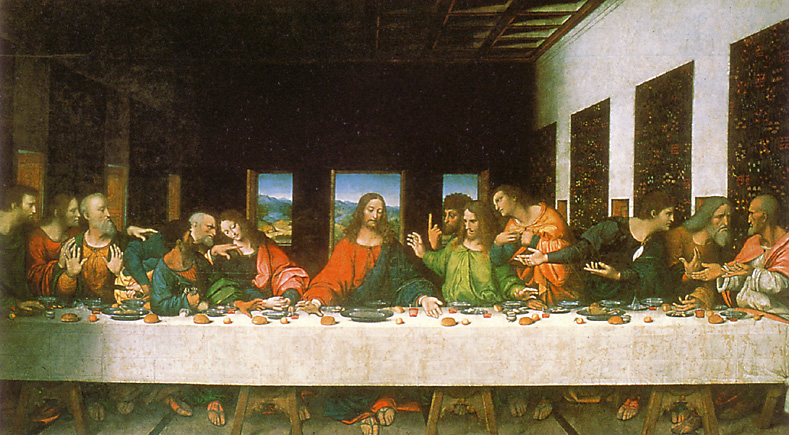
Yes, it’s on Thursday, not “Maundy.”  At this service we remember the last “maundatum,” or “mandate” of Christ to “Love one another as I have loved you.”  Here we celebrate communion (always open to all) by watching a portrayal of that moment captured in Da Vinci’s masterpiece when Jesus reveals that one of his own disciples will betray him.  The cast of characters in this short drama will be:

Bartholomew: Tim Stewart        Thomas: Nathan Mattox

James the Less: JustinVaugn      James Zebedee: Kevin Dellinger
Andrew: John Edmonds.            Philip: Carson Edmonds
Judas: Tim Davis                       Matthew: Anthony Suiter
Peter: Pat Edmonds                   Thaddeus: Carl King
John:     Atticus  Dellinger           Simon: Duane Lester
Martha: Maggie Barnes             Jesus: Shan Edmonds

April 22, Good Friday Tenebre Service, 7pm
In this “service of darkness,” candles are extinguished as the story of Jesus’ arrest, trial, and execution are read.

April 23, “Into the Tomb, Into the Darkness” Caving and Discussion at Devil’s Den State Park in Arkansas 9am
This finale to our confirmation will give us the chance to go into a “tomb like” setting and prompt the discussion, “what does the Resurrection mean to you?” 

April 24 Easter Worship Service, 10:55am (Sunday School 9:45) Communion served and open to all. 
The most important Sunday of the year holds our most important message: God brings new birth and Grace fills the world! 

Easter Season Continues with celebration of new birth as we mark the days with these special occasions:
Confirmation Sunday: May 1st, 10:55am: Our young people make a profession of faith and celebrate their baptismal covenants.  Afterwards, we will volunteer at the Okmulgee Homeless Shelter to live out that profession. 
Mother’s Day Service: May 8th, 10:55am: Certainly those who give birth should be honored in the season we celebrate new birth!
 Honoring the Graduates: May 15, 10:55am: Finishing high school education is a big accomplishment.  This service focuses on achievement and wisdom.  
Centennial Sunday School Round-Up: May 22: 9:45am
This is our 100th year of ministry in Morris, but we’re a new church every time someone commits their life to Christ in our midst.  Oftentimes the relationships that nurture this commitment are found in Sunday School.  We’ll celebrate our 100th year of Sunday School by gathering together as we used to at the beginning of our church in Morris: arriving on horseback and meeting under the trees! 
Memorial Day Service: May 29, 10:55am: Sacrifice and new birth go hand in hand.  Sacrifice is required for new birth to occur.  At this service we remember the veterans and the sacrifices they’ve made.

April 10 Sermon: The Preview

Sermon Texts:
Ezekiel and John

Sermon Notes:


Perhaps one of the most poignant passages of scripture is the one we just heard.  We hear the grief of Jesus for a friend, a grief that he shares for all of us—for all of our deaths, and motivated by which he comes into all our future tombs and calls us out. 

Come out.  Breathe the air again.  Breathe the air of a new kingdom in which I am king and I have banished sin and death.  Be raised and live life fully now.  Love one another as I have loved you.  By this, others will know you as citizen of this kingdom. 

I’m reminded of my grandmother’s funeral, for which my father and I gave eulogies.  Over the previous ten years, we accepted my grandmother’s descent into oblivion as she succumbed to Alzheimer’s disease.  We accepted something that Mary and Martha just wouldn’t accept with Christ in their lives.  They ran up to Jesus with sorrow and perplexity in their voice.  “Why weren’t you here?  If you had been here, this wouldn’t have happened.” 

Jesus’ answer to them was baffling, I’m sure.  “I wasn’t here so that the world may see the gift that I bring.” Is essentially what he said.  

But why, Jesus—why couldn’t you have just been here and spared us the fear and trembling as we watched our brother die.  As your friends, don’t we get preferential treatment?  Shouldn’t there be some “perk” to following you?  Shouldn’t we be saved the pain that you can so easily remedy with your healing power? 

What if his answer to us is the same as his answer to Mary and Martha.  What if enduring the pain and suffering of this life with the firm hope in the power of Christ to bring us all back to life is one way that the power and glory of God can be shown to this world?  Do you believe it?

The last bit of my grandmother’s personality to ‘go’ was her musical ability.  It is amazing to me how our brain stores information, and how so often the musical mind is untouched by strokes or accidents that effect the rest of our minds.  I’ve read a couple of books by Oliver Sacks, the author and neuroscientist who wrote the book that the movie “Awakenings.”  In “the Mind’s Eye” and “Musicophilia” he gives many accounts of people who have drastically debilitating diseases of the mind which cause them to even lose a sense of recognition of every day objects, family members, or even their own reflection.  Some of these people have difficulty deciding what in the world pants or spoons or car-keys, or anything really, are for, and yet, when they “sing” the instructions to themselves for, getting dressed, for example, they can still accomplish tasks like these. 

My grandmother played the piano, and I remember about 2 or so years before she died, we went and visited her in the nursing home, and she played amazing grace for us on the piano.  She added a little comedic flourish at the end, and I was amazed that a bit of her sense of humor still lived there in her musical mind. 

At her funeral, I shared my belief that she has been made new in the Kingdom of God.  That she has received a new celestial body that is complete—that is physically and spiritually as God intended it to be. 

In the raising of Lazarus, John not only gives us a preview of the resurrection of Jesus, he gives us a preview of our own resurrection, when Jesus calls us all beyond the grave, and in that story is the seeds of the good news which might grow through our daily lives, as we live in light of the resurrection, and as we pour out our selves to God as Mary pours out the expensive burial nard all over the feet of the one who brings the Good news of God. 

Last week I spoke with the confirmands about how as a church we ordain women and give women the authority they deserve to bring the Good news just as the men do in the church.  I told the young men there that if they are ever questioned about this practice by their friends, that they can say that women were the FIRST preachers, and here we see one of the first sermons.  Mary, pouring out her devotion to the Lord Jesus.  An act of worship.  An act that speaks volumes, and foretells the fate that Jesus has been trying to get across to his male disciples for years, but which they refuse to hear.  This same Mary will be among that group of women who are the first bearers of the Good news of the resurrection in only a matter of days.  And what else is preaching? 

One thing that I imagine is that as God has spoken this creation into being, we will be Sung into recreation in the life to come.  That gift that seems to stick with us even when our brain is struck I imagine has some power beyond the grave.  Is there any wonder that angels are always portrayed as “singing?” 

Our lives are in God’s hands.  NO matter what befalls us, we are instruments of God’s peace and God’s assurance to the whole Creation. “I am with you, always!”   

Tuesday, April 05, 2011

April 3 Sermon: Enjoy the Silence

Sermon Texts:
Psalm 46
1 Kings 19: 8-13

 
Sermon Notes:
Enjoy the Silence

1 Kings 17 Mt. Horeb

I went to college at a place that was right across the street from a very busy stretch of railroad tracks.  We all got used to the wailing horns and thunderous noise.  I was recently watching an old video of a play that I was in while in college, and it was so funny, that theater was on the side of campus that was closest to the tracks, and trains would just rumble through pretty much every hour.  While the play was being performed, in the recording, I began to hear that whistle, and then it just seemed to get louder, and louder, and louder!.  The funny thing was, we didn’t even react on stage.  It was just part of the background to us.  But watching it years later after becoming accustomed to the intense quiet of Morris, OK, it was amazing that we did it.

My junior year of college, I lived in this apartment that was literally 30 yards away from this bend in the railroad tracks.  Those trains would literally come  through 16 times a day, and through the night too!  One train would always come blasting through at 2am.  It would rattle the walls, and if you were having a conversation when the train was coming through, we just had to sit there and wait for it to pass.  There was no talking over it.  This was before the days of TIVO, so I couldn’t simply pause the TV when the train came through.  I had it plugged into my stereo, and I’d have to turn the thing all the way up just to hear.  But as I  mentioned before, we got used to it.  After only a week or two, I’d just sleep right through the 2am train, though it rattled the walls and caused a deafening roar. 

I’m reminded of that train for some reason when I hear this passage from Kings.  Perhaps God speaks so blatantly that we have just become accustomed to it.  Perhaps this is why Jesus says we must become like little children.  Taking nothing for granted. 

Or, perhaps our lives are so flooded with sound that we are deafened to the “still small voice” of God.  I’m on facebook too—so I’m not judging it as an outsider—but think about it.  You go to a main page and scroll through what is the equivilant of people yammering to anyone in general! 

We say we do it so we can “keep up with our friends,” but do I really need to know that they aren’t that impressed with a particular episode of Scrubs?

Experience of Going into a cave, which muffles the sound. Everything sounds close. And when you come back out, Everything sounds open and clear. 

Sometimes the experience of enveloping ourselves in silence has an effect of opening our ears to God’s voice. 

It seems like much attention is paid in our expression of faith on what we say and believe.  Is important, but as my dad heard an old Cherokee woman say one time, “You can’t be the mouth of God until you’ve been the ears of God.” 

As integral to our religious heritage as “I believe,” is the instruction “Hear, O Israel.” 

But, many of us have trouble listening to God.  Instead, as Barbara Brown Taylor writes in the wonderful short book Tthe Silence of God, “Many of us prefer to speak.  Our corporate prayers are punctuated with phrases such as “Hear us, Lord” or “Lord, hear our prayers,”  as if the burden to listen were on God and not us.  WE name our concerns, giving God suggestions on what to do about them.  What reversal of power might occur if we turned the process around, naming our concerns and asking God to tell us what to do about them?  ‘Speak Lord, for your servants are listening.’” 

When I was studying at Oxford, I regularly worshipped with the Society of Friends.  You might have heard of them before, they’re also known as the Quakers.  If you go to a Friends worship service, be ready for silence.  You see, that’s all it is.  People sit in the silence and listen for the movement of the Spirit.  If they feel moved to speak, the speak the Spirit guided word.  Believe it or not, in the several visits I made to the Quaker meeting house, I never said a word.  It wasn’t that I never felt prompted to say something—it’s just that I felt more a sense of respect and caution for the spoken word.  Even though the whole purpose of the Quaker movement was to free the Word from the pulpit, I sensed a much greater importance on the spoken word, and so I refrained from speaking as a sign of respect.

Barbara Brown Taylor writes, “Sometimes I think we do all the talking because we are afraid God won’t.”  It’s kind of like being on a date, and the person is obviously nervous and so talks and talks and talks.  She continues, “Or, conversely, that God will.  Either way, staying preoccupied wth our own words seemsa safer bet than opening ourselves up either to God’s silence or God’s speech, both of which have the power to undo us.  In our own age, I believe God’s slence is the more threatening, perhaps because it is the more frequently experienced of the two.  Very few people come to me because they want to discuss something God said to them last night.  The large majority come because they cannot get him go say anything at all.  They have asked as sincerely as they know how for answers, for guidance, for peace, but they are still missing those things.  They have heard me talk about God on Sundays and they hope they can make us of my connections. 

Friday, April 01, 2011

March 24 Sermon: Beautiful Feet

Sermon Texts:
Isaiah 52: 7-9
John 13: 1-15, 34-35

Call to Worship
A new commandment we were given:
Love one another, as I have loved you.
In simple acts of service and kindness,
Love one another, as I have loved you.
In repairing the wounds of conflict
Love one another, as I have loved you.
In listening to each others' stories and memories
Love one another, as I have loved you.
In forgiving someone when they have wronged us
Love one another, as I have loved you.
Lord, soften our hard hearts, give us the clean spirits
To Love one another, as You have loved us.

Sermon Notes:
Blessed is this gift of a new floor. What comes into contact with a floor? Our feet. Imagine all the places your feet have taken you. Dr. Seuss Book—Oh the places you’ll go.

Jesus’ feet. I came into the sanctuary this week to ask for a sermon. That’s not that uncommon a thing for me. But, what happened in return was uncommon for me. I went down here to the chancel and I knelt in front of the altar, and the stained glass was glowing, and I just became solely focused on Jesus’ feet there in the window. I knelt there and stared at those feet and I heard this door open and close in the draft that comes through the church. I heard the wind blowing through the shingles, I heard the birds singing and chirping and competing with one another. I heard the wind blowing through the newly budding branches of those sweetgums. I heard. The door thing kinda freaked me out. I kept wondering if someone had crept in the door and then was sitting on the back row of the church or something. But my focus wasn’t broken. I knelt here and my back was straight like I had a string pulling me up from the top of my spine.

Feet, they are taboo aren’t they? This account of Jesus washing his disciples feet is uncomfortable to us, as it was to the disciples, but for different reasons. We are probably just grossed out by the idea of someone touching our feet. The disciples are used to that. This is a common act of hospitality, usually performed by a slave. The disciples are appalled that their teacher and master is the one on his knees with a towel tied around his waist, washing their feet.

But Christ was foreshadowing here, wasn’t he. It was these lowly feet –these fishermen’s embarrassingly hardened and calloused feet and these tax collector’s embarrassingly soft and pampered feet, that had been following the footsteps of Jesus around Judea and Samaria and Galilee. It was these feet that would bear the message of Jesus’ redemptive power from Spain to India and from the Caspian sea to Britain to Ethiopia.

Jesus is giving life to Isaiah’s song of praise, “How Blessed are the feet on the mountains of those who bring good news.” Can you imagine how hard and calloused and grungy these disciples feet must’ve been when they spent their lives walking around on them everywhere they went? How did they cut their toenails? I remember this one guy in college didn’t wear shoes. The bottom of his feet were black. He didn’t just not wear shoes around the brick sidewalks of my college, he didn’t wear shoes at the gas station or wal-mart or anywhere. He challenged those “no shirt, no shoes, no service signs.” Wait a minute-I haven’t seen those signs around here—do we just have those in Arkansas? Heyyyyyy…..

Took a shower the other day after I had mowed the lawn and raked up all the sweetgum balls. Boy, my feet were dirty. Can you imagine Jesus bent down washing between your toes after a hard day’s work like this?

Jesus washes our feet. Jesus is our Mighty God in the flesh. And what does he do? He shows us how to love and how to serve. “Love one another as I have loved you,” he says. We think this sounds like an easy task, and yet it is sometimes so hard. He doesn’t say “Love one another as you have been doing.” He says, “Love one another as I have loved you.”

Not everything has to be a fund raiser. Sometimes something can be a gift of devotion and glorification. (((((((((Floor?)))))))))) How we treat the poor is part of our judgment day. But sometimes one must just stop and fall on her knees and pour her heart out to Jesus, as Mary does in the chapter preceding. You see, Mary is a prophet. She sees with prophetic eyes that what Jesus just did: step into her brother Lazareth’s tomb and call him out was a sign of things to come. When Judas and the others, with unseeing eyes, castigate her for her action, Jesus, the Word Made Flesh, gives them the word of his impending death.

So, may we be creative in our devotion to our master’s feet.

Monday, March 21, 2011

March 20 Sermon, Hope Floats


Texts:
Genesis 7: 1-18
1 Peter 3: 13-22


Don’t get the wrong idea about why I chose this scripture in relation to events in Japan over the past week. I actually started planning this sermon two weeks ago and had originally chose it to relate the 40 days of rain to the 40 days of Lent that we observe.
Feeling safe and secure. Feeling rescued.
The one cruise ship experience I have had was not very enjoyable, though free. I was a youth minister in Bartlesville, and another friend of mine from college said a couple of them were going down to the Bahamas to check out a mission site, and had received a grant to take a first hand look at no expense. They invited me along too.
We were told we were going to be taking a cruise ship from Ft. Luderdale to the Bahamas, and this got me pretty excited too.
Got pretty seasick.
Noah’s Ark:
The Problem: Our lives are filled with chaos, and we’re in danger of drowning in the chaos.
Relate the ark narrative to the cross. Perhaps have a pillow of blue sheer on the altar with the ark on it on the cross.
What shall we do? Turn the church into an ark. In here, we cultivate the practices that will have a part in our “working out our salvation with fear and trembling.”
Jesus built an ark with his life. He faced the hard, relentless rain of temptation and persecution.
In the wilderness, where the Israelites wandered for 40 years, Jesus found himself attended by angels
Are we more prone to notice that God provides the flood or that God provides the ark?
The great rabbinic commentator Nachmanides wrote that God gave the Rainbow by turning upside down the bow of war. "See," said God; "My bow can no longer shoot from Heaven. It is now my sign of peace and love and hope."


Job’s friends are obsessed with suffering and how to explain it. They give all kinds of reasons amnd make all kinds of connections. God doesn’t listen to them. God sweeps them aside and gives ear to the sufferer, Job. It is not the best argument that wins the day—it is the plea.

Teva, the word for the Ark that saved the future from the Flood, is also the word for "word." As Noah could not simply contemplate the Teva/Ark but had to enter it to save the creatures, so we have been taught ? by the Baal Shem Tov, for instance ? that we cannot simply mouth a Teva/word of prayer, but must ourselves go deep within it, to save and heal ourselves."

Monday, March 07, 2011

Transfiguring Us Out


Texts: 2 Peter and Matthew

Sermon Notes:
This is always the scripture we hear right before we head into lent.
Reminder that it’s not just on the mountaintop with his face shining that Jesus exhibits the true nature of our God.
Also in the valley.
Transfiguring us (out)
Can we be transfigured? Can we change from one thing to another? Can we change from unappreciative, and self centered to humble and joyful?
Jesus tells a story about a boy who did just that in the prodigal son story. He tells of a loving God who longs to receive us into the arms of gladness.
Last week we spoke about Jesus’ proclamation to “not worry.” Can we be transfigured from worry-wart to care-free spirit. That seems like a pretty tall order! Can we overcome our “personality type?”
We hear about God taking Moses as a stuttering, hiding shepherd and making him into a someone who issues commands on behalf of God to the pharaoh, and then leading a people into the wilderness after a promise of a new land.
We see in this scripture and in most of the new testament, that Peter can sometimes be a bull-headed, stammering fool. And yet after the resurrection, he becomes an inspiring preacher, illuminating thousands of people with the light of Christ.
Ask God for the gift if you want to be changed, sometimes you’ve got to let something die inside you for something new to be born.
Paul spoke about this
I die daily. What is sown must die before being reaped in glory. We must be open to God doing open heart surgery on us. God will turn our hearts of stone into living things.
I will put a new heart and a new spirit within you.
O Splendor of God’s Glory Bright 679.
Miracle of Transfiguration in life
‘ ‘ in death.
Transfiguration as Sanctification. Big words.
We come closer to the image of God. We shine with the light of God in our lives, not only when we are on the mountaintop, but when we are living the law—living justice and mercy and devotion and worship.
This is the transfiguration station. We are here to be transfigured, and “transfigure out” our lives.

Sunday, February 27, 2011

Feb. 27 Sermon: Don't Worry Bout a Thing


Sermon Texts: Isaiah and Matthew

Sermon Notes
Seems like there is a lot of pop-psychology these days for avoiding anxiety. And at the end of the day, those of us who probably need the message the most probably have added to our anxiety by realizing that we can’t seem to shake our anxiety. There must be something wrong with us! Why can’t I do this? Aaagh
I wonder if Jesus had a wife, what she’d think of this kind of sentiment, because I know my wife doesn’t really care for it when she’s worried about something, and I say, “don’t worry.” Usually, I get more “husband points” when I just listen to what she’s worried about and validate her concerns.
I can imagine the look on her face if I were to quote Jesus’ lines from today’s reading. “Well, look at the flowers—they’re not too concerned about what they will wear—let’s go!
Right after telling his followers to "be perfect," Jesus tells them, "don't worry" (Matthew 5:48, 6:25). In fact, he repeats himself five times.
In many ways, I feel like Jesus is here preaching to the choir, regarding worry and concern. I’ve always been fairly able to temper my concerns and worries with healthy dose of optimism (my wife would call it naivite)
I have little musical mantras that flood my mind when I’m feeling anxious about something. Bob Marley singing “Don’t worry, about a thing—cause every little thing, is gonna be alright,” to Stevie Wonder’s “Don’t you worry bout a thiiiiiiiiiiiiing.” To the Beach Boys singing “Don’t Worry Baby, Everything will turn out all right.” To Bobby McFerrin Singing “Here’s a little song I wrote, you might want to sing it note for note, don’t worry. Be happy.” Chuck D (of Public Enemy) Didn’t feel quite so optimistic about things—in “Fight the Power” he says, “Don’t Worry Be Happy was a number one jam, "man" if I say it you can slap me right here.”
But, notice that Jesus isn’t exactly being optimistic here, he says, “Don’t worry about tomorrow, because today has enough troubles as it is.”
Scott Hoezee of The Center for Excellence in Preaching
“Jesus says that each day has enough trouble as it is. This isn’t just a philosophy of life—Jesus is probably speaking out of the experience that he and the disciples have had to this point. And we know what that trouble is. Sometimes it's sheer busyness. Most households these days need flowcharts just to figure out who needs to be where and when.
Especially parents of younger children live with the constant fear that they're forgetting something. "Each day has enough trouble of its own" our Lord said. If ever there were a Bible verse to which we could all shout a full-throated "Amen!", this is it.
Life is full of distractions. Any given day is chock-full of what we deem to be "interruptions" to what we'd really rather be doing. But in Matthew 6, by telling us both that our heavenly Father sees us in these daily lives and by inviting us to pray about those same lives, Jesus asks us to look at even our distractions, even our interruptions, through new eyes. If this is the context in which, somehow or another, we are able to seek first the kingdom of God and its righteousness, then that kingdom and that holy way of living is possible not by our breaking out of the routine but smack in the midst of it all.”
I remember when I used to work at UCLA and then at Occidental College, many students would often come to me with visible anxiety about “what they were supposed to do with their life.” Their own insecurities about the future were coupled with what they perceived their parents expectations to be. Sometimes I’d counter to them, “Well, what do you have going on RIGHT NOW?”
Tony Compolo asked in a sermon on this topic,
Are you going to do what God wants you to do today ? That is the ultimate question. Every day you should get up and say, “This is the day that the Lord has made. What doees God want me to do? What does God want me to achive this day?

Wednesday, February 16, 2011

Feb. 13 Sermon: Higher Path


Sermon Texts: Deuteronomy and Matthew

Sermon Notes:
We’ve all been at those forks in the road haven’t we? Before the days of GPS, when you come to a fork in the road and you just don’t know
deut. 30: Same obstacles lie ahead of either path you take through them. One gives us life, the other one death.
Pretty drastic language—as with the discussion on lust. Wow—I’m sure most churches would look like a zombie movie if we were to take this prescription literally.
What’s at the root of that? Lust objectifies people, and to Jesus, objectification is the ultimate sin. It is taking a person, a Spirit-bearer, and reducing her to what you find particularly delightful. Perhaps our bodies age and become less “lust inducing” can be a reminder to us that what grips us with lust is very, very temporary. But the light inside us never dies. And it is the light inside us that Christ is trying to get us to see in one another. That light can be overshadowed by lust, especially if we feed our lust. And lust is something that can be trained.
Tackle divorce issue? It’s probably going to be what they key in on the most there—social issue that churches approach in a variety of ways.
Obviously Jesus speaks against divorce, not only here, but elsewhere in each of the gospels, and even later in Matt 19, when he says So they are no longer two, but one flesh. Therefore what God has joined together, let no one separate." /7/ They said to him, "Why then did Moses command us to give a certificate of dismissal and to divorce her?" /8/ He said to them, "It was because you were so hard-hearted that Moses allowed you to divorce your wives, but from the beginning it was not so. /9/ And I say to you, whoever divorces his wife, except for unchastity, and marries another commits adultery." /10/ His disciples said to him, "If such is the case of a man with his wife, it is better not to marry." /11/ But he said to them, "Not everyone can accept this teaching, but only those to whom it is given.

May sound like Jesus is pinning the blame on the women—only the women are committing adultery? But viewed throught the lens of his contemporary culture, Jesus is actually speaking about the value of the women who are rejected in divorce. Though it was accepted in his culture, Jesus pointed to the significance of what divorce did to the women in question—Though the men who decided to divorce their wives thought it was appropriate just to think of themselves, Jesus reminds them what their actions mean for the lives of others. He tightens the bonds of covenant by including not only our actions, but the intent behind our actions.
Matthew speaks of a pathway of personal integrity, which joins the inner and outer life. What we think about and our emotional lives shape how we act. Small things – like anger – are in a continuum with dangerous actions such as murder. Jesus is not denying our emotional life or personal attractions, or asking us to repress our feelings, but reminding us that we need to educate our emotions and thoughts – that what we feel and think has an impact on our overall well-being. Integrity involves the integration of the inner and outer life in ways that are life-giving for us and others. We can experience a healing of memories, emotions, and thoughts that enable us to move from alienation to reconciliation and learn to live by love and not fear.
Steep pathway up a mountain Karate Kid. At the top of the mountain are Kung Fu masters, one of whom the Karate Kid sees on a cliff ledge face to face with a cobra, seemingly dancing with it as it bobs and weaves its head. He at first mistakes her for mimicking the motions of the cobra, then Jackie Chan, the new Mr. Miogi, tells him that she is actually controlling the snake with her intentionality. Choosing life is that high steep path to the mountaintop—and what Jesus tells us, whether we are ready to hear it or not, is that at the top of that mountain, our intentions are of primary importance. They are the place where true worship and love of God, or where murder and adultery begin.
Choosing life or choosing other gods is the follow through on momentum. That momentum can be trained and honed—but it takes diligence and committement.
cause the sayings of Jesus, especially in Matthew's text, go beyond a 'code' of ethics into a 'psychology' of ethics, they stimulate our "imaginations" so we go deeper into all that motivates us, the impact of even our most mundane actions on ourselves and others
It does bring to
mind something from the movie Eat Pray Love in
which someone talks about the importance of
controlling your thoughts. I believe what he said
was we should choose our thoughts the same way we
choose our clothes in the morning. Unfortunately
the way I choose my clothes is to reach in to a
dark closet without the light so that I don't wake
my wife and grab whatever pants and shirt my hand
falls upon; which is also the exact same way I
seem to do with my thoughts, groping around in a
dim mind trying to catch hold of something that
feels right. Most times this can lead to some
strange and foolish combinations, but once in a
while the results are interesting.

Wednesday, February 09, 2011

Feb. 6 Sermon: Cooped Up

Sermon Texts:
Isaiah and Matthew


Notes:

One thing I’m sure we all got into touch with this past week is the experience of being cooped up.
We were cooped up anyway with various illnesses, so we’ve been hanging around the house for a couple of weeks.
Experience of being cooped up.
From today’s reading, we hear that God is much the same—He doesn’t care to be cooped up.
Jesus says it this way, “You are light—who lights a lamp and then puts it under a bushel?”
In John’s Gospel, he calls Jesus Christ the “true light, which illumines everyone.” So, by Jesus telling his disciples that they are light, he’s saying that he lives in us.
And when he lives in us, he doesn’t like to be cooped up in the house. He wants to be let out.
Isaiah speaks about what kinds of specific ways the light is shown to the world—things that we might call “social justice.”
And lest we think that “letting your light shine” means putting a smile on your face or name-dropping “Jesus” or “Praise God” into every other sentence, Isaiah tells us what letting your light shine really means. I’m certain Jesus had Isaiah’s instruction in mind when he began preaching this “Sermon on the Mount” and made such bold declarations about his hastily assembled congregation:
Is not this the fast that I choose: to loose the bonds of injustice,
To undo the thongs of the yoke,
To let the oppressed go free, and to break every yoke?
Is it not to share your bread with the hungry and bring the homeless poor into your house; when you see the naked, to cover them, and not to hide yourself from your own kin?
Then your light shall break forth like the dawn and your healing shall spring up quickly!
Isaiah 58:6-8

Jesus said, “In the same way, let your light shine before others so that they may see your good works and give glory to your Father in heaven.” Every time you share with the hungry; every time you tend to the homeless; every time you clothe the cold and naked; every time you refuse to hide your face from the suffering around you but look it square in the face; each and every time you do that, you breath life-giving air onto that tiny little light burning within you causing it to burn even higher and brighter!
Jesus also turns from this discussion to a perplexing discussion about fulfilling the law to the stroke of the letter—something Paul would have no doubt scratched his head at (had Paul not already written everything we find in the Bible)
Jesus seems to say that one of ways that we can let our light shine is by observing the law to the best of our abilities. And what is it that is the law is most about? Loving God and loving our neighbor as ourselves.
Salt and Light for the Whole World. Jesus' teachings in the Sermon are directed far beyond the narrow circle of the disciples themselves. We are to be the salt of the earth and light of the world. Matthew 5:13-16 is connected, as if with an umbilical cord, to Matthew 28:19.

Salt and Light Give Glory to God, Not Ourselves. The goal of being salt and light is to give glory to "your Father in heaven" (see 5:17, 6:9, 11:25). These two metaphors are perfect for depicting a ministry that points beyond itself to God. Salt shouldn't call attention to itself in a well-seasoned dish. It enhances the combination of other ingredients. Light illumines other objects in the room beyond itself (Reid, 36).

It’s a good thing we hear this at an early age and begin to try to learn it, for we must spend a lifetime reminding ourselves to keep our light burning! It takes constant attention, lest we succumb to that temptation to “hide our light under a bushel.” There in the opening verses of what surely must be The most famous sermon in the world, “The Sermon on the Mount” right after the poetic and status-changing opening which we call “The Beatitudes,” Jesus looks out at a crowd of close disciples and lesser-know followers alike and makes some very bold declarations: You are the salt of the earth! You are the light of the world! Has something that been said to you lately? Has someone boldly looked at you and proclaimed such good news?

You can go a long time without hearing that kind of declaration. More often than not, you don’t hear anything that comes even close. Instead, you hear, “You’re not who we’re looking for!” “You don’t measure up.” “You’re too old.” “You’re way too young—come back when you’re more experienced.” Or, something just as disappointing. It’s enough to snuff out any kind of light flickering there within you. But you don’t hear that from Jesus. Instead, without first passing out an aptitude test or requiring a year-long internship, he proclaims, “You are the salt of the earth—you are the light of the world!” Like salt, we are to conserve the well-being of this world we inhabit—as light, our good works stand out or lights up in such a way that God is made known.

Monday, January 24, 2011

Wesleyan Covenant Renewal

Texts:
John 15: 1-8
Colossians 2

The sermon isn't really an hour and a half long--just forgot to turn it off till well after church was over. oops!

Thursday, January 20, 2011

Martin Luther King Jr. Sermon: Out of Date

Micah 6: 6-8
Revelation 21: 1-5a


Notes:
One thing I’ve taken to doing since I started noticing that having young kids is tough on the knees of your jeans (I seem to only have a pair for a year or so before they get worn out in the knees) is to shop for jeans at the Salvation Army. At $1 per pair of jeans, I just can’t seem to entertain the notion that paying 30 or 40 times that for a pair that is going to last Just as long is a good idea.

One thing became apparent to me the last time last time I was in the salvation army on Brookside in Tulsa. I noticed that there were several long rows of women’s jeans, but only a quarter of a rack or so of men’s jeans.

I asked the check out clerk if they were expecting a shipment of men’s jeans anytime soon, and pointed out that there was quite a disparity between the men’s and women’s selections, and she laughed and said “you guys just keep your clothes forever!”

I suppose that’s partially true—and something else I’ve noticed is that women’s jeans seem to go out of style a lot faster than the plain cut of men’s jeans. I wonder why that is?

I also came across this list about all the things that would be unknown to a baby born in 2011.

Yes, things go out of date. And in the scriptures it seems to reiterate this trend. In the passage from Revelation it says that “Behold, the old things have passed away, and I am making all things new.”
You see, in God’s opinion, There will be no more death’[b] or mourning or crying or pain, for the old order of things has passed away.” Those things are out of date, according to God, they are like a landline telephone or a encyclopedia Britannica.

God has a new order of things, and it includes justice and peace.

The way we are to honor this new order of things too, is a bit different than what we might expect. The prophets Amos and Micah both speak to God getting a bit fed up with sacrifices and purity practices, and instead craving the deep and lasting justice that might roll down like waters and righteousness like an ever flowing stream. In Micah, it is put quite plainly for us, He has shown you, O mortal, what is good.
And what does the LORD require of you?
To act justly and to love mercy
and to walk humbly[a] with your God.

The out of date character of the pretenses we so often substitute for the real thing weren’t lost on Martin Luther King Jr., and if you listen to his “I have a dream” speech on the Washington mall, you can hear it clearly.

He states that the leaders of the civil rights movement will “never be satisfied” while injustice prevails.

You see, he had glimpsed a vision of the New Kingdom that John alludes to in the revelation passage. He had faith in what was possible, and so the present situation he found himself was clearly and definitely out of date. Only, he saw the out of date character of his own present situation not as a slightly out of style pair of jeans or even as a land-line connection in a world of DSL and wireless connections—the injustice that he witnessed and had perpetrated on him was more like the out of date quality of a gallon of milk down on the bottom shelf of the fridge with an inch of milk left at the bottom of the container that you leave there on vacation and by the time you get home the gas in the carton has expanded the plastic container, and the lid pops off with the pressure, and it is just putrid. You try not to breathe in and you have to GET RID OF IT!

Thank God he stood up and decried the injustice, and said NO! the injustice we feel is not just something we can tolerate, it is like that disgusting milk. It has to be thrown away!

injustice and racism and sexism are not vestiges of a bygone era, like rental stores or watches or dial up internet. They’re not just inconveniences. They are sin, and as repulsive to God as that out of date milk.

We can either treat them like inconveniences, or as people of God we can rise up and confront them for the disgusting rotton filth that they are.