Here's a great article to read in preparation for this Sunday's sermon--Christ the King Sunday
Royal treatment - Living by the Word - Column
Christian Century, Nov 15, 2003 by Mary W. Anderson
ANOTHER CHURCH YEAR ends on November 23 with the festival of Christ the King. Although a few folks get jazzed over this festival, most of us need to be reminded that the church year is different from the calendar year, the academic year and the budget year.
On most minor and major church festivals, I remind my congregation how ancient these festivals are. I like to wow them with the vast number of centuries the church has been observing some of them. The festival of Christ the King spoils that plan. It was first introduced in 1925, and not until 1969 was it designated the festival for the last Sunday of the church year. Since I cannot wow them with a millennium's worth of tradition, I emphasize how the church continues to create traditions and make liturgical history.
It is odd to think that the 20th-century church developed a festival centering on Christ's image as king. In America we are as distanced from the image of "king" as we are from the image of "shepherd." Popular theology is more intrigued with the image of Jesus as CEO--a leadership role, to be sure, but hardly comparable to that of a king with a kingdom.
Our American brush with royalty comes mostly from Britain. We might not be able to name any kings, but we are familiar with Queen Elizabeth and with the tabloids and tragedies surrounding her family. We would easily recognize the queen, yet many of us are unaware of what she really does from day to day and what her powers really are. Royalty is respected, it's part of the tradition, hut does it really do anything? Do we need it?
I wonder and worry that people perceive Christ's rule to be similar to the queen of England's rule. Do we view Christ as one surrounded with the art and beauty of a tradition that is more antique than active? Do we see this figure of salvation as hopelessly outdated and practically mute in these postmodern times?
If we stretch ourselves to think in royal terms, we remember that although "king" may be an unfamiliar symbol, it is a political term. Kings rule a particular piece of geography. They may rule over a particular ethnic group. They have subjects--they have "a people." What we declare on this last Sunday of the church year is: Christ has made of us a people.
Growing up in the South, I often heard the home folks ask of a sows girlfriend, "Who are her people?" They were fishing for two things: a family name and a location. "She's one of the Wingards from over Lexington way." Tiffs information could make one be embraced or shunned. I never heard "people" used outside of Family until I moved out of the overwhelmingly Christian South and lived in Chicago. Here "my people" was used for distinct ethnic groups and religious groups. And it was an unspoken truth that if any significant rubber ever hit any significant road, it was your people that mattered. A "people" was not a biological unit. They didn't necessarily share DNA but perhaps things more bonding: a common story, the foods and meals they are together, the experiences they endured and the hopes that endure through generations. I envied their sense of solidarity and identity. It's good to have a people.
Those who have been baptized into Christ Jesus are the people of his pasture and the sheep of his hand. Christ has made of us a people with his kingship. And that kingship is unique, unlike any earthly kingship that is bound by geographic borders. This kingdom is boundless. Christ's rule is not limited to a particular racial or national group. All are welcome, especially the chronically unwelcome ones. Christ reigns from the cross, we say. Christ rules, as many earthly rulers do, because he has waged battle and has been victorious. But Christ's enemies are sin, death and the devil, all defeated by Christ's death. In a kingdom of a lowly stable and an empty tomb, death birthed life.
To speak of kings and kingdoms, of subjects and peoples, requires a fair amount of translation for modern ears. Some, finding the translation too cumbersome, will opt for calling Jesus their CEO or therapist. But what will then be truly lost is not the title used, but the relationship implied.
To say Christ is king implies that we are subjects. The heart of this relationship is our dependence on a ruler who holds our lives in his hands. We do not choose a ruler as we elect a president, hire a CEO or contract with a therapist. We are Christ's people--we share the same eucharistic foods, we share the same story of faith, we stake our lives on the same hopes.
Here at the end of the church year, after living through another cycle of hearing the story of Jesus' life, of being taught by him in miracle and parable, we come to the coda of this hymn of praise. After another year of living our lives, burying our dead, baptizing our babies, marrying and divorcing, struggling and thriving, we bring all of the year's experiences to the climax of this day. We lay it all back at the feet of the one enthroned on the cross, giving thanks. It's great to be a people ruled in love and mercy.

Tuesday, November 21, 2006

Christmas Open House at the Parsonage
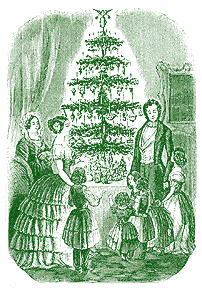
save the date! From 2-4pm on Saturday Dec. 9, Lara and Wesley and Nathan will host a Christmas party for the parish and friends. Drop by any time in that two hour span to have some cider, other goodies, and to see how we have made your pasronage our home for the holidays!
Monday, November 20, 2006
Thanksgiving Sermon: "Thanksliving"
Scriptures:
Deuteronomy 8: 7-18
2 Corinthians: 9: 6-15
What does it mean to live our thankfulness? The passage we heard from the book of Deuteronomy is the witness to a God who delights in our delight. When we receive the gifts of God with a joyful and thankful heart, God is propelled forward with us—charged up by our gratitude. When we fail to live with thanks and joyfulness in our hearts, when we instead turn inward and live in complaints or dissatisfaction, God’s activity is veiled from our eyes. In the Gospel of Matthew, Jesus says “to those who have much, much more will be given. And to those who have nothing, what they have will be taken away and given to those who have much.” This is not about material possessions, it is about living with joy and thankfulness in our hearts. When we share our thanksgiving with others, it has a way of multiplying and spreading. When we do nothing but complain and act callous with one another, we isolate ourselves and descend into “the outer darkness” of despair and lonliness. Deuteronomy tells us of the end of the journey of Israel out of exile and into the promised land. At the end of the 40 years of wandering, they come to the cusp of a new era in their collective history. These people who have been on such a journey together have known God’s provision during the time they were in the desert, they have known God’s salvation from slavery. Now God asks them to be thankful in the bounty they are about to receive. Likewise, we are at the end of a journey together. This is the second to last Sunday of the Christian year. We stand at the cusp of Advent, waiting for the bounty which God will reveal in the Birth of Christ. This is a time to pause and lift up our thanks to God.Though God leads us toward abundance and a bountiful life, the good life can cause us to forget about God and start thinking that we provide for ourselves. We have seen in the industrialized world a dramatic exodus from the Church. In parts of the world where there is much trouble and strife, the church is strong. God promises Israel a land flowing with milk and honey, but God knows that the ingredients are there for amnesia. One reason the Jews celebrate Passover every year is to prevent that amnesia. Keeping God’s commandments prevents us from forgetting about God. By living thanks, we pattern our minds and hearts to dwell in the grace of God. If we simply accept the good without giving thanks, amnesia sets in and we begin to believe in another God. We begin to believe in the God who says we deserve what we have because we have worked for it. We begin to serve that God by taking without gratitude, by spending without thought of others, by living the “looking out for #1” life. When we forget to live thanks, we forget that God is God and that we are not. God saves us from that trap by commanding us to remember—to remember who we were and the journey we have taken as a people. To remember that the bounty we share is a gift from God. IN the sharing of thanks, we remind each other of our gift. As Paul says in the second letter to the Corinthians, “the one who sows sparingly will also reap sparingly, the one who sows bountifully will also reap bountifully.” The more thanks we sow, the more thanks we will reap. If we live with a joyful and thankful heart, we will continue to live in joy. The generosity which is an outpouring of gratitude will multiply our gratitude. If we don’t feel thankful, then we probably need to give more. If we don’t feel a warm sense of gratitude when we give, we are probably too attached to our things and maybe we have the idea that we deserve what we have. Paul says, “Each of you must give as you have made up your mind, not reluctantly or under compulsion, for God loves a cheerful giver.” Thanksgiving is about Thanks and it is about Giving. Sharing our thanks together is an “overflowing of Thanksgiving to God.” ThanksLiving is making this openness to God our lifestyle, our permanent dwelling place. Thanks-Living is making our heart an altar, and bringing the light of Christ to that altar. Have you noticed that oftentimes, it is easier to generate a sense of collective victimization than collective joyfulness? When we get together with people we may not know, sometimes we bridge the gap of unfamiliarity by gathering around the things we despise. We pump ourselves up on our shared troubles or worries or whatever it is that unites us negatively. Politicians play on this human condition and build a following by talking about the negative attributes of the other candidate rather than the positive attributes of themselves. Despite what pollsters have said is a general public disdain for “mudslinging” or “attack ads,” politicians continue to utilize this form of campaigning because they know it works. Yes, it is our temptation to rally around our shared dislikes, complaints, and feelings of victimization. What would it be like to identify with one another by our thankfulness? What if, instead of uniting around our shared dislikes, we instead found a common bond in our shared gratitude? This, I think is the community we are called to form under the banner, “Christianity.” When we live with thankfulness in our hearts and share that thankfulness with others, the things we have to be thankful for seem to multiply. Let’s take a moment to experiment with this. We’re a community of believers, and I would hope that we have a lot to be thankful for, yet it is sometimes easier to think about our prayers of need or struggles than our prayers of thanksgiving. Let me be the first to share with you some things I praise God for.I’m thankful for…….My wife Lara being a supportive and challenging partner in marriage. My son Wesley living with such delight and wonder at the world—it helps me live with delight and wonder. My sister being a bold person who is seeking a career which she will be passionate about. I’m thankful for my parents inspiring me to follow my heart. For watching football games with my son. I’m thankful for green hills turning red and gold and orange and yellow. For barbecuing on my front porch. For the faithful witness of a great co-worker. For a community of believers who have been receptive to things I say in this pulpit that stir my heart—what a blessing it is to hear that something you have said has made a difference to someone else! Take a moment and write some things you’re thankful for. Try to be specific about it. Instead of just saying, “I’m thankful for my wife.” Write on that card what it is that makes you so thankful for your wife. Is it her cooking? What is it about her cooking? Do you like the way she puts more chocolate chips in cookies than the recipe calls for? Well write that! Don’t just write, “I’m thankful for deer hunting season,” what is it about deer hunting season that you love? Spending time with family in the woods? Being away from church on Sundays? Write that! Try to be as particular as you can.Now, because we are a body, because we are a congregation who can be strengthened by shared joys, I want you to find someone here in the congregation you’d like to give that card to. Thanksgiving is a sharing. We as a community of believers have to get real with each other and share our gratitude with one another. This is “living” thanks. We share our praise and thanksgiving together as a body of believers. Because the Living Christ is here among us when we gather together, our shared thanks in that Living Christ elevates our thanksgiving to God’s holy throne. Share with someone you may have known for less than 5 years. Share with someone you may have had a disagreement with in the past. It is sharing our thanks together which unites us, so let’s strengthen that “blessed tie that binds.” Take the next couple minutes to stand up and find someone to share your list with. Don’t take a list from more than one person, I want everyone here to have a list from someone else. As you sit around the Thanksgiving table this week with your friends and family, I hope that you might take a moment to really be stop and consider what we are doing. We’re not just stuffing ourselves silly with turkey and scalloped potatoes and green bean casserole. We’re not just napping on the couch while NFL teams clash in throwback uniforms. We are carrying on a great tradition. Gathering around the table of fellowship with our family is a true act of worship. God opens to us the treasure of gratitude. By giving thanks, by living thanks, we glorify God and we enhance our own existence. We can either toot our own horn by going through life without a grateful heart, or we can listen to the symphony of thanksgiving. God does not just demand thankfulness because God has a fragile ego. God invites us into a dance by setting a pattern of gratitude.


Sunday, November 12, 2006
Nov. 12 Sermon--Two Pennies
Scriptures:
1 Kings 17: 8-16
Mark 12: 38-44
For some reason, this scripture reminds me of the time when I was in high school Sunday school class in Arkadelphia, when my teacher, Rex Holbrook, opened up his wallet and distributed all he had among each of us youth. I remember looking around the table in wide eyed disbelief as we at first were dumbfounded, then trying to protest. “No, no, you can’t do that!” Rex, I think I remember, had been teaching us about the parable of the talents—when the landowner distributed his wealth among the workers and promised to return. What I remember taking away from that lesson was that all that we are given is a gift, and we have the honor and privilege to share those gifts with others.
I Googled Rex to find out how he was doing. In my Google results, I came across a newsletter that said that his dad had recently passed away in August. He was still living in Arkadelphia, so I found his number and decided to give him a call. I hadn’t talked to him in 10 or more years!
I told him that the lesson he had taught that day had made a deep imprint on me, and that I would be sharing it in a sermon this week. He was delighted to hear from me and remarked that he had just been thinking the other day that most of us (his students) were now the age that he had been when he taught that class.
So why did this scripture remind me of that particular Sunday school lesson more than 10 years ago? I suppose it did because I remember the look in Rex’s eye when he handed me and every other student in that class of 7 or 10 youth a $20 bill. It was a look of complete trust and hope. It was unsettling—especially to a teenager! I imagine it was the same look in the eyes of the widows whom we heard about in today’s scriptures.
The widow that gives hospitality to Elijah and the widow whom Jesus observes giving money to the temple are linked across the centuries—both give what little they have and are blessed by prophets—both also are connected from across the millennia to us today.
Widows in the times of Elijah later in Jesus’ time had a difficult situation—they were reliant upon male children or brothers or other family members for their provision. This is why the widow who feeds Elijah was justifiably concerned that her hospitality of Elijah not interfere with her provision for her son. That son was the key to the survival of the whole family. Some Biblical scholars have reckoned that the reason Jesus says the scribes “devoured widows homes” was because there were social customs in which the scribes were charged with providing for the widows, or held a widow’s belongings in trust if there were no other males to look after finances. In any case, it is safe to say that widows had nothing, especially in comparison to the rich who gave large donations to the temple treasury. The priests and scribes used the temple treasury to provide for a lavish lifestyle, while the widows suffered.
The end result is that the temple authorities came to surround themselves in comfort and distractions and the widow who gave everything was completely vulnerable. It wasn’t as though the two pittance made the difference to the woman between poverty and sustenance though, there was essentially no difference between the widow keeping the two pennies and putting them in the treasury. The difference was in the posture of giving versus the posture of hoarding.
You see, Jesus’ lesson is that in the act of giving, the widow puts her complete trust in God’s mercy and grace. Really, it makes no difference if it is 2 pennies or 2 million pennies—all will eventually disintegrate into dust—our souls on the other hand, will be gathered in the treasury of heaven or the treasury of hell! Our spiritual selves are affected by giving—when we turn things over to the will and purpose of God, we place ourselves in the complete trust of God. If we grasp, hold on to, become preoccupied with money or anything other than God—we will sink.
Picture a great sailboat loaded down with treasure—when the boat needs to get somewhere quick and there is not much of a breeze, what does the captain shout? Lighten the load! Treasure overboard! It is then that the wind is able to pull the ship along where the captain wants to go. Belongings weigh us down, they create concerns. This is why Jesus says, “do not be concerned with what you will wear, or what you will eat.” Consider the ravens—they neither toil nor reap, but are fed by their father in Heaven. Consider the lilies; they neither spin nor clothe themselves, yet even Solomon in all his splendor could not match the beauty of one of them.
This is a difficult lesson for us to hear! It is hard for us to give up our belongings—they are comfortable, they bring us security and safety. Perhaps one way to reorient ourselves and our lives is to cultivate a different attitude toward our belongings.
What I hear most often from those who have lost their homes in a fire is that they find out that all they really cared about were the photo albums. What does that tell us?! It says to me that even though we spend so much time and stress and effort worrying about money and possessions, deep down in our heart of hearts what we are really concerned about is relationship! Lord, give us a sense of these priorities in our daily lives! God, our Father and our friend, help us value our relationship with you as much as you value it!
Mary Anderson, a pastor in Columbia, SC wrote in an article in Christian Century, “The widow wasn't dependent on her money or her status in life; she had none of these. She was dependent on God and her neighbor for everything. She didn't have two feet to stand on, she didn't have bootstraps to pull up. She was totally dependent—and that's what Jesus pulls out of her story like a pearl of great price. This is what we are to be like before God—dependent on nothing but the grace of God. We are to be people without any resources except the riches of God's mercy.
The issue is not how much we have in the bank, but what that money is for us. Is it our heart, our security, our source of power, or is it a tool for our stewardship? Are we dependent on our money to give us all we want and need from life, or are we dependent on God to make us rich? If you follow me, Jesus teaches, you will walk in the way of the widow. Live lives that show in everything you do and say that you are dependent on God for all you have and all you are.”
This relationship with God is the model that Jesus set before us with his life. It is the radical trust, hope, and attention on God’s presence that make up a life well lived. When our lives are crowded with things—distractions that tend to displace our relationship with God to the sidelines, Jesus says, “it becomes harder to enter the kingdom of God than it is for a camel to walk through the eye of a needle.” We need to pay attention to the heroes of faith that Jesus points out, and whom are pointed to in the scriptures of our spiritual ancestors. The widows in both of these stories lived Christ like lives—they put their trust in God instead of in their material possessions. They gave when common sense might have told them to hoard. Jesus, too, gave when common sense would have told him to keep for himself. Paul tells the Phillipeans that “though he was in the form of God, did not regard equality with God as something to be exploited, 7but emptied himself, taking the form of a slave, being born in human likeness. And being found in human form, 8he humbled himself and became obedient to the point of death— even death on a cross. 9Therefore God also highly exalted him and gave him the name that is above every name, 10so that at the name of Jesus every knee should bend, in heaven and on earth and under the earth, 11and every tongue should confess that Jesus Christ is Lord, to the glory of God the Father.”
Here after all, was a man who was literally infused with the one and only God, but who came to earth as a poor man, a rambling healer who had nothing to call his own, nowhere to rest his head or to rest. How he must’ve felt like that widow when he was nailed to the cross—hoping this somewhat anonymous life given in totality would have some bearing on the kingdom. We are here because he did—and we look to him to guide our way. In the name of the Father, and of the Son, and of the Holy Spirit, Amen.
Tuesday, October 31, 2006


Sunday, October 29, 2006
All Saints day sermon
Scriptures
Isaiah 25: 6-9
John 11: 32-44
Our scriptures today are wonderful and complex. In our Gospel lesson we heard of Jesus’ most significant miracle because he demonstrated his power over death itself. This miracle was the raising of Lazarus. When I think of this scripture, I have in my mind the images from a film that has nurtured my faith—so I’d like to share those images with you. They come from a film that stirred up a lot of controversy and in turn was overlooked by much of the Christian community: The Last Temptation of Christ.
………………….
There are several symbolic acts in this scene that I think are very powerful testimonies of Christ’s identity for us as the church. They are powerful because like the rest of the novel and the film adaptation, they speak powerfully to the humanness of our savior Jesus Christ. First, Jesus stands at the entrance to the tomb and thrusts his hands through the invisible barrier between the outside of the tomb, where living is done, and the inside of the tomb—the domain of death. It is a powerful visual symbol for us for the identity of Christ who defeats death. He has set the stage for what follows—a description of how death is defeated by Christ. After Jesus issues his command into the tomb, first a whisper, then appealing to the prophets and heroes of his faith, then finally with a command coming from his own heart, he kneels in prayer at the tomb for what seems to be a while.
He is startled when the rotting hand of Lazarus reaches up for him. Pensive as he contemplates the magnitude of his actions, Jesus then reaches his hand into the tomb. Death’s hand at first re-acquaints itself with the living, then with desperation grasps hold and pulls Jesus into the tomb with him. For me, these are powerful and imaginative additions to the story we have in our scriptures. They speak to Jesus’ identity because they describe for us how Jesus came to defeat death for all of us.
God, in Jesus Christ, defeated death by taking it on himself. By being pulled into the tomb to experience all that we experience….and then—embracing us even still. Did you notice that? Instead of turning away in fear and repulsion to the corpse that is pulling him in, Jesus embraces Lazarus in the tomb and pulls him back into the living! Jesus gives us new life because Jesus embraces us and pulls us out of our tombs and into life again. In life and in death and in life beyond death, we never leave the loving embrace of our savior.
Fortunately for us Methodists, most of the images of the life to come in the Scriptures are feasts. God knows we Methodists like to eat! Isaiah paints the picture of rich food, well aged wines—white and red! And rich food filled with marrow—YUM! As we all sit at the table with the rest of the human family, God provides the dinner entertainment—a great shroud or sheet symbolizes our death—it is as if the table is set on it as the tablecloth. Like a magician, God strips the tablecloth from under the feast without a glass of that well aged wine spilling on the table. Then, he takes the shroud and swallows it. We all applaud. He wipes away every tear and fills our hearts with gladness—he wipes disgrace from the ends of the earth.
This week we celebrate the continual life of those saints who have gone before us. It is All Saint’s Day this week. The first of November was in the old calendar the beginning of the year. The harvest came to completion and great feasts were held. During these feasts, those who had passed away in the previous year were uplifted, celebrated, and preserved in memory.
It is also in the tradition of this church a youth Sunday, when young people are lifted up, celebrated, and involved in the worship leadership of this congregation. It occurred to me that it would be greatly symbolic for our youth to lead the congregation in its remembrance of its departed. It is symbolic to me because God holds us as precious in our infancy, in the early stages of our walk of faith, all through our lives to our deaths and finally beyond our death. God’s power and presence is made most manifest when we worship as a family—old and young, vibrant and tired. We worship a God who sets a feast for all. And our worship is the participation in that feast of life.
During our great thanksgiving today, we will lift up the names of those who have gone on to the next life during this past year. After each name is read, the bell will toll. A bell makes sound because it is hollow in the middle. The hammer strikes the inside of the bell, and then the sound reverberates out of the hollow opening, emitting vibrations in the air that continue to issue forth even after the hammer has struck.
Our lives have the same effect on the world around us. If our whole lives are symbolized by that brief strike of the hammer against the bell, then the meaning and influence that our lives bear on those around us echoes on long after that original strike of the hammer. The Good News of our Scriptures is that in the ear of God, that ringing never stops. We are loved to the extent that we are resurrected into a new life in the presence of our Maker.
Imagine a Savior who loves us so much that he embraces us even if we are repulsive to the world around us. Imagine that he personally pulls every one of us out of our tombs of self-doubt and sin and death and into new life in the light. Imagine that God desires our fellowship like a great dinner host that gathers all at a common table. Can you see those pictures? You don’t have to imagine—because that is what God is—that is indeed what Christ has done for us, and that is the reality that we celebrate as we come to the table of communion.
Because the reverberations of life are still fresh in our ears, and we are shaped not only by those who are members of this congregation but also those whom we know in other walks of life, I would invite you to name aloud others who have passed away in the recent past after we name aloud those who have touched your lives as well.
Wednesday, October 25, 2006
Worldwide
With the recent "hit" our website got in Egypt, we have now been accessed on every continent in the world. Want to see for yourself? Scroll down to the counter at the very bottom of the page, click it, then look around at our "viewer stats" on the sitemeter. You can view our visitors by world map by clicking "world map" on the left sidebar, then clicking "last 100" in order to see where our last 100 viewers accessed the site from. You can also view "by location" to see a list of all the places our website has been accessed. Most exciting to me is not that we have been looked at worldwide, but the frequency of use in Oklahoma. I'm glad you're finding this site useful!
Monday, October 23, 2006
Forklifters for Jesus
In case you or someone you know is interested, a school for forklift certification at the Muskogee Indian Capital Vo-Tech will be running for 4 days. Enrollment is $32.50 and opens Oct 23rd. Classes are Monday Oct. 30th through Thursday, Nov. 2nd from 5:30 to 9:30. (During the Camp Gruber Hurricane Katrina period last fall, it is my understanding they had a hard time finding people certified to drive forklifts.)
(A message from your DS)
(A message from your DS)
Scripture for this Sunday
This Sunday we will celebrate All Saints day a few days early. We will also celebrate communion on this day. Instead of the normal lectionary readings, we will be using the lectionary readings for All Saint's Day. You can find them by clicking the Bible Study Link at the left, then clicking on "All Saint's Day."
The Big Fun Thing--Youth Event in Stillwater
Hey Youth!
The event is from 2:30-7pm on Sunday. We can be fashionably late if we leave here at 1pm. That'll give you time to get a bite to eat before leaving. Bring 8 bucks for cover charge. It'll be great, so join us and bring a friend. If you haven't already let me know you're coming, attach a comment below.
The event is from 2:30-7pm on Sunday. We can be fashionably late if we leave here at 1pm. That'll give you time to get a bite to eat before leaving. Bring 8 bucks for cover charge. It'll be great, so join us and bring a friend. If you haven't already let me know you're coming, attach a comment below.
Sunday, October 22, 2006
Job 38: 1-7, 34-41
Psalm 104
You might have picked up on this from some of my other sermons—my favorite sanctuary is the outdoors. I don’t think I am that uncommon when it comes to this. I have spoken to many people who have a keen sense of God’s presence and power when they are attentive to nature. St. Augustine, one of the most influential Christians on our religion in all of history, wrote, “Some people, in order to discover god, read books. But there is a great book: the very appearance of created things. Look above you! Look below you! Note it. Read it. God, whom you want to discover, never wrote that book with ink. Instead he set before your eyes the things that he had made. Can you ask for a louder voice than that?”
I have had many great encounters with God in nature. My experiences have led me to a great interest and activity in the bridge between theology and ecology. When I was in seminary, I received a grant that allowed me to study and experience faith communities around the country that were involved in some kind of ethic or worship practice that incorporated the natural world around them.
I used some of the grant to travel to central Wyoming for a two week workshop retreat in the Wind River Range of mountains along a glacial lake called “Ring Lake Ranch.” The two weeks were spent horseback riding at 7 and 8 thousand feet, hiking, exploring petraglyphs, and attending lessons by a man named Belden Lane who wrote a book called Landscapes of the Sacred and The Solace of Fierce Landscapes.
On one occasion, I remember sitting in a little cleft in the rock that I had found that overlooked the glacial lake. The glacial lake had been formed thousands of years ago as the glacier had cut through the valley and left deposits of water sitting along its path. All of the lakes were connected by little streams, and the locals called them “string of pearls” lakes because of their beauty. My vantage point overlooked the lake and up the valley to the remains of the glacier that still covered the tops of some 10,000 foot mountains a mile or two up the valley.
As I took in the scene, I started to notice that the water would ripple in front of me, and then I would feel the cool breeze of the wind coming down the valley. As I focused closer, I began to notice that the lodgepole pines on the sides of the mountains in front of me also whistled and sang as the wind passed through their needles, and then when I turned to look further down the valley I could see the wind passing further and further along the valley.
In the Scriptures, the Holy Spirit is called Ruach, and it means “breath,” or “wind.” In today’s Psalm, the songwriter says of God, “You ride on the wings of the wind, you make the winds your messengers.” On this day, that scripture was burning on my heart. I felt God’s presence and power. The message that God gave me was, “I created all of this—all of this worships in its own way. The trees, the water respond to my breath—Do you?”
How do we respond? As a youth minister in Bartlesville, I planned and led two “environmental mission trips,” and while I was in seminary I created a student group called “Community of Faith for Healing the Earth.” The Psalmist also observes the breath of God animating all of life on Earth. The psalmist writes, “when you send forth your breath, they are created…when you take away your breath, they die and return to their dust.” Our scriptures tell us that what gives us life is the spirit, the breath of God. When I hear this, it causes me to want to do so much more with my life. It makes me want to live my life as praise to God. As the Psalmist says, “I will sing to the Lord as long as I live; I will sing praise to my God while I have being.”
The authors of the Bible are certainly attuned to God’s presence in and through the world around us. The Psalmist this morning paints imagery of God entwined with creation. We are told that the wind is God’s wings, that the sunlight is God’s garment. The world around us is infused with God.
I imagine that many of you who hunt and enjoy recreation in the outdoors have witnessed moments of great peace and inspiration as the Psalmist records. Many of the hunters I know are interested in the process of being outdoors and observing the world around us as much or more so than the actual felling of an animal.
An appropriate response to God’s grandeur which is observable in the overwhelming expanse of the world and universe around us is humility. Haven’t you ever looked up at the stars with the understanding that the light you observe now was actually emitted thousands and even millions of years ago and simply been overwhelmed, humbled?
God responds to Job’s interrogation with a lesson in humility. Particularly offensive to God is no doubt Job’s curse of his own day of creation in the third chapter. Job is so carried away with his own misery that he curses the day of his own conception. He utters seven curses in a symbolic attempt to undo the creation of the whole universe which is also symbolized by the number seven.
God says to Job, “were you there when…?” God’s intention is to remind Job that there is a large, full world, and that God’s design and vision are utterly transcendent and mysterious. We may question God’s fairness when we suffer, but when we do we must also remember the vast size of God’s intentions. We typically behave and live in the world as if we are God’s only creation. Our depletion of natural resources and our short-sighted pursuit of material goods and gratification are indicative of our arrogance as members of Creation. If the scriptures proclaim that God can be perceived by us through the majesty of the world around us—what does it mean when we damage our environment for our own short-term gain?
While I was in Wyoming, I also took this picture…. In this picture, you may notice that the bare tree and the cloud in the sky give each other a sense of completion. When I saw this sight, it inspired in me the notion that God’s creation is interconnected in strange and mysterious ways. Ecosystems that have carefully entwined processes and delicate balance remind us of this truth.
While the vastness of God’s grandeur apparent in the night sky or Grand Canyon or the sheer power of the Pacific Ocean may easily inspire us to feel small and humble, God asks us to also be humbled by the intricacy of life. In God’s response to Job, not only does he mention the sky and mountains and leviathan, God also draws Job’s attention to the composition of mud, to the appetite of the lion cub, and his own provision for the common raven. God intends for us to respect the balance of Creation and to live as a harmonious member of creation.
Because we do worship a God who is attentive to all of His creation, and we do worship a God who charges us with the responsibility to be stewards of the Earth—I would ask us a faith community to come up with some creative ways that we can celebrate this covenant in our own community.
I have noticed that we do not have a recycling facility either in this town or in Okmulgee. Why not? Is that a need that can be addressed by the faith community, or a partnership between communities? We might also ask ourselves if the ease of use of Styrofoam is really worth the impact that these materials have on our environment. Our town is next to the Okmulgee landfill. Do we want the longest remaining evidence of our community here to be our coffee cups and plates? Our trash? In my own private estimation of easily addressable steps we could take to be better stewards of the earth—this is one that I see.
We live in a community that is easily traversed by bike or by foot. I would encourage everyone who is able to walk or bike when weather permits to church or on your daily errands or to work. I have found that you see a lot more of your community when we view it from this vantage point.
We worship God through our attention to our personal lives, our morality, our love for neighbor and those in need. We worship God through our celebration of Jesus Christ. We also worship our Creator by living as faithful stewards of the Creation. God has blessed us with unique power—the faculties of reason and skill. With these faculties and without the inspiration of God we have developed a way of life that is not sustainable because it is destructive to the world around us—destructive to our human and non-human neighbors. God gives us gifts of reason and skill, God creates us in his image with these tools—but we must be attentive to God’s word as we use these gifts. We are asked to be caretakers of the earth—our lives and the delicate balance of God’s creation depends on it! In Costa Rica, wildlife preserves contain human communities as well as wildlife because the government realizes that humans are part of the ecosystem and can be a benefit to it if they live within their niche.
How can you live as a steward of creation? How does God communicate with you through the world around you? How do we, as children of God, share our faith in God by our engagement with the ecosystem in which we live? Throughout the scriptures, we are reminded of God’s power and majesty in the beauty and intricacy of Creation. Furthermore, We are blessed with the ability to share in God’s act of creation. Let us use this ability with humility and with celebration of God’s presence in our lives. Amen!
Tuesday, October 17, 2006
Give input on new UMC website. Clink link to the side, or the stained glass pic of Jesus
UMC.org Offers Preview of New Web Site
Online Survey Solicits Consumer Feedback
NASHVILLE (October 17, 2006) United Methodist Communications is asking visitors to UMC.org, the official online ministry of The United Methodist Church, for feedback on a cutting-edge redesign of the Web site.
The home page of www.umc.org offers a sneak peek at a few of the innovative features that will be offered on the new Web site, scheduled for a full launch in early 2007. Six online surveys provide opportunities for users to offer comments and opinions for consideration before the site is finalized.
“Our goal is to make it easier for people to connect to the church and to each other through technology--to provide a digital front door to the church. Throughout the development process, we have sought to listen to what it is that users want in a website and to provide the tools, resources, and content to meet those needs,” said the Rev. Larry Hollon, chief executive of United Methodist Communications. “We want to know if we’re meeting their expectations.”
The sneak peek showcases:
Our People: Meet some of the people of The United Methodist Church and read their stories of faith
Find a Church: Reach out to seekers in your community by showcasing your primary ministries
Living Prayer Center: Send prayer requests to covenant prayer groups around the world
Spiritual Gifts: Discover your spiritual gifts using an online assessment tool
Ask InfoServ : Get your questions answered through the denomination’s official information service
Search: Quickly find the information you are looking for using the Google search device
The sneak peek offers just a sample of what’s to come over the next few months. Users can sign up for e-mail updates letting them know when new features are added.
In addition to providing feedback, local churches are asked to update and personalize individual church listings available at Find-a-Church. Users can search the database of churches by geographic location, congregation size, language and ethnicity. Local congregations can use this feature as an evangelism tool by adding details about their worship schedule and activities, words of welcome, photos of the church and pastor, membership statistics, an interactive map and driving directions, and more.
Sunday, October 15, 2006
Sermon Notes--Oct. 15, 2006. Laity Sunday
Today's sermon is not a manuscript because we didn't preach with a manuscript. Dr. Pat Edmonds and the pastor each elaborated on paragraph 220 from the Book of Discipline's section on the meaning of membership.
Sermon Texts
1 Peter 2: 1-10
Matthew 5: 13-16
All members of Christ's universal church hare called to share in the ministry which is committed to the whole church of Jesus Christ. Therefore, each member of the United Methodist Church is to be a servant of Christ on mission in the local and worldwide community. This servanthood is performed in family life, daily work, recreation and social activities, responsible citizenship, the stewardship of property and accumulated resources, the issues of corporate life, and all attitudes toward other persons. Participation in disciplined groups is an expected part of personal mission involvement. Each member is called upon to be a witness for Christ in the world, a light and a leaven in society, and a reconciler in a culture of conflict. Each member is to identify with the agony and suffering of the world and to radiate and exemplify the Christ of hope. The standards of attitude and conduct set forth in the Social Principles shall be considered as an essential resource for guiding each member of the Church in being a servant of Christ on mission.
What does this passage from the book of Discipline say to you? Comment below.
Monday, October 09, 2006
Dayspring e-card website
Here is a Christian e-card website where you can find the words to brighten someone's day. Thanks to Kim for bringing it to our attention.
Good looking website for church lay people (that's you!)

We are all called to ministry through our baptismal covenant. This sunday we celebrate laity Sunday. Click the pitcher to go to the laity website.
Sunday, October 08, 2006
Oct. 8 Sermon--Growth and Mutuality
Sermon texts
Psalm 25
Romans 12:1-8
I titled the “Pastor’s perspective” this month “Forgotten Members” They are forgotten because they have become inactive and we no longer enjoy their presence here in the church. We are called by our vows of membership to re-member them here among us. We are called to seek them out, to inquire about their lack of participation, and to usher them into renewed activity and presence here among us.
At the end of this month, we will celebrate the lives of those who have made the journey into the next life. In the act of re-membrance, we bring them close in our minds and hearts and rejoice in the fellowship that exists even after they have left us in this life.
In my article, I told you that we would focus on discipleship and the meaning of membership, and I see no better day to begin this endeavor than today—when we prepare ourselves as a church to meet this afternoon with our District Superintendent and report on the efforts we have made together in the past year to truly be the church and uphold our covenant of membership. This is the purpose of a charge conference.
In my article, I told you that we’d be presenting a list of people that we haven’t seen here in worship or in any other facet of church life in quite a while. This list isn’t generated to point out people who should be scolded or snubbed. Instead it is a list of people we should pray for, a list of people we should welcome and do our best to engage and invite so that they may be re-membered with this body of people!
Let’s take a look at what our collective church has to say about membership—The insert in your bulletin is from the Book of Discipline. I was present in Pittsburg as an observer while this book was being formed two years ago. This is the constitution of United Methodism—and you have as much authority in determining its content as I do as a clergy person. I don’t know too many people who read it though—so it is probably helpful for us to reflect on it together from time to time.
We’ll come back to this from next week—but I want to concentrate especially today on the first two paragraphs you have there on your bulletin.
The first is paragraph 218—Growth in Faithful Discipleship. It reads, “Faithful membership in the local church is essential for personal growth and for developing a deeper commitment to the will and grace of God. As members involve themselves in private and public prayer, worship, the sacraments, study, Christian action, systematic giving, and holy discipline, they grow in their appreciation of Christ, understanding of God at work in history and the natural order, and an understanding of themselves.”
What is the key word of this paragraph? I think one key phrase is “growth.” Growth in a church is not always about growing in number or in sanctuary size or in church budget. Growth also has to do with how each of you, individually, are growing personally. Are you developing a deeper commitment to the will and grace of God?
The Psalm we heard today equates reverence for the Lord with guidance on a path that we should follow. A “commitment to the will and grace of God” involves “private and public prayer, worship, the sacraments, study, Christian action, systematic giving, and holy discipline.” These disciplines make the path clearer. As we progress along the walk of faith, we grow spiritually through these practices. Speaking of growth, I noticed this book at Cokesbury and picked it up, it’s called Growing Spiritual Redwoods. The truth is, I haven’t read the book yet, but I love the title and the picture on the front, so I bought it! Hey it was only a few dollars! I had seen it before at a workshop I attended on the subject of church revitalization and new church starts, so I trust it is good. Just judging by a cursory glance at the book, I can tell that one theme is the idea that strong, visionary Christians don’t just appear out of no-where. They are grown through the nurture and vitality of a vibrant faith community.
When we live up to the vision for church membership set forth in the book of Discipline, we have good foundations for being the kind of nurturing and vibrant faith community that can raise spiritual redwoods. Look around you---who are those people who you see as “spiritual redwoods?” Who has risen above the forest to provide a vision that sees off into the distance? Who has made an impact that will be felt in the lives of this church for years to come? Who has weathered the fires and the storms that have threatened to devastate our community? We should celebrate these people.
Mutual Responsibility—Faithful discipleship includes the obligation to participate in the corporate life of the congregation with fellow members of the body of Christ. A member is bound in sacred covenant to shoulder the burdens, share the risks, and celebrate the joys of fellow members. A Christian is called to speak the truth in love, always ready to confront conflict in the spirit of forgiveness and reconciliation.”
Here is another aspect of membership that reminds me of redwood trees. Lara and I enjoyed going to the south Sierra Nevada’s and camping among the ancient, giant Sequoyah trees at about 6000 feet. The General Sherman, located in the national park there, is the largest tree in the world. At 275 feet high and 103 feet in circumference at the base, It is awe inspiring to be in that tree’s presence. It is wonderous to contemplate the age of the tree and all that has happened in human history in the 2150 years that Sherman has been alive. When our Christ walked the earth, the General Sherman was already a mature tree of 150 years.
Estimating the Sequoias impressiveness and importance by their age and size is one thing. It is certainly a hopeful sign for us to grow and develop as a member of the body of Christ in the same manner as the Sequoias. But another thing that is impressive about the Sequoias can’t even be seen when you walk among them in the park. It is under your feet.
You see, the Sequoias live only at a particular altitude and climate. At this particular altitude, the soil they grow in is only about six feet deep. Now, have you ever tried to dig a six inch hole for a six foot pole? You know what is going to happen! It will fall over. But the Sequoias have developed a way of life that allows them to exist in this depth of soil and still be the largest trees in the world. The roots, spread out along the rocky surface beneath the soil and grasp on to the roots of the neighboring trees. The trees grow in groves for their own survival. In order for the trees to stand upright and grow to such massive greatness, they must be connected, rooted to each other and mutually supportive.
These trees have learned this kind of behavior to survive in such shallow soil. Isn’t that a miracle? Now—can we learn from the Sequoyahs? Our vows of membership in this church call us toward a vow of mutual responsibility among one another. We are to “shoulder the burdens, share the risks, and celebrate the joys of fellow members.”
We are called to give each other support, to sink our roots into the shallow soil of a culture which no longer values church life, and we are to grasp on to one another at the root level! That’s what these things are that we are asked to share—roots! What is more fundamental to us than our hopes, our joys, our burdens, our risks? In order to share these things, we must be willing to divulge these things to one another. This is why ministries within the church like Griefshare and youth group and UMW and Bible study are so important. These are venues when we are invited to stretch out our roots and grasp ahold of one another.
On another level—it is also why we are asked to share our stories with one another. A church is group of people who know and are invested in each other’s spiritual stories. As a matter of record, our recent General Conference added the record of the Christian Journey into the required records that a church is asked to keep of its members.
Our hope is that as individuals within a community, there is a balance between the two ways of being. If I am in the midst of a crisis of faith—I should not be the only person in my church who knows about it. If I am joyful about a new beginning in my life—this house should know my joy. We are invested in each other. As Paul says to the Romans, “So we who are many are one body, and individually we are members of one another.”
Yet the church is not a place where we strive for conformity. In our unity, we celebrate the uniqueness and special gifts given to each individual, and we seek to foster that.
Finally, take a look at this cone. It’s not the largest cone you’ve ever seen, is it? It is not that impressive really. But, this kind of cone grows into these impressive trees that we have been speaking about. This is what you have to give as a part of the forest. Things that you say and do to give new life to this body are not always memorable or noticeable to you. But like this insignificant little cone—the Kingdom of God is like a mustard seed. We can be kingdom bearing people!
It doesn’t take gargantuan seeds to raise people with Sequoyah like faith—it simply requires persistence. It may be the contributions that you make in the life of the church that give birth to the kind of ministry that really changes lives of those around you. You have no idea what kind of power is manifested when we live with the faith that our actions make a difference in the world.
Another thing—for these little cones to do what they are intended to do, there is a key ingredient: fire. Forest fires cause these little cones to burst, and that is what leads to new life in the ground. The Sequoyah trees have fire resistant bark, and you notice that they don’t put off much foliage until the crown at the top of the tree. This is so fire can’t catch the crown on fire and harm the tree. For new life to emerge in our forest, we must allow the fire of renewal to burn among us! Many look at a the fires of renewal and are fearful. “Things are going to change!” they say. “My beloved church won’t be the same!” Changes may come and people run away. But if we are to be the forest that God wants us to be. If we are to be a vibrant, living church, we must allow for the fires to renew the forest and make way for new life to take hold.
Have faith! Trust that God will bring the Vision of the Kingdom to our hearts and that the Body of Christ among us will bring that Kingdom into being. We have a part to play! Have faith! Amen.
Monday, October 02, 2006
Oct. 1 Sermon. World Communion Sunday. With us or against us?
Sermon Texts:
Numbers 11: 4-6, 10-16, 24-29
Mark 9: 38-50
Today is World Communion Sunday. It is a yearly celebration of what we hold in common with Christians of all denominations around the globe. The denominations of Christianity are very different, yet we all confess one God, we all find God incarnate in Jesus Christ, and we all believe the Holy Spirit is present with us, especially in the act of Holy Communion, which we all celebrate. Some of us celebrate more often than others, but it is the common meal that we recognize together, at least on one day out of the year.
World communion Sunday began in the 1930’s by the Presbyterian church as a testament to the times. As Nazi power grew in Europe and that continent was embroiled in the birth of another war that would eventually engulf the whole world, Christian denominations came together to provide an alternative vision for the world. During the 40’s, World Communion Sunday was adopted by the Methodist church and by other denominations involved in the Ecumenical movement as a symbol of solidarity amidst our worldly divisions. Gathering around the table as Christians, instead of as Methodists, or Baptists, or Episcopalians, became a hope for the future—a hope that we one day will be enfolded back into the family of Christ that knows no boundaries or divisions.
In this day and age, with the Ecumenical movement on a budgetary respirator of sorts, and with its influence waning in favor of more divisive Christian voices, what does World Communion mean to us today? How many other churches in Morris are observing World Communion Sunday? Do you know? I don’t! Our community doesn’t have a ministerial alliance that would plan a community wide celebration like this. We now have a cross-denominational youth partnership, and we have worked with other churches on projects in the community, but we are certainly in a different mindset than what might have been envisioned by the pioneers of the World Communion Sunday movement.
Today’s scriptures focus us on two similar accounts of the power of God manifested in those whom the “in-crowd” considered “unworthy.” First we heard about Eldad and Medad. Moses has come down from Sinai to find the Exodus crowd up in arms about not getting any meat. Moses passes the complaint on to God, and adds—“IF you’re going to keep putting me through this kind of torture, just strike me dead now!” God responds that he will indeed provide meat: In fact, in what I think is evidence of God’s sense of humor, God tells Moses to pass on the word for the people to prepare themselves for not just a day of meat, or a week, but a whole month when they shall eat nothing but meat. God uses the phrase—“They will eat meat until it is coming out of their nostrils!” Perhaps God is getting a little frustrated with these whiners as well! I can just see God and Moses in the front seat of a station wagon, with all the people of Israel in the back—“Are we there yet?”
Anyhow, as you heard, God gives Moses the miracle of delegation and asks him to bring 70 leaders to receive some of the “Spirit” that is on him. 68 show up, and are given the Spirit and momentarily lapse into some ecstatic prophecy. When they all go home they notice that two who didn’t make it to the meeting (but were supposed to) are prophecying in the camp, while the rest of the elders stopped while they were still around the tabernacle. Make them stop, Moses! They complain. “If only all God’s people would be made prophets!” Moses says.
The same kind of situation happens with Jesus’ crew. While Jesus is up on a mountain, his disciples are trying to heal people and are unsuccessful. Jesus comes down and, much like Moses, complains to God—“How much longer am I going to be stuck down here among these faithless people!” After Jesus heals those people that the disciples were trying in vain to heal, John comes back to camp with his chest stuck out—“Jesus, I saw some people casting out demons in your name, and I told them to stop because they weren’t one of us!”
The disciples had seen a man casting out demons in Jesus' name; and because he did not follow them, they tried to stop him. More about this strange exorcist is not told us. It may even be that the name "Jesus" was nothing more to him than a magical formula that worked miracles. But if so, it doesn't seem to have been this that the disciples objected to. The problem, in their eyes, was simply that he wasn't one of them, and they were jealous for their rights and privileges.
You may remember that, as the story has come down to us, the disciples had just been debating that most momentous of all theological questions: Which of us is the greatest? They had rank, privilege and exclusive rights on their minds.
High fives are passed among the disciples. “John, you laid the smack down!” his brother James exclaims. “Wait just a minute,” comes a voice from the corner. Jesus has moved outside the circle of self-congratulations. “If they are using my name to cast out demons, they’re not speaking ill of me! Whoever is not against us is for us!”
Jesus, in this story at least, is speaking of an inclusiveness that his disciples don’t understand quite yet. This passage is in marked contrast to what later comes from Jesus’ mouth in Matthew 12:30 and Luke 11:23: “He who is not with me is against me.” George Bush picked up on this last saying when he was speaking about attacking Afghanistan in November of 2001. I wonder what the world would look like if we adopted Mark’s version of the saying.
Luke actually makes room for both sayings in his Gospel. Also in Luke 9:49-50. Most commentaries point out the seemingly obvious contradiction between these two lines of thinking: but I read one article that seems more compelling to me. B.A. Gerrish, a scholar at Union Seminary in Richmond, VA writes that “The first, "Whoever is not against us is for us," calls for generosity in our estimate of others; the second, "Whoever is not with me is against me," calls for honesty in testing ourselves. By the one, we accept the profession of others; by the other, we try our own profession. One says, "Judge not"; the other says, "Examine yourself."
Gerrish continues, “Why was it, in particular, that the disciples wanted to stop that other man? Not, apparently, because they were greatly worried about his loyalty to their Master, but because he wasn't one of them. And if that is so, then was it his profession of Christ's name that was in question, or theirs?
John told the Master, perhaps expecting to be praised, that he and his friends had stopped the man from casting out demons in Jesus' name; and Jesus replied, "Whoever is not against us is for us." But he might just as well have said: John, are you really with me? Or is there something you value more than loyalty to me? Are you more concerned for your group than for my name? He said: "whoever is not against us is for us." Might he not just as well have said, "John, whoever is not with me is against me"?
And so world communion Sunday reminds us how futile and perhaps how dangerous it is to take the words of Jesus, “either you are with me or you are against me,” and apply it to anything other than our own commitment to Christ. It is not a measuring rod to hold up to others. Christ gave us a different saying for that—“if you are not against us, then you are for us.” With how the world has changed since 2001 as well, I would venture to say that it is also not a good statement of foreign policy. I believe Jesus would have agreed much more with Abraham Lincoln’s question of national self-examination when he said, “I do not pray that God is on our side, but that we are on God’s side.”
When we gather around this table to have fellowship together in remembrance of Jesus’ life and love for us, we can be assured we are on God’s side. When we confess our sins together and forgive one another, we can be assured that we are on God’s side. When we accept God’s work in the outsider—the person on the margins: we can be assured that we are on God’s side. If we draw a boundary line between “us” and “them,” we draw a boundary between “us” and God.
Gerrish concluded his article by writing, “As one of my favorite theologians, Friedrich Schleiermacher, wrote more than a century and a half ago: "All who start from the living word of the Saviour, and from living faith in him, stand on the same ground with us; and there can never be a reason for us to withdraw from fellowship with them." It has taken Christians a very long time to learn that lesson. And perhaps now we can take a second look at our many traditions and ask, not "Which of us is right?" but, "Have they seen something in their encounter with the Lord which we have missed in ours, or not seen so clearly?"
Sunday, September 24, 2006

September 24 Sermon--Who's the Greatest?
Sermon Texts: By the way, if you click on the sermon texts, it will take you to the scripture online.
James 3:13 - 4:8
Mark 9: 30-37
First and last, last and first. It’s never really mattered to me. You see—my name is Michael Nathan Mattox. Yes—I have always been in the middle of the line. I’m sure you’ve all experienced the line I speak of—the line to recess or lunch. Teachers would always line us up in alphabetical order by our last name. Just so the Zimmermans and the Watsons and the Yandells wouldn’t be completely scarred by a childhood of always being last though, sometimes the teachers would get us into line for recess or lunch from the end of the alphabet to the front. That put all the Adamses and Barkers in their place, didn’t it! It was if the words of Jesus came alive on those rare occasions when we’d line up in reverse order. “The last shall be first and the first shall be last.” I used to see it as my job as preacher’s kid to remind the kids in line of that bit of wisdom. But the teachers never thought of the big chunk of us in the middle. Never did we line up from the middle to the first and last. I suppose some of the time they’d try to mix us up by making us line up by our given name—but it didn’t make any difference to me. What does it mean to be a servant? What does it mean to be great? How can the last be first and the first last? What does it mean to welcome the children in our midst? How does one gain wisdom? These are some of the questions put forth by today’s scriptures. I can just see the scenario play out in my head. Jesus has just tried to explain the nature of his mission here on earth. The Son of Man must be betrayed and crucified. The 12 are thick headed about it—they don’t understand—they don’t WANT to understand. Instead, they are caught up in the glory of being one of the chosen few. Jesus is walking with them through Galilee, familiar turf where the disciples probably feel safe and glad to be back home. Their excitement about their time roaming around the countryside as Jesus’ posse spills over into gloating. Jesus overhears something. He rolls his eyes, impervious to their shallowness and ignorance. “What is it that you’re arguing about?” The look on his face says he knows but he wants them to admit it. They hang their heads--silent. I see the bald spot on top of Peter’s curly head as he carefully studies the dirt on the floor. They don’t want to admit the fact that they were arguing about who was the greatest. Arguing about the greatest and perhaps who it is that will take over as the leader after Jesus is betrayed and crucified just like he said he would be. They don’t really get what Jesus is saying, anyway. Jesus sits them down and gives them a little lesson. A child, a little girl, has been pestering the group for a few minutes now, trying to find some company. He takes her and sits her in his lap. “You welcome her and you welcome me. You welcome me and you welcome God.” There it is, as simple as that. “You think you’re great because you were hand-picked by me? Well, I am manifest in everything that you would call lowly. I’m that little girl you wouldn’t give two thoughts, I’m a housefly buzzing around your face. What I have to say isn’t for this world and its idea of greatness—I’ve come to turn this world upside down. I’m here to proclaim God’s favor for the poor, the prisoners, and the oppressed. I’m here to take my throne in Jerusalem on a donkey. My throne will be the executioner’s cross.” The question of “Who’s the greatest” occupies a lot of our time here on earth unfortunately. The simple way that Mark explains the disciple’s argument makes the discussion sound petty and beneath us, but we probably know deep down that the argument involves all of us. James says in his letter, “For where there is envy and selfish ambition, there will also be disorder and wickedness of every kind. 17But the wisdom from above is first pure, then peaceable, gentle, willing to yield, full of mercy and good fruits, without a trace of partiality or hypocrisy. 18And a harvest of righteousness is sown in peace for those who make peace.”Envy and selfish ambition—in some circles, these traits are considered admirable. “It’s a dog eat dog world!” “Look out for #1!” “IF you don’t get ahead, you’ll be left behind!” We call it “competitiveness.” Envy and Selfish ambition are glamorized on television and in our culture. Those who put others first are fools, or saints. We hold up people like Mother Theresa when asked to think of someone who lived their life putting others first. We fail to recognize that putting others first is and can be a daily activity carried out by regular old disciples like you and me. It doesn’t have to be left to the saints and the naïve dreamers and patron saints of lost causes. Jesus has a strange idea of greatness doesn’t he? He believes it involves welcoming—welcoming those we typically ignore. He uses children as an example. Children may seem immature to many of us, but they score high points in Jesus’ book. The culture of the time regarded children as fairly worthless in comparison to Rabbis. Rabbis liked to converse with other Rabbis—to hammer out the finer points of the Law with those educated enough to follow the conversation enough without a lot of extra explanation. Jesus was a strange kind of Rabbi. He preferred the company of children to other Rabbis. He hammered out the finest point of the law by putting things in terms that children could understand. Instead of behaving as though the children couldn’t understand the law, Jesus complained that it was the Rabbis who couldn’t understand. A key ingredient to “getting it” in the mind of Jesus is the act of welcoming. Have you ever been truly welcomed? What does it feel like to be welcomed? I believe there is a connection between welcoming and serving. Have you ever been truly served? I think the root of serving another and welcoming another is in the approach we have to the person we are welcoming and serving. If you approach another person, even a child, as possessing sacred worth, you see that the Sacred is in that person. This is why Jesus says, “IF you welcome a little child, you welcome me and God through me.” True service and welcome does not amount to how much sweat pours out of skin as we diligently work to make things better for someone else. True welcoming does not amount to how clean our home is and ready for others to come and stay with us. These kinds of behaviors, though they can be genuine, can also be a by-product of our quest to prove “Who’s the greatest.” Instead, true welcoming and true service grows out of a condition of the heart. It’s a condition that holds all of God’s creation as being valued by the Creator. It is “drawing near to God” in the words of James. Welcoming and serving become conduits of God’s grace if we draw near to God in our heart. When I think of this scripture, I think of one of my childhood Sunday school teachers at Sequoia United Methodist Church in Fayetteville, Mrs. Dorothy Lindquist. Mrs. Lindquist was a school teacher in Minnesota before retiring in Fayetteville. She died a couple of years ago in her mid-90’s. When I was a pupil of hers (she always called us her pupils) she was in her 80s and recently widowed. Mrs. Lindquist was a traveler—in fact she traveled on every continent, and when she did she always thought of her Sunday school class. I remember how we always used to gather around the Sunday school table and gawk at the coins she brought from far away places. Then, to our astonishment, she would invite us to choose a coin to take with us—our very own. Mrs. Lindquist didn’t just buy our affection with foreign coins and bills—she cared for us. She taught us the stories of the Bible, and we knew that we were always welcome in her presence. Children would sit close to her in the worship service, and she’d put her bony arm around us. She valued us because she knew that God valued us, and because she believed that about us, we kids learned to understand that about ourselves. She enabled God’s love by welcoming and serving. Her wisdom and experience might have been highly valued by some of the other adults in the church—but she chose to share her wisdom and her experience with the little children first. Jesus was a lot like Dorothy Lindquist. Jerry Goebel writes, “Jesus didn’t have to set up a “photo-op,” like some politician, chasing down a child and wresting it from some passer-by, nor was there any struggle to hold the child in his lap once he reached for him or her. A child was a touch away from Jesus; a child came gleefully onto his lap and there felt as warm and protected as a kitten balled in her mother’s fur. Who is this God of ours that his very son would be found among children who felt so close to Jesus that his touch would be familial?” When you leave today, take a look at that picture that hangs on the wall opposite the sanctuary. I love that this church has the picture of Christ blessing the children in our fellowship hall. It says so much about the God we worship. Goebel writes, “Our God passionately loves his creation. God’s love pours out like a waterfall plunging unquestionably over the abyss. At the core of that love is not the fittest, not the greatest, but the weakest, the most vulnerable. The fact that God’s son, the Prince of the Universe, makes this statement with an anonymous child in his lap is evidence for where our Lord’s heart resides. The child is anonymous to history but not to Jesus. The symbolism of this act will always stand as one of the greatest indications of God’s true character. Nestled in the lap of salvation, wrapped in the arms of infinite love, how can we ever doubt God’s intent to love his people back to wholeness?”When we are motivated to love others because God loves and values them, we are living and loving as God intends. What kind of a person do children love? That is the kind of person that Jesus was and that is the kind of person he called “the greatest.” That is the kind of person who resembles our God.At the end of his article, Goebel asks, “What kind of character must one foster to be loved by the littlest ones? What kind of traits are we to engender to become like Jesus? Should we strive to become smarter, richer, tougher, and more practical? Or should we instead strive to be ever more compassionate, available, vulnerable and extravagant in love? To become the greatest, we must become the one in whom the least little child would find comfort and love.”
Monday, September 11, 2006
Sept. 10 Sermon, When the Gospel Goes to the Dogs
Sermon Texts:
James 2: 1-17
Mark 7: 24-37
“When the Gospel Goes to the Dogs”
I’m sure many of you own dogs. If they are inside dogs, they no doubt know where to go when it is dinner time. There may be a “rule” not to feed Ginger during dinner, but somehow or other, these animals seem to know how to get a good scrap or two out of us. Our family dog in Little Rock would just as soon eat the napkins that we use at dinner as actual scraps. I don’t know if she has lost a few marbles, or what, but she LOVES eating napkins. It doesn’t matter if it’s been used or not. In fact, my parents have to put trash cans in strategic locations so that she doesn’t eat every paper product that finds its way into the trash. “Crazy Ginger” loves begging for food at the table, and to my mother’s chagrin, Dad, Haley, and I usually indulge her.
Our cats on the other hand, aren’t content to sit under the table. They believe their rightful spot is in a chair sitting at the table, eyeing we who sit and eat there, or better yet, getting up onto the table and sniffing at our plates, deciding if they would like to have any of what we have. This behavior usually gets a good swat or squirt of the water bottle, and a “Get down, you stupid cat!”
I wonder what Jesus would have thought of this kind of behavior out of my cats. He certainly had some ideas about the placement of children and dogs at the dinner table—but he might’ve just not been familiar with cats.
I must admit that today’s gospel reading is probably my least favorite presentation of Jesus in all the Gospels. This same story is presented in Matthew, except Matthew tells that the woman shows a little more persistence, following Jesus and the disciples, calling out in desperation—which Jesus carefully ignores, until finally he spins around and says, “It is not right to take the food from the children at the table and throw it to the dogs.” Mark allows for a little bit of wiggle room for the woman at least. He phrases Jesus’ words as “First the children must eat all they want, for it is not right to take the children’s bread and toss it to the dogs.” Either way, it seems kind of harsh. It also seems like Jesus is ignorant of the direction his movement will take. Perhaps he is changed by this encounter with this particular woman. Not only does Jesus seem unknowing of the future of his church, He seems to reveal a racism, a prejudice, that is not befitting an incarnation of the one and only God—the creator of all people and Nations.
Sometimes, it is important to pay attention to what bothers us.
It is not right to take what is given to the children and throw it to the dogs. Here, Jesus is echoing the prevailing attitude among Jews of this era to the surrounding people.
As in most cases of intense nationalistic and racial pride, the Jewish understanding of superiority was born out of centuries of experiencing the brunt and humiliation of oppression and defeat. The Egyptians could point to the pyramids and their mark on science and religion. The Greeks needed only to survey a map to note the range of their influence. The Romans poured concrete, built roads, maintained order, perfected war and trade. The Jews had no earthly cause to celebrate their culture, so they turned to a Divine reason to gird themselves up. No one really cared about the Jews. They meant nothing to anyone. They had as much influence in the Roman world as western Kansas has on the American world. They were only known as being fiercely obstinate about their religion and their God.
Jesus was formed in this culture. He probably heard jokes as a teenager about the Syro-Phonecians or the Samaritans. He knew what it meant to socialize with these kinds of folk.
Yet Mark tells us that he went 100 miles out of his way to visit the very despised region that was populated by these kinds of folks: Tyre and Sidon.
Mark tells us it is because he doesn’t want to be noticed. He wants a little Rand R. He wants a Labor Day weekend. But, it is not to be. Mark tells us that even here his fame has been spread far and wide. The woman who comes to the house to visit him knows of his power to heal—and she wants a bit of it for her daughter.
The woman is identified as a Syro-Phonecian. She is Gentile by race and she is Greek in culture. She is probably wealthy—as the Greek culture held its greatest influence over those of privilege. Tyre was known among Jews, especially Galilean Jews, as a region that oppressed the Jewish farmers of Galilee. They would buy up all the grains that were produced in Galilee, and then in times of need, would not distribute any back to the people in Galilee. Tyre was a city with a hungry appetite, and not just for the food of Galilee. Tyre’s politics and military also spread its influence far beyond its “city limits.” It was a “city state” that fed off the sweat and labor of the farming communities around it, and as most of us who live in rural settings know, that relationship benefits the cities much more than the country.
Have you ever been desperate? You have to understand that it was not like the Syro-Phoneacians thought of themselves as inferior and undeserving. They were inheritors of the great Greek culture. The Jews who were so proud and so narrow minded to worship only ONE God were considered to be about on par with the reverence and awe that we hold for hillbillies! What is evident in this text is Jesus’ hesitance to heal the woman’s daughter because of her race—but we must also assume that it took a great bridge in the cultural divide for the woman to approach Jesus in the first place. It would be akin to one of us going up into the hills in search of a hillbilly medicine woman to cure a disease that we had no other hope for.
Sometimes it is desperation that drives us to Jesus—and I hope it is broadcast loud and clear that that particular motivation to seek the healing of Christ is written of and honored in our oldest stories of our Savior. We look with shame on desperation because it flies in the face of our national and cultural religion—individualism. Desperation means we have run out of resources to do it on our own. Desperation is the ultimate foil to the ideal of Rugged Individualism. Some people die in desperation because they are too proud to reach out their hands and cry out for a Savior. We tend to honor those heroes who die for the national and cultural religion of the Holy Individual.
We are told by James that it is a holy act, a saving act, to stand up for those who are in desperate situations. James lifts up the people who are poor and naked and hungry, and points to our very real response—someone else will deal with it. I’m too busy, I’m too important, I’m too……But James says this is our encounter with God. When mercy is shown, we are judged with mercy. When no mercy is shown, no mercy is shown us in the end. James says quite succinctly, “Mercy triumphs over judgment.” What good news for us! James is saying that if we live mercifully, we will be shown mercy! It is really kind of easy to show mercy. I think it is actually quite a bit easier than judging. Judgment requires us to have all our ducks in a row so that we can be efficient judges. Sometimes, being merciful is simply an outgrowth of my failure to have my life straightened out in the first place! How can I act with judgment against someone else if I am lacking in the same area?
And yet we are tempted to act with judgment anyway aren’t we? It feels good in the short term to show judgment. Self-righteous indignation is intoxicating, no matter how ill-founded it actually is. It gives so much pleasure to have the ability to step on someone else’s neck, even when someone may have their boot on ours! It seems to take our attention away from all that and our own troubles if we can focus on someone else’s for a while—point out their wrongs and their problems. It is even more gratifying to know exactly what someone else needs to do to get things straitened out, and to tell them, or anyone else who will listen, about it. It is gratifying because it tends to get my mind off of how I don’t have things straitened out myself. But who cares about that when someone else’s problems are so glaring and obvious!
The encounter we are told of in Mark’s gospel is an encounter of mercy overcoming judgment. Jesus had judged the woman unworthy to receive his healing power. He had met her request with denigration—referring to her and her people as “dogs.” However, the woman took his own words and emptied them out—filling them instead with another meaning. She wins the argument, and because of her persistence she is awarded her request. Jesus says, “Because you have said this, your daughter is healed.” Jesus acknowledges being bested at his own style of debate. He had made a career thus far out of taking the commonly held and understood interpretation of law and custom and turning them around to broaden them to be more inclusive.
It is after this encounter with the Syro-Phonecian woman that Jesus again displays a miraculous feeding. And whereas the feeding of the 5000 was to a Jewish audience, the feeding of the 4000 is in a region that is majority non-Jewish. It is as if he is convinced that not only do the Gentiles deserve to lick up the scraps of bread under the table of Israel, but they deserve a place at the Table as well. And they deserve a space at the table because God doesn’t give scraps. God gives feasts! There is no need for anyone to stoop down below the feet of some privileged “children,” because God has enough bread for everyone in the whole world.
Perhaps Jesus was simply run down and in need of a break. We are clearly told in the scripture that he went to Tyre so he wouldn’t be noticed. After leaving Tyre, the text tells us he returned to Galilee by way of Sidon, which is north of Tyre! He went north to go south. So—perhaps he got the rest he needed there. In any case, in the very next chapter, the invigorated Jesus isn’t squabbling over the bread that should be on the children’s plate going to the dogs. He now is clear that he doesn’t need to take any bread away from the children because there is simply more bread to give! His mission and ministry expand from a cultural or regional frame of reference to a limitless frame of reference. He breaks bread again and feeds the multitudes—this time Gentiles and Jews alike.
When the Gospel went to the dogs, the Gospel expanded. Good news reached across the boundaries that we still recognize today. God broke out of the box called “Israel.” Or perhaps “Israel” simply grew that day. It grew out of the confines of a nation beset by mountains and deserts and ocean and emerged as a spiritual reality that is as broad and deep as a woman’s anguish for her suffering daughter. Mercy truly trumped judgment. And through our acts of mercy as the embodiment of Christ on earth—Israel still grows!
Monday, September 04, 2006

Sept. 3 Sermon, "Doers of the Word"
Sermon Texts:
James 1: 17-27
John 1: 1-14
The Word: This concept is a double edged sword in our traditon. The Word has several meanings—so how are we to know how to hear it when we hear it mentioned in Scripture? Sometimes when we refer to the “Word of God” we are referring to Scripture, as when I lift up the Bible after I read the scripture lesson and say, “This is the Word of God for the people of God.” Other times when we hear the “Word” of God, such as in the Gospel of John, there is a more mystical meaning that is intended.
The Word in some cases is the second part of the Trinity. It is in the beginning with God and it is God. Through it all things come into being. Here we are thrown back to the image of Creation, when God creates the world how? By speaking! The Word is literally the tangible, hearable, aspect of God that we are told comes to us in the flesh in the person of Jesus Christ. The Word is given life by the Breath—the Spirit sweeping over the watery womb of the Earth and in the incarnation of Jesus this same Spirit “covers” the watery womb of Mary. The Word cannot be articulated without the Breath, and in the same way, the One Who Speaks, the Word, and the Breath are intimately tied together in a Oneness we call the Trinity.
Today we begin looking at a new book in our scriptures. This book gives us Protestants headaches—so it is good that we do not shy away from it but instead struggle with it and grow from it. The book did not gain wide acceptance in the Western church until the 300s, and Martin Luther’s distaste for it was well known. (He called it “an epistle of straw.”) One problem with it is that it seemingly contradicts Paul’s theology of salvation best characterized in Galatians 2:16 “A person is not justified by the works of the law but through faith in Jesus Christ.” James has a different take, saying in 2:24, “You see that a person is justified by works and not by faith alone.”
The letter of James was attributed to the brother of Jesus who was the leader of the church in Jerusalem at the time of Paul’s evangelism of the Greek world.
By studying Acts and James and some of the epistles of Paul, it seems likely that James was a voice of support for Christian converts observing the laws and customs of the Jewish faith. Yet he was not as convinced as the believing Pharisees or “Judaizers” that the law should be followed to a T by converts from another culture. So, what in the mind of James is the Law? He calls it the royal law and says that it is implanted in the heart of every human. He re-iterates his brother’s teaching in his dedication to this law. The law that holds salvation is Love, and it is characterized by mercy.
James criticizes religion that is overly spiritualized and individualized. James calls “worthless” the religion of those who merely hear the word. Religion in his mind is not merely hearing, but allowing the change in oneself that results from hearing that word. James urged the church to not merely hear and debate and proclaim—religion according to James isn’t what we say or confess as a result of hearing that Saving Word—it is about “Doing” that Word.
Last Sunday, Taylor reminded me of a scene from “White Men Can’t Jump” where Wesley Snipes and Woody Harrelson are in the car and Woody turns on Jimi Hendrix and starts strumming his air guitar and scrunching up his face in imitation of the great guitar player. Wesley Snipes takes offense to Woody’s light treatment of Jimi Hendrix and says, “Man, you just listen to Jimi—you don’t HEAR him!” Snipes is saying to Harrelson what James is saying to the church. To truly hear the Word is to be changed by the Word. As Snipes enacts the subtlety, twists, and turns of Jimi’s music on the basketball court, he proves that he truly “hears” Jimi.
James lifts up community and challenges us to practice a faith of rubber meeting the road. He boldly proclaims that true religion is caring for the orphans and widows—which was one of the chief practices of the early church.
For James, then, “the faith of Jesus” means living before God in a manner shaped by the words of Jesus, and above all by his declaration that loving the neighbor as oneself is the “royal law.” Jesus never asked his hearers, “Do you agree with me?” or “Does this sound reasonable to most of you?” or “Get my drift?” Jesus wanted more than mere agreement. Most of the time they called Jesus “Teacher,” but he seems to be about more than mere passing on of knowledge. What Jesus said was, “Follow me.” He was after discipleship, not just simple intellectual agreement.
Perhaps that’s why we tend to turn the gospel into some kind of intellectual problem. Upon hearing scripture, we tend to ask, “Now, how could that have happened?” Or, “Now let me think about that.” But scripture doesn’t just want to be understood. It longs to be put into action. So maybe that’s why we step back, ponder, think, consider, reflect when the Bible longs for us to get moving, get into the act, perform the text rather than just speak or hear it.
William Willamon, the bishop of N. Alabama writes,
Years ago I remember discussing with a group of lay people what they looked for in a good sermon. “I like a sermon which helps me to think about things in a new way,” was a predominate response. I like a sermon which engages my mind, which spurs my thinking and reflection.
That sounded good to me. After all, I like to preach interesting, engaging, thoughtful sermons — when I can! Yet the more I thought about it, I wondered if their response was not quite right. There really is something about us which loves to think that all worship is about is sitting, listening, taking in.
Agreement and understanding are not the problem. The problem might be letting the ideas that we celebrate here in church sink into our bones and muscles and compel them to action. If we say we feel something in our heart, then shouldn’t we also feel it in our fingertips? What will we do with that which we have said, sung, and heard? We’ve been given Good News, a liberating law, a Golden Rule. We have heard it, we know the right words—Can we be “Doers of the Word?”
John Wesley called this action of “Doing the Word” in the world “holiness.” Holiness was not simply acting prim and proper, it was not living with a look on your face like you’ve just sucked a dill pickle. Piety has become a negative word in our everyday language. “Oh, look at that man, acting so pious!” we say with distaste on our teeth. John Wesley knew piety as a positive attribute. It meant living a sincere life, living as authentically as we can, it meant living a life in accordance with the Good news that we have been given. It meant giving to others, it meant reaching out to those in need. It meant observing the sacraments and being nurtured by them, it meant speaking with love and kindness and gentleness and forgiveness. People of faith ruined our idea of piety when they started oppressing others with it. John Wesley knew it as a great freedom. And James knew it that way as well.
If we don’t practice what we preach, if we don’t live the word in our daily lives, and instead we simply hear the good news and nod our heads, we are like people who see themselves in a mirror and then upon turning away from the mirror forgetting what we look like. We don’t want to live this kind of forgetful life do we? We have an identity! The Word is implanted in our hearts, says James. We came into being through this Word of God! We are made in that image! God birthed us through this Word is how James proclaims it. Now—why would we want to do anything else but live in the acknowledgement of that Creative Word.
We are asked not only to put the ideals and ethics we find in Scripture, in the Law, into practice, we are asked to live as beings who know their Creator. Living in this understanding involves responding to people in need—because they too are birthed by that Word—they are the same as we are. It involves giving—because it is a reflection of the perfect gifts from the “Father of Lights,” according to James. Our God is a Giver of Gifts, a Creator of Possibilities, and if we want to live as people molded by the Word of this Giver who Created us, we should give with the same generosity.
There is a well known saying that keeps us preachers in check: “I’d rather see a good sermon than hear a good sermon.”
Willamon ended his meditation on this scripture with an account of how he responded to the inevitable compliments of his sermon:
“Pastor, that was a wonderful sermon,” said the parishioner at the door after the service. “That remains to be seen,” said the preacher.
Sunday, September 03, 2006
Live BIG begnis in September

Interested in our new Sunday School program for kids and teens? Click the icon to watch a video on Windows Media Player>
Subscribe to:
Posts (Atom)