Monday, March 23, 2009
Lent 4 Sermon Notes: March 23: Light and Dark
Why do farmers burn their fields.
Lent is the season that we “live the questions” instead of the answers. So today’s scripture is especially hard to wrestle with because it is a scripture many of us have a deep emotional connection with.
It offers a powerful and unmitigated answer. It envisions a stark contrast between light and dark.
John 3:16 is a scripture that many of us have committed to memory. It warms us with the feeling of being loved and prized by God.
Then, John goes on to speak about those children of light and darkness.
That kind of polarization can be dangerous. I prefer the parts of the bible that live into the ambiguity. Stories like ………..
John here and elsewhere gives us dichotomies. We are either in the light or the dark. I think I bristle at this outlook on the world because my experience of life is a walk in the sunshine and in the shadows, and often it is overcast. Not too dark, not too bright.
Looking over my journaling and sermon preparation with this text shows me that my struggle with this topic isn’t new. My previous sermon on this passage was “Light, Darkness, and Dusk.”
I recently heard in an article in Christian Century that the gospel of John is the primary gospel in evangelicalism. To me, John’s mysticism demands that we approach Jesus through the straightforward Mark or the storyteller Luke. John seems like a graduate level course compared to Christianity 101.
John is dished out to beginners in evangelical churches because that branch of Christianity highlights a choice between evil and good. The folly of evangelical churches tend to be the overconfidence that they have a firm grasp of evil and good, and that there is a blanket prescription for all darkness.
I want you to know that we live in a world that responds with most energy to dichotomies. Words like struggle, ……. Attract attention and commitment.
This isn’t a bad thing—we should celebrate those stories of those among us who have seen the light in the darkness and have walked into the warmth and brightness of God’s mercy.
But, I admit to some shame and unworthiness in my life as a Christian because I don’t have a big “rescue story” that I can personally share as a witness with you. I have no dramatic change of personality or behavior as a result of my faith in Christ. I was born into this faith of mine. I was passed around in the pews and at church meetings, much like my children are.
If your experience is similar to mine, I think the danger to this “steady light” kind faith tradition is that we’ll forget to fuel the fire. New Christians, people brought into the faith from lives outside it, seem to burn with the heat and intensity of a fire with plenty of kindling.
As inheritors of the flame, those of us who have been raised in the faith might suffer from the illusion that we don’t have to add anything to the fire to keep in burning. I don’t have any life change stories, but I can tell you about recognizing the resentment and selfishness that grew in my own life that I have by grace recognized as fuel I must cast in the fire. The sanctifying grace of God burns out the impurities in our souls and devours the weeds and thorns that have grown in our souls.
As Paul writes in Ephesians, “by grace we have been saved through faith, and this is not your own doing—it is the gift of God.”
The danger of the dichotomy is that in glorifying the process of coming to the light, we will exclude our attention from the darkness. We might begin to huddle around the light instead of seeing the shadows we cast. We will be like moths drawn to a flame.
Jesus invited us to join him in the ministry of bringing the light to the darkness. The light isn’t just about our salvation, it is about the salvation of the world. We have a role to fill in the work of God.
We are not the keepers of Grace. We are not the definers of Grace. We have no business putting parameters on Grace. Grace is free and open to every person. We are simply the communities who come together to give thanks for it and who seek to receive it and reflect it as a community of faith.
We are people who want to live out in the openness of God’s vision for the future. There is a wideness in God’s mercy. There’s a wideness that encompasses the darkness and the light and all shades of experience in between.

Monday, March 16, 2009
Overturning the Tables

Sermon Scriptures: Corinthians and John
Notes:
John moves the temple scene to the beginning of his Gospel because it serves a symbolic function for him. The temple cleansing in John completes the inaugural event begun with the Cana miracle. John 2:1-11 revealed the grace and glory of Jesus and the abundant new life Jesus offers. John 2:13-22 highlights the challenge and threat that new life poses to the existing order (cf. John 5:1-18).
The threat and challenge that new life poses: Use Pantokrator icon to show different eyes of Jesus: compassionate and judge.
The text we have today shows that Jesus is indeed a judge. Jesus is angry.
Christ comforts us in our weakness. Our savior not only comforts the afflicted, he afflicts the comfortable. He turns over the tables of a place of worship and instills a new hope—one harder to grasp than the blood of animal sacrifice. Jesus knows he will put an end to the age of appeasing God with a sacrifice of “things.” He ushers in an age of appeasing God only with a sacrificed heart. “Tear down this temple, and in three days I will build a new temple,” he says…and he does!
In Christ’s temple—which is our very body and life—Christ cleans and purifies as well. We ask God for the privilege and challenge of being a living sanctuary, and we do this because Christ did first. When the temple authorities ask for an explanation and Jesus refers to his forthcoming resurrection, he is prophecying about God’s Spirit becoming unleashed on the world, not bound by the brick and mortar of a physical temple. Jesus cleanses the temple of our hearts of corruption just like he drives the corrupt system out of the Temple—he replaces the corruption with Hope.
St. Augustine of Hippo said, "Hope has two beautiful daughters. Their names are Anger and Courage: Anger at the way things are, and courage to see that they do not remain the way they are."
It’s not just “take my life and let it be” it is “take my life and let it be consecrated Lord to thee.”
Here is another lesson to be learned from this reading: the need for righteous anger in the face of injustice, extortion, and especially, the exploitation of vulnerable people.
We have to do some historical digging to see what stirred up Jesus’ wrath so much about this particular circumstance. The whole system of commerce in the Temple was well established, and indeed, quite a racket for the temple authorities. Historians tell us that once a year, Jewish males had to pay a temple tax, and that tax could be paid only in temple coin, not with Roman or Greek coins. Hence the moneychangers. But the moneychangers charged a huge fee for the exchange; often up to half the amount being changed went into their pockets, out of which the temple took its substantial cut.
Additionally any sacrifice offered at Passover had to be that of an animal without blemish. The temple authorities offered perfect animals for sale. Anyone bringing his own animal had to have it inspected by the priests. Not surprisingly, the animal was nearly always rejected, and the person had to buy another from the priests. Scholars tell us that a bird bought outside the Temple cost about 15 of our cents, but one from inside the Temple could cost many times as much.
So it was not simply the presence of the moneychangers and the animals offered for sale that so angered Jesus -- after all, they were services meant for the convenience of people who had to travel long distances to get to Jerusalem. No, it was the misuse of authority in the blatant and gross overcharging of even the poorest people that set him off.
Anger at such things is not a bad thing. It is a good, cleansing thing. Such anger is not the opposite of love. Anger at injustice is an appropriate expression of love -- it is a cry for righteousness.
Righteous anger is not a loss of control. Jesus is not out of control in this reading -- he's very clear about the targets of his wrath. Righteous anger is a taking of control, a move out of passive acceptance and toward change.
How have we turned the Sacred into a marketplace? There is a good bit of wisdom in a movie that some of you I’m sure would not find very tasteful—it’s called Dogma, and is a comedy about faith. In the movie, the church decides to exchange the crucifix image because it is too sullen and depressing. To replace the crucifix, the church unveils “The Buddy Jesus,” a cartoonish savior with a toothy grin, a wink, and a “thumbs up” gesture, saying “it’s all you, man.”
The message Kevin Smith, the filmmaker, is trying to make is that we American Christians tend to market Jesus, who is our Temple—whom we go to to encounter God. We market Jesus when we glamorize Jesus into the one who gives us a wink and a nod, giving us nothing but acceptance without placing on us any demands for repentance. This Jesus strokes our egos, gives us license to denigrate others who don’t see the world the way we do, and requires nothing from us but belief. When we sell this Jesus to the community, we mis-represent a Christ who may make life more difficult rather than easier. Lent is a time when we re-focus our lenses on the crucifix and begin to see the truth and beauty of what the world may know as foolishness.
This cross is good news because it saves us from the illusion that we should be happy go lucky in a world that is so painful and difficult for the majority of God’s creation. Buddy Jesus tells us it’s okay and we should turn a blind eye to the corrupt systems of destruction and idolatry. Perhaps we should pity those who suffer. The crucified Christ, the fool, tells us we should join the sufferers, we should enter the suffering and through it be changed, we should take up our cross and follow.
Tuesday, March 10, 2009
Poppy Seed Dressing Recipe
The Morris UMW was happy to host A Day Apart for the Muskogee District UMW on March 7, 2009. It was nice to make connections with women from around the district. We had 52 in attendance!! Many of the ladies requested information from us, which we said we would provide by way of this website...so here is the information:
The tablecloths are available at Marlbil.com
This was a big hit at the UMW Day Apart retreat this past Saturday, so here it is!
1/3 cup sugar
5 tablespoons cider vinegar
2 1/2 tsp poppy seeds
1 1/2 tsp grated onion
1 tsp ground mustard
1/2 tsp salt
1 cup vegetable oil
Directions:
In small bowl, combine the first six ingredients. Slowly whisk in oil. Cover and refrigerate. Serve with fruit
The tablecloths are available at Marlbil.com
This was a big hit at the UMW Day Apart retreat this past Saturday, so here it is!
1/3 cup sugar
5 tablespoons cider vinegar
2 1/2 tsp poppy seeds
1 1/2 tsp grated onion
1 tsp ground mustard
1/2 tsp salt
1 cup vegetable oil
Directions:
In small bowl, combine the first six ingredients. Slowly whisk in oil. Cover and refrigerate. Serve with fruit
Wednesday, March 04, 2009
Thursday, February 26, 2009
Pastor's Perspective, March
The Feeling of a Season
March is usually characterized for us by vacations, freakish weather, and basketball tournaments. Will it also be characterized for us by lent? Lent is a season when, guided by Jesus’ example of forty days in the wilderness, we adopt a spiritual discipline (such as fasting, as Jesus did) and struggle with the temptations which confront us. It is a season in life when some of us give up some element of our lives as a sacrificial discipline. Many of us examine ourselves and ask, as we did this past Ash Wednesday, “What do I want to burn away from my life? Some think of bad habits or luxuries we’ve grown too accustomed to, and decide to practice going without.
I’ve found that my Lenten disciplines are more effective and have the potential for long lasting change in my own behavior if I also think of some positive action or thought and replace the negative with the positive. When my mind turns to the old thought or practice I am asking God to help me abandon for at least a season of discipline, I’ve found it empowering to simply pray, “With your help God, I can….” Followed by the name of that thought or practice you are attempting to abstain from during Lent.
Also important is replacing the “time spent” typically on that previous thought or action, and fill it with time spent in devotion or practicing our discipleship. You have access to many ideas for spiritual disciplines on our linked websites on the church weblog www.morrisokumc.blogspot.com. If you’ve never been to the church website, give it a look
Rabbi Abraham Joshua Heschel spoke of the Sabbath as a “cathedral in time.” I think this is a great way for us to imagine what we are doing with lent. We are tearing down the inner strip malls and brothels and building gardens and sanctuaries. Two of the groups within the church that have real potential for formative spiritual practice that creates a “cathedral in time” are the Covenant Discipleship group and the confirmation class.
Covenant Discipleship is a group of people who hold one another in “covenant accountability.” Each new group creates a new covenant around the four areas of worship, personal devotion, justice and compassion. A pilot group met every week from late 2007 until the end of 2008 to speak with one another about the covenant and how we had lived up to it or not. The process of sharing your struggles and victories with living your discipleship helps to strengthen it. If you are interested in participating in such a group, talk to Kim Davis, Donna Haggard, Shirley Miller, Nathan Mattox, Linda King, Karen Morris or Jackie Vaughn. We are looking expanding the gift of this ministry within the church.
Also embarking on a new course is at least five young people who will be exploring the life of faith and the story of our scriptures and tradition. They will be staying after church several Sundays to participate in discussions, mission trips, tours of other faiths’ houses of worship and even an outing to explore the caves at Devil’s Den State Park in Arkansas. During the first weekend of March, several of them will be attending a Confirmation retreat with youth from around the conference. I’m in charge of the final worship service, which is a real life experience of the Prodigal Son story (excluding the dissolute living, of course.) Be praying for Charlsey, Lee, Travis, Colby, and Rhoen, and if you know of any other 6th-8th graders who would like to participate in confirmation over the next 3 months, a list of our activities is (guess where!) The website!
Also at the church website, you’ll find a link to the “examen,” a prayer tradition from Ignatius, a man who rose to prominence as a fierce soldier, and turned away from that life to instead practice prayer and worship. His daily prayer of sharing with God (and a community) our greatest struggle and joy of the day guides many to a rich spiritual life. A good book about the examen that is very accessible (it even has cartoons) is Sleeping with Bread, by Dennis Linn and his family. I suggest it to you if you’re looking for a spiritual discipline.
I hope Lent is a cathedral in time for you. If you need any guidance in deepening your walk of faith, that is why I am here.
Wednesday, February 25, 2009
Ash Wednesday Service Tonight at 7pm
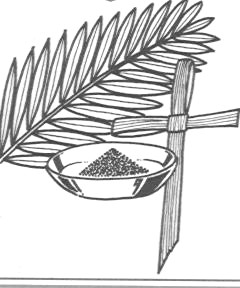
Come mark the beginning of Lent by being marked with the symbol of our mortality and Sin.
Monday, February 23, 2009
Confirmation Retreat Registration

Hey parents and youth. Things are shaping up for us to have a great confirmation class. We'll kick things off with a retreat with many other youth from the area on March 6-7. We'll leave the church at 4:15 on Friday and return here at 9:30pm on Saturday. If you're going, we need a registration form as soon as possible. Print it out here, then drop it by the parsonage or the office. Call Nathan if you have any questions. Thanks!
Other dates for confirmation events can be found here.
Transfiguration Sunday Sermon: Out of the Shining of Remembered Days

Transfiguration gives us a template for worship
Important not to try and pitch our tents at one hallowed experience.
He went downhill. There is more to faith than having experiences.
My sermon today has basically been an adaptation from the Interpreter’s Bible Reflection of Halford E. Luccock
Transfiguration may remind us of what worship may mean—a shining hour, high and lifted up, when Jesus and his revelation of God are luminous from within, their own self authenticating evidene, with a glow such as no fuller on earth can supply.
Life’s best hopes and highest aspirations are validated. A poet has written of old age and the “last song” he would make “out of the shining of remembered days.” Worship may be this steady “shining of remembered days,” a sustaining power.
Paul, besides being scourged and imprisoned, remembered in Acts 26, “a light from heaven, brighter than the sun. shining around me, and hearing a voice.”
Does worship have that sustaining power for us? That despite the difficult periods of our lives be reminded of God’s presence and power?
Poem byu Eunice Tietjens,
But I shall go down from this airy place, this swift white peace,
this stinging exultation.
And time will close about me, and my soul stir to the rhythm
of the daily round.
Yet, having known, life will not press so close, and always I shall feel time
ravel thin about me;
For once I stood
In the white windy presence of eternity.
A life which has no transfigured hours of worship is poor, no matter how rich the furniture.
Mountain top experience.
Science and biology attest to something actually happening in our brains when we are truly at worship or at prayer or meditation.
We are given the ability to see beyond or within.
However, this scripture also speaks about the danger implicit in every complete satisfaction. Getting life pegged at that point.
Think of the many areas in which the mood of Peter, when he said in effect “let’s stay here and build,” blocks the possibilities of life.
Always a tragedy when a person moves on everywhere else but leaves his religious thinking behind, pegs his spiritual experience at a point away back in the past.
A life which might have been a voyage of discovery is chained to a spot reached before any genuine exploration could really begin.
Also is sometimes the result of a faith which has refused to grow, and so no longer is able to fit an expanding world of experience and need.
Sometimes underlies that penchant for “the way we’ve always done it.”
It was good for Peter to have the experience, not good for him to try and prolong it. He had to go on to new experiences of understanding and discipleship. The voice said, “Listen to Him!”
((((( Take these words into your imagination. Let them run freely over time and space. Consider how many occasions there have been when the words “This is my beloved son, listen to him” have been and are the supreme wisdom.
When a life looks out on the world in the early years, when it is choosing its goals and its way, its ambitions and aspirations, then listen to him who rejected the proffered kingdoms of this world for the larger kingdom of God.
Many years ago Rudyard Kipling gave an address at McGill University in Montreal. He said one striking thing which deserves to be remembered. Warning the students against an over-concern for money, or position, or glory, he said: “Some day you will meet a man who cares for none of these things. Then you will know how poor you are.
When life goes into eclipse, when darkness covers the face of the sun, in sorrow and failure and despair, then listen to him who was a man of sorrows, and whose revelation of God brings the sustaining word of comfort and the enabling word of hope.
When life waxes in might and gathers power or riches, when the siren song of self-indulgence are sounding, then listen to him who can save life from going to pieces.
Raphael’s picture of the transfiguration. Shows the strking contrast between the mountaintop and what awaits the disciples down the hill. Above, the beauty of that high vidsion; beow, tragic need and suffering, the impotence of the disciples, and the fruitless discussion about it.
We commonly hear the phrase “going downhill” applied to a person in a condemning or pitying manner. When we say someone is “going downhill” we mean that he has seen better days, that he is descending to an anti-climax.
But there is a nobler sense of the words as well—the sense in which Jesus spent his whole life going downhill from the high and lonely places, where he held communion with God, to the level, crowded palaces of human need.
There are those who spend much of their time on the fine art of “going uphill,” climbing to some height of advantage, position, power, or wealth, and pay no attention at all to this much finer art, the art of going downhill. It is the lifelong descent from the place of vision to the place of deed, from the hill of privilege to the plain of need.
This is the trajectory of the life of our savior attested to in the Kenosis passage we read earlier. It is a hymn from our earliest history, and means “emptiness” or “poured out.” Jesus didn’t stop going downhill. He went all the way down the hill through another uphill climb to Golgotha. After dying on the cross, our creed states that he even descended into the land of the dead.
We should glorify this man, because he went all the way downhill for the sake of us. So that we may be lifted up and transfigured along with him.
Friday, February 20, 2009
Ash Wednesday, Feb. 25 at 7pm
Come mark the beginning of Lent in worship. At 7pm, we will gather for Ash Wednesday and the imposition of the ashes-which come from the burned palms of last year's Palm Sunday as a reminder of our frailty and mortality.
Sunday, February 15, 2009
Have you been to our new prayer chapel?


I've included some photos before of a project we are working on in the former storage room off the sanctuary. Though it has been a pastor's office and a choir room in the past, the little room right off the sanctuary had been in use for a number of years as a storage area. The worship committee felt the room was too pretty to "store stuff, " and began work on a prayer chapel. Harvey Grundman made the altar for the room and recently cut a pew in half to use in the room, and we've made other additions to offer an area for prayer and contemplation. Come in and read a copy of Alive Now, use the finger labyrinth, sit by the fountain, or kneel at the prie dieu and light a candle on the altar. Each Sunday communion is available in the room, and during business hours, the chapel is open from an outside door for your use. Our prayer is that the congregation finds the chapel to be an encouragement to observe a "cathedral in time." Thanks to everyone who contributed to the project and who contributed to the memorials fund of the church. We believe we have turned storage space into sacred space.
Feb. 15 Sermon: Run, Christian Run
I'm sorry for those of you who like to listen to the sermon--I've had Ipod trouble lately. Once again, the sermon notes are all I can provide.
Texts: Isaiah 40: 28-31
Texts: Isaiah 40: 28-31
Paul appealing to a culture steeped in athleticism. Athenian and Isthmuthian games (which were played within 10 miles of Corinth, less than a year prior to when this letter was written.)
Paul was writing to an audience who had sports on the brain. I’m not just interested in looking at what this passage says, but also how it is said. Paul appeals to the culture. He knows what they find compelling, and he uses that language to describe the good news.
Coming soon will be the NFL draft. This could be an equivalent metaphor. Darren McFadden blew them away at last year’s combine (where scouts from NFL teams examine a player) 4.3 40 yard dash. What was he competing for? Millions of dollars.
Maybe not what we would compare to a crown of glory, but definitely is perishable. Especially when you consider he ended up picked by the Raiders, which is owned and dominated by a crazy man. As he found out this year, plagued by injuries and on a team that fired its coach midseason, that glory if fleeting.
Running the race as though you will win. Not because there is only one prize to be had. Paul distinguishes between an athletic race and the spiritual quest in that way. But, he admires the athlete’s model of self-control.
Reading “Outliers” The story of Success, by Malcolm Gladwell. He says in the book that in study after study, those who show virtuoso talent in one area have one thing in common: they have all practiced around 10,000 hours to get to that point.
We must train hard because we have been given the chance to live the life of discipleship. There are those in the world who desperately want to express their faith but are kept from doing so by repressive governments or cultures of exclusion.
Scene from Rudy—he struggles to make ends meet in order to get into Notre Dame. Tries for 2 years in jr. college across the street improving his grades. Finally makes the practice squad, which the coaches describe as, those people " who will never have a chance to dress for a game and who we don't care get hurt. "
Would we approach our faith life with less determination and focus? If we have only one opportunity to “play the game,” are we just going to go out there and kick the grass?
One big thing that just happened in sporting world is signing day. Futures of football programs are speculated and prognosticated based on what high school seniors will receive the 25 or so scholarships to play football at different schools.
Number of stars, better the prospect. Here’s some good news for us—God wants all of us on the team. God give us all a scholarship called grace. Now we should earn the scholarship we’ve been given.
You know how a team plays better on its own court? The players know that the crowd is just waiting to cheer them on, so they want to give them something to cheer about. Our faith community should be like that.
Cheer each other on in this faith journey. Express yourself to others—let someone know that they’ve inspired you or encouraged you.
Wednesday, February 11, 2009
Feb. 8 Sermon: I gotta be me.
No ipod again, only notes.
I gotta be me. Sammy Davis Jr.
Do we? Paul here speaks about taking on the characteristics of others in order to be able to relate to them.
We privlilege our cult of our own personality to the extent that we might think, “be true to who you really are” is part of the gospel.
This is half true. We are so thoroughly bought by a culture that tries to sell us every reason in the book as to why “who we are” isn’t good enough.
Consumer empire. Difficulty of realizing who we are and being true to who we are.
In a very real sense, God can’t use us until we know who we are and are willing to be true and honest to ourselves and others about that.
Part of what it means to confess that we are a sinner. That we are lacking. That we aren’t self made or self realized. We need rescuing.
Not the end of the road though. Paul is telling us there is something beyond that. It is putting the self aside for the purpose of something greater.
Paul says he’s willing to “become a Jew, so that the Jews.” He is a Jew, is he not?
There is one greater than us, and there is a purpose greater than our own “self realization.” This is where self-help and new age fall short.
Struggle with “being who I am,” and “being all things to all people.” Why—so the good news can be shared.
Perhaps this a gift of the iteneracy. You aren’t served by folks who are just like you are.
King of the Hill, Methodist pastor is from Iowa or something. Obvious that she’s different than the culture. We need to know that that kind of setup is helpful to the Gospel.
Talk about how I’ve had to stretch and learn about my context. How is God calling you to stretch the boundaries of your own personality?
The gospel, the power of God, always encounters and engages people where they are, where they live, in their social matrix. Inevitably, the gospel moves them and changes them, but it always comes to them, engages them, and nourishes them from that very point, as and where they are.
What is the Gospel to you? What is the good news of Jesus Christ? What meaning does that have for you?
Now, think about someone who you think needs to hear that message. That’s an easy way to share the Gospel because you’re just sharing with someone else the way that you hear God calling you.
What does Paul mean by “Gospel” the Corinthians:
Now I make known to you, brethren, the gospel which I preached to you, which also you received, in which also you stand, by which also you are saved, if you hold fast the word which I preached to you, unless you believed in vain. For I delivered to you as of first importance what I also received, that Christ died for our sins according to the Scriptures, and that He was buried, and that He was raised on the third day according to the Scriptures.
Notice that in Mark, just when Jesus seems to be hitting his stride and casting out demons right and left, he goes out into the wilderness for some prayer and solitude, and when his disciples come to him with the message that everyone is searching for him, Jesus says they need to carry on and find other places to spread the message.
Casting out demons was a fine way to spread the good news in one area, but we find Jesus up to other things in other places.
Paul mixes the imagery of being a slave for Christ and being free in Christ because both are true, and because some of us need to hear words of freedom while others need to hear words of tighter binds.
Obviously, Romans 1.1-5 (which proclaims Jesus as resurrected Lord) and Romans 1.16-17 (which proclaims what happens to those who acknowledge Christ as Lord when they hear the gospel, the good news, of his resurrection and exaltation over all) fit together like hand and glove. There should be no tension between them. But it is helpful to notice how they fit together. Putting it roughly, Romans 1.1-5 tells us the content of the Gospel and Romans 1.16, 17 tells us the effect of believing the Gospel.
Others, regardless of their differences from us, deserve to be given the Gospel in whatever way they might understand it. They deserve it because they are children of God.
It will make a weak man mighty.
It will make a mighty man fall.
It will fill your heart and hands or leave you with nothing at all.
It's the eyes for the blind and legs for the lame.
It is the love for hate and pride for shame.
That's the power of the gospel.
That's the power of the gospel.
That's the power of the mighty, mighty power.
That's the power of the gospel, well.
That's the power of...
Gospel on the water,
Gospel on the land.
The gospel in every woman,
And the gospel in every man.
Gospel in the garden,
Gospel in the trees.
The gospel that's inside of you,
Gospel inside of me.
That's the power of the gospel.
That's the power of the gospel.
That's the power of the mighty power.
That's the power of...
That's the power of the gospel.
In the hour of richness,
In the hour of need.
For all of creation comes from the gospel seed.
And you may leave tomorrow and you may leave today,
But you've got to have, got to have the gospel when you start out on your way.
Monday, February 09, 2009
Feb. 1 Sermon, "To Eat or Not to Eat, Is that the Question?"
Sorry no ipod today. I messed up. But here are notes for your edification.
Texts: Psalm and 1 Corinthians
Speak about going home sophomore year.
Interesting class on the hist of Islamic middle east
Encounter with
A little learning is a dangerous thing. Sophomore: wise fool.
Don’t care what you know till they know that you care
Freedom of being known. Family knows us as we really are. Facebook, friend of mine had a video of her dad dancing around like a fool to the “King of the Hill” theme song. Freedom of being yourself when you are known for who you are.
For Paul the definitive knowing is God’s knowing of us, which, if love for God is properly in place (cf. Deut 6:5), will result in our being known, in our receiving God’s love in a way that not only claims us for God but also engages us in love toward others (cf. 13:9, 12).
Although the word does not appear in this context, grace is at issue here. It is not what believers know that sets them right with God and gives them to one another. The flow never runs that way for Paul. God’s freely given, unmerited love claims the believers and establishes them. It is a delicate matter in Paul’s understanding. One does not come to know God as many Greeks had assumed. Rather, one is known by God (Gal 4:9).
All proper knowing proceeds from God and acknowledges that God’s knowing precedes and grounds what believers know. God’s knowing establishes, constitutes (cf. Exod 33:12, 17) believers, who then must caution themselves that their knowing is derivative and that what they know should function as a guide to love rather than as an index of status and rank.
Love is not just a sentiment, not just a feeling, not merely a sort of disposition. Love works; it acts; it does things; and the chief thing it does is to edify, build up, cause growth in each of the persons who engages in it and who is engaged by it.
Love transforms circumstances and people. The loved one is never again the same; the one who loves is never again the same. Love is thus a transaction but not a bartering; it is not susceptible to bargaining. Love, once under way, takes on a life of its own; like the grace on which it is built, it surprises. Love restores, love enlarges, and love makes whole. Most often that is what happens with love. But love is not a magic wand; love can be spurned and rejected; and sometimes love elicits its nearest of kin, hatred.
an arrogance which idolizes one’s own perspective on the world.
Today that arrogance is on display regarding the interactions of the Corinthians around the decision to eat meat. Though Paul is inclined to agree with the opinion of those who eat meat sacrificed to idols, he thoroughly disapproves of their attitude. So instead of taking the opportunity to take the side of the “leanrned,” he reprimands them. He hones them. Tries to give them the humility that comes with true knowledge.
In his letter Paul resorted to the Corinthians’ own language about the strong and the weak, turning it on its head, saying that those who presumed themselves strong in fact revealed themselves to be weak, reminding them that God chose the weak and the foolish to shame the strong and wise. He Went on to criticize the Corinthians for their opinionated quarrelsomeness, their slippery morality, their unwarranted boasting. They exasperated him by turning the Lord’s Supper into a series of private parties at which some people gorged themselves and became drunk while others got nothing to eat.
And yet it was to these people, to this divisive and anxious fellowship, that Paul wrote one of the most eloquent reflections on what love is, and what it is not. Paul understood that in Corinth the spiritual pride of comprehension had supplanted the leadership of love.
Texts: Psalm and 1 Corinthians
Speak about going home sophomore year.
Interesting class on the hist of Islamic middle east
Encounter with
A little learning is a dangerous thing. Sophomore: wise fool.
Don’t care what you know till they know that you care
Freedom of being known. Family knows us as we really are. Facebook, friend of mine had a video of her dad dancing around like a fool to the “King of the Hill” theme song. Freedom of being yourself when you are known for who you are.
For Paul the definitive knowing is God’s knowing of us, which, if love for God is properly in place (cf. Deut 6:5), will result in our being known, in our receiving God’s love in a way that not only claims us for God but also engages us in love toward others (cf. 13:9, 12).
Although the word does not appear in this context, grace is at issue here. It is not what believers know that sets them right with God and gives them to one another. The flow never runs that way for Paul. God’s freely given, unmerited love claims the believers and establishes them. It is a delicate matter in Paul’s understanding. One does not come to know God as many Greeks had assumed. Rather, one is known by God (Gal 4:9).
All proper knowing proceeds from God and acknowledges that God’s knowing precedes and grounds what believers know. God’s knowing establishes, constitutes (cf. Exod 33:12, 17) believers, who then must caution themselves that their knowing is derivative and that what they know should function as a guide to love rather than as an index of status and rank.
Love is not just a sentiment, not just a feeling, not merely a sort of disposition. Love works; it acts; it does things; and the chief thing it does is to edify, build up, cause growth in each of the persons who engages in it and who is engaged by it.
Love transforms circumstances and people. The loved one is never again the same; the one who loves is never again the same. Love is thus a transaction but not a bartering; it is not susceptible to bargaining. Love, once under way, takes on a life of its own; like the grace on which it is built, it surprises. Love restores, love enlarges, and love makes whole. Most often that is what happens with love. But love is not a magic wand; love can be spurned and rejected; and sometimes love elicits its nearest of kin, hatred.
an arrogance which idolizes one’s own perspective on the world.
Today that arrogance is on display regarding the interactions of the Corinthians around the decision to eat meat. Though Paul is inclined to agree with the opinion of those who eat meat sacrificed to idols, he thoroughly disapproves of their attitude. So instead of taking the opportunity to take the side of the “leanrned,” he reprimands them. He hones them. Tries to give them the humility that comes with true knowledge.
In his letter Paul resorted to the Corinthians’ own language about the strong and the weak, turning it on its head, saying that those who presumed themselves strong in fact revealed themselves to be weak, reminding them that God chose the weak and the foolish to shame the strong and wise. He Went on to criticize the Corinthians for their opinionated quarrelsomeness, their slippery morality, their unwarranted boasting. They exasperated him by turning the Lord’s Supper into a series of private parties at which some people gorged themselves and became drunk while others got nothing to eat.
And yet it was to these people, to this divisive and anxious fellowship, that Paul wrote one of the most eloquent reflections on what love is, and what it is not. Paul understood that in Corinth the spiritual pride of comprehension had supplanted the leadership of love.
Tuesday, January 27, 2009
Jan 25 Sermon: Paul's Family Values
Sermon Texts: Psalm and Corinthians
One of the things I have noticed about churches and people looking for churches is that “family values” seems to occupy a place of prime importance.
Many seem to think that the pastor’s message, the Sunday school curriculum, the programming, and everything else should adhere to this nebulous social concept that we have that some things are full of family values, and other things are not.
Are family values actually lived, or are they just views, platforms. Do we care more about how one lives a married life, or how one theoretically defines marriage?
Marriage, I’d say is one of those family values. Mourning, of course is the expression of valuing your family, so I’d say it is a family value too. The accumulation and responsible use of money is a family value.
There are tons of churches which offer meaningful programming and entertaining topical sermons on these issues. Churches that approach ministry in this way are lauded for their practicality and worthwhile messages.
So, I wonder how Paul would fit into one of these immensely practical churches offering money management classes and marriage enrichment small groups with his odd advice to the Corinthians church. This requires a little digging into the context.
Paul believed that the second coming of Christ would happen at any moment, as evidenced by this scripture—so being the pressing nature of the apocalypse, Paul encouraged his disciples to focus on the relationship with God over all else.
Trying to help them “will the one thing” as Kierkegaard says.
Not nec. Bad things that compete with our dedication to God. Good things do too. (Nooma) Can we “will the one thing?”Psalm says “For God alone my soul waits in silence; from him comes my salvation.
2He alone is my rock and my salvation, my fortress; I shall never be shaken.
“God alone” I don’t think Paul was down on the relationships that people have in life. But he was aware of the fact that all these other things take time, and time spent addressing all the other needs first leaves little time for our relationship with the one “in whom we live and move and have our being.”
We need a re-orienting. Paul says to the Romans, “And do not be conformed to this world, but be transformed by the renewing of your mind, so that you may prove what the will of God is, that which is good and acceptable and perfect.”
Make the time to acknowledge God’s presence. Be here in worship, be in prayer or devotion or worship on a regular basis. Put first things first, then all else will fall into place.
When we first place our trust and faith and hope in God, and we nurture that relationship with time and attention, then the other concerns we have can flow out of that relationship with God. We’ll find that we don’t feel hurried, we don’t feel stretched and pushed and obligated and guilted into doing things. We’ll find, that like Jesus, we are able to press on toward that “one thing” that God intends for us: life—and life abundant! 02
One of the things I have noticed about churches and people looking for churches is that “family values” seems to occupy a place of prime importance.
Many seem to think that the pastor’s message, the Sunday school curriculum, the programming, and everything else should adhere to this nebulous social concept that we have that some things are full of family values, and other things are not.
Are family values actually lived, or are they just views, platforms. Do we care more about how one lives a married life, or how one theoretically defines marriage?
Marriage, I’d say is one of those family values. Mourning, of course is the expression of valuing your family, so I’d say it is a family value too. The accumulation and responsible use of money is a family value.
There are tons of churches which offer meaningful programming and entertaining topical sermons on these issues. Churches that approach ministry in this way are lauded for their practicality and worthwhile messages.
So, I wonder how Paul would fit into one of these immensely practical churches offering money management classes and marriage enrichment small groups with his odd advice to the Corinthians church. This requires a little digging into the context.
Paul believed that the second coming of Christ would happen at any moment, as evidenced by this scripture—so being the pressing nature of the apocalypse, Paul encouraged his disciples to focus on the relationship with God over all else.
Trying to help them “will the one thing” as Kierkegaard says.
Not nec. Bad things that compete with our dedication to God. Good things do too. (Nooma) Can we “will the one thing?”Psalm says “For God alone my soul waits in silence; from him comes my salvation.
2He alone is my rock and my salvation, my fortress; I shall never be shaken.
“God alone” I don’t think Paul was down on the relationships that people have in life. But he was aware of the fact that all these other things take time, and time spent addressing all the other needs first leaves little time for our relationship with the one “in whom we live and move and have our being.”
We need a re-orienting. Paul says to the Romans, “And do not be conformed to this world, but be transformed by the renewing of your mind, so that you may prove what the will of God is, that which is good and acceptable and perfect.”
Make the time to acknowledge God’s presence. Be here in worship, be in prayer or devotion or worship on a regular basis. Put first things first, then all else will fall into place.
When we first place our trust and faith and hope in God, and we nurture that relationship with time and attention, then the other concerns we have can flow out of that relationship with God. We’ll find that we don’t feel hurried, we don’t feel stretched and pushed and obligated and guilted into doing things. We’ll find, that like Jesus, we are able to press on toward that “one thing” that God intends for us: life—and life abundant! 02
Confirmation Dates to Remember
Feb. 20: Deadline for Retreat Registration
March 6-7: Confirmation Retreat at Camp Egan
March 22: After church-2pm (Pizza included) “TheMethod to our Methodism.”
April 5: After Church-5pm: Operation Understanding
April 19: Lunch and work at homeless shelter: end 3pm
May 3: After church till 2pm-“What you don’t know about the Bible could fill a book.”
May 23: Hiking/Caving at Devil’s Den, Arkansas
May 31: Pentecost and Confirmation Sunday!
Wednesday, January 21, 2009
Jan 18 Sermon: Nazareth and Toad Suck
Sermon Texts:
Epiphany 2B Corinthians and John
Sermon Notes
Christ from Hicksville
Growing up in Arkadelphia, we always looked down our noses at folks from Gurdon. It just sounds like a place to make fun of, doesn’t it? The po-dunkness of the town just flows from the guttural sounding names of some towns in South Arkansas, where I’m from. Gurdon, Dierks (pronounced Durks), Smackover, Fordyce. We used to make fun of the guys who would date girls from Gurdon. Nothing good comes from Gurdon.
Those towns who tried to name themselves something more glorious usually fall short of the grandiosity of the namesake. There is a London, Tokio (yes, spelled that way), Hollywood, and yes even Paris in Arkansas. .. and London, Hollywood, Tokyo, and Paris they are not.
Some towns are blatantly honest about their place in life. Ashdown was right next to a paper mill, and I suppose it was about the right distance and direction from the plant that it was indeed where the Ash comes down. “Cotton Plant” is Jonny Cash’s hometown, and is aptly described by its name. Even our largest city capitol is a humble “Little Rock.”
Early in my hometown’s history, the name was briefly considered to be changed from Arkadelphia to Athens to attract another university. (Arkadelphia has two: OBU and HSU). I suppose the population of Ark. Did think of our little town as a seat of education, like that namesake. But, they stuck with the name that inexplicably elicits laughter from others.
Maybe we as high falutin as we thought we were. No doubt residents of nearby and more significant Hot Springs looked down their noses at us.
But you know what I mean about these little towns? Perhaps you came, or even come from one. Perhaps that’s how folks think about Morris. Or perhaps that’s how we think of other little settlements around here. Ther’s always somewhere smaller and less significant and more laughable. Unless of course you are in Booger Holler, AR. That’s right down the road from Toad Suck.
Canonical gospels all have nothing positive to say about Nazareth, other than it was the home of Jesus.
They try to kill Jesus by throwing him off a cliff, they aren’t able to receive the ministry of Jesus’ ministry. He said himself, a prophet isn’t accepted in his own hometown. Not until Jesus has died and resurrected that his own family begins to believe his Gospel.
Nazareth is either small and insignificant, or it is disreputable because of the religious practices of those northerners.
In Judea, Nazareth and Galilee in general is thought to be a step down from Judah. Judea is where the temple is, after all. The north had more influence from the Assyrian Empire. It was a less “holy” place. Nothing good could come from Nazareth. Nazereth held no cultural significance to Judaism.
Are you willing to accept this Christ who comes from nowheresville? Or, even a disreputable place? It is not what Nathanael observes about Jesus that saves him. According to Nathanael, he doesn’t expect much of this Jesus guy if he comes from Nazareth.
However, it is that encounter with Christ and finding that though he thinks he knows Jesus, Jesus really knows him. Now that is where Nathanael begins his discipleship.
In a sense, Nathanael goes from expecting nothing of Jesus to being wowed by his foreknowledge of his whereabouts to being told, “you ain’t seen nothin’ yet!”
That’s what happens when we bow to the truth that great things can come from what we think are insignificant sources. That’s the truth of the nativity. That’s the truth of the incarnation.
God’s mystery and miracle can even come from places like Toad Suck, AR. If we live inside this truth not because we have seen proof, but because God is God—then we are living lives of discipleship.
Even those moments or occasions that we think are insignificant and boring can contain the precious jewel of enlightenment.
One notion of Zen philosophy that really attracted me to that practice is that mindfulness or a settled sense of letting things “be” is often best practiced by being attentive to those mundane practices like doing the dishes or sweeping the floor.
These tasks, which we would probably say, “well, what kind of significant moment could come out of doing the dishes?” hold the keys to enlightenment, because if we find value in the “boring stuff,” then we will be less likely to grow unfazed by the truly “brilliant stuff.” Some people drive the Pacific Coast Highway every day—a highway which most of us would be truly astounded by and shouting “woah, look at that!” at every twist and turn. And some people who have grown accustomed to it probably don’t really see it anymore.
Paul writes to the Corinthians about having the same kind of open mind about the importance of our bodies.
People in the time of Jesus and after (and even now) have a fairly dim view of our bodily life. After all, our bodily life is fragile and corrupted. Our bodies get old and broken and they eventually fail us.
Cheap understanding of value of body—led some to use prostitutes.
Our body is the temple of God. Can anything good come of the body? Our bodies are infused by the Holy Breath of God. Living itself is a miracle. When we cheapen the value of our bodies by following their every urge and inclination, we forget that we are not our own. We belong to God.
God can use any humble vessel or place to bring about significant change. The author of the universe if the author of every part of the universe, and none of it is insignificant. Every sparrow, every hair on our head is numbered. Even Gurdon is the dwelling place of God.
Epiphany 2B Corinthians and John
Sermon Notes
Christ from Hicksville
Growing up in Arkadelphia, we always looked down our noses at folks from Gurdon. It just sounds like a place to make fun of, doesn’t it? The po-dunkness of the town just flows from the guttural sounding names of some towns in South Arkansas, where I’m from. Gurdon, Dierks (pronounced Durks), Smackover, Fordyce. We used to make fun of the guys who would date girls from Gurdon. Nothing good comes from Gurdon.
Those towns who tried to name themselves something more glorious usually fall short of the grandiosity of the namesake. There is a London, Tokio (yes, spelled that way), Hollywood, and yes even Paris in Arkansas. .. and London, Hollywood, Tokyo, and Paris they are not.
Some towns are blatantly honest about their place in life. Ashdown was right next to a paper mill, and I suppose it was about the right distance and direction from the plant that it was indeed where the Ash comes down. “Cotton Plant” is Jonny Cash’s hometown, and is aptly described by its name. Even our largest city capitol is a humble “Little Rock.”
Early in my hometown’s history, the name was briefly considered to be changed from Arkadelphia to Athens to attract another university. (Arkadelphia has two: OBU and HSU). I suppose the population of Ark. Did think of our little town as a seat of education, like that namesake. But, they stuck with the name that inexplicably elicits laughter from others.
Maybe we as high falutin as we thought we were. No doubt residents of nearby and more significant Hot Springs looked down their noses at us.
But you know what I mean about these little towns? Perhaps you came, or even come from one. Perhaps that’s how folks think about Morris. Or perhaps that’s how we think of other little settlements around here. Ther’s always somewhere smaller and less significant and more laughable. Unless of course you are in Booger Holler, AR. That’s right down the road from Toad Suck.
Canonical gospels all have nothing positive to say about Nazareth, other than it was the home of Jesus.
They try to kill Jesus by throwing him off a cliff, they aren’t able to receive the ministry of Jesus’ ministry. He said himself, a prophet isn’t accepted in his own hometown. Not until Jesus has died and resurrected that his own family begins to believe his Gospel.
Nazareth is either small and insignificant, or it is disreputable because of the religious practices of those northerners.
In Judea, Nazareth and Galilee in general is thought to be a step down from Judah. Judea is where the temple is, after all. The north had more influence from the Assyrian Empire. It was a less “holy” place. Nothing good could come from Nazareth. Nazereth held no cultural significance to Judaism.
Are you willing to accept this Christ who comes from nowheresville? Or, even a disreputable place? It is not what Nathanael observes about Jesus that saves him. According to Nathanael, he doesn’t expect much of this Jesus guy if he comes from Nazareth.
However, it is that encounter with Christ and finding that though he thinks he knows Jesus, Jesus really knows him. Now that is where Nathanael begins his discipleship.
In a sense, Nathanael goes from expecting nothing of Jesus to being wowed by his foreknowledge of his whereabouts to being told, “you ain’t seen nothin’ yet!”
That’s what happens when we bow to the truth that great things can come from what we think are insignificant sources. That’s the truth of the nativity. That’s the truth of the incarnation.
God’s mystery and miracle can even come from places like Toad Suck, AR. If we live inside this truth not because we have seen proof, but because God is God—then we are living lives of discipleship.
Even those moments or occasions that we think are insignificant and boring can contain the precious jewel of enlightenment.
One notion of Zen philosophy that really attracted me to that practice is that mindfulness or a settled sense of letting things “be” is often best practiced by being attentive to those mundane practices like doing the dishes or sweeping the floor.
These tasks, which we would probably say, “well, what kind of significant moment could come out of doing the dishes?” hold the keys to enlightenment, because if we find value in the “boring stuff,” then we will be less likely to grow unfazed by the truly “brilliant stuff.” Some people drive the Pacific Coast Highway every day—a highway which most of us would be truly astounded by and shouting “woah, look at that!” at every twist and turn. And some people who have grown accustomed to it probably don’t really see it anymore.
Paul writes to the Corinthians about having the same kind of open mind about the importance of our bodies.
People in the time of Jesus and after (and even now) have a fairly dim view of our bodily life. After all, our bodily life is fragile and corrupted. Our bodies get old and broken and they eventually fail us.
Cheap understanding of value of body—led some to use prostitutes.
Our body is the temple of God. Can anything good come of the body? Our bodies are infused by the Holy Breath of God. Living itself is a miracle. When we cheapen the value of our bodies by following their every urge and inclination, we forget that we are not our own. We belong to God.
God can use any humble vessel or place to bring about significant change. The author of the universe if the author of every part of the universe, and none of it is insignificant. Every sparrow, every hair on our head is numbered. Even Gurdon is the dwelling place of God.
Roof before and after


Thanks to a generous gift from the Goodman family, we were able to able to put on a new roof. What a witness for stewardship! The parish was inspired, and eighty percent of our 2009 budget was raised in our first (ever or in a really long time) pledge campaign. Praise God for the gifts!
Monday, January 12, 2009
Jan 11, 2009 Sermon: Living Water/ Water Living
Stuff from Christian Century Article by Yamada:
“I am haunted by waters.” Last words of Norman Maclean’s novel, A River Runs through it.
Waters haunt all of us who profess the Christian faith. They haunt the human imagination. Rightly so, our bodies are made up of water. If we are prevented from drinking, we will die. If the land is prevented from drinking, we will die.
As some of you may remember, if the land goes without water, the wind can whip the dust into giant clouds of destruction and alter the lives of millions.
Water will play a central role in the coming decades or centuries. When it is said that fresh water will become a commodity like oil, available to a decreasing percentage of Earth’s population, and yet the seas are forecasted to rise and displace billions of people. Humans will have a dual relationship with water in the 21st century. We will desperately need it, and it will inundate us.
Water: metaphor in ancient literature for chaos, leviathan. Also a metaphor for the necessity of life. We are brought into this world through the water of a womb. God’s people come through the waters of the Red sea and the Jordan.
Remember playing with water table at Mid America Museum.
Visit to grand canyon.
Shaped by water metaphor with the grand canyon. Letting our life be eroded by God’s presence and activity. You can tell which stones have not been in the stream for very long. River stone is round and smooth. Foreign stone would be angled and rough.
Didache: what it is, what kind of advice it has about the baptismal waters. It should be flowing.
Perhaps this is one reason why—it reminds us that water is living, and the waters of baptism should be let loose on our lives.
The song we sang earlier has that one line that is so interesting: come Holy Spirit, aid us to keep the vows we make; this very day invade us, and every bondage break. Come give our lives direction, the gift we covet most: to share the resurrection that leads to Pentecost.
How do the waters of baptism “invade” us? They invade our lives. They invade our plans.
They have dual meaning to us as well. Paul speaks about “dying” in the waters of baptism. The act of immersion very illustarates this notion of drowning in the water. In a very real way, we do drown.
The waters of baptism drown that aspect of us that we have been deceived into believing: that we can make it on our own, or that we aren’t worth spit, or that we’re too lost and too far gone to ever come back.
Yes, baptism is s symbol of the death of those ideas about ourselves and the “putting on” of a new identity—that of a child of God.
Early Christians, take off clothes, go down into water, come out and put new clothing on and stomp on the old clothes.
Pouring water over our head—reminds us that the waters of baptism erode our souls. They shape us into the beautiful landmarks that God would have us be.
God making skipping stones
Scientists say the main reason we have life on earth is water.
God agrees.
Friday, January 09, 2009
Subscribe to:
Posts (Atom)