Friday, July 23, 2010
July 18 Sermon: Childhood Prayers
It’s one of the true blessings of parenthood to watch and listen to your children pray. It seems that children have much more wisdom about God than we oftentimes give them credit for.
After spending time with children, we see what Jesus means by saying “their angels constantly look at the face of his father in heaven.” What an odd, mystical way of saying it—but it’s true! Children and the child-like oftentimes possess a faith that is unclouded by doubt and over-rationalization. And they are un-jaded by cynicism and criticism. Thank God for our children and their prayers, that probably keep us all afloat.
But, we adults have a part in this too. You heard it from the Proverbs of old in our call to worship, and you hear it from the proverbial wisdom of modern science and psychology.
11 years ago, Judith Rich Harris wrote a book that became a Pulitzer Prize finalist in non-fiction. In it, she challenges the commonly held assumption that parents are the main contributors’ to a child and teenager’s personality. Instead reports from her studies that peers are the main influencers.
This book has created much debate and study in the decade since in child psychology and family therapy, and her findings have held up: peers are a significant, and perhaps the most significant, influence on our children.
But, you can’t deny that parents have some influence on their kids. I, after all, still remember those prayers my parents taught me to say at bedtime, and now have taught them to my own son, even with the nonsensical little routine that I used to love doing that my parents and I incorporated into the prayer after I started mimicking what they always said to me after the praying was done and I would leap from my knees up into the bed:
Now Get In Bed!
So, with what we know from the Bible and the Proverbs about the importance of teaching our children in the ways of our faith, coupled with what we know about children influencing each other, coupled with our Christ mandated concern for our neighbors and community, it is perhaps one of the most charitable and beneficial actions we can undertake to raise up a generation of kids who pray and who cling strongly to a real and tangible connection with God, so that they can in turn influence instead of be influenced by their non-praying peers.
Everyone always talks about “prayer in schools” as the common solution to all the problems we find in school today, but my opinion on the matter is that prayer is a great opportunity to teach and connect with my own children, and I would rather someone else who doesn’t share my values and primary concerns and that of our family tradition being the one who instilled those treasures in my children. If I entrust someone else with the job of teaching my children to pray, am I doing what God is asking me to do as a parent? What if the person teaching my child doesn’t practice the same kind of faith as my family practices?
Oftentimes I encounter people who are nervous about praying. Have you ever met a child nervous about speaking to his mom or dad? Not likely, I would say. More likely, what people who are afraid to pray in front of others are concerned about is the performance of prayer. They might be hesitant because they don’t think they know what they are going to say. They haven’t had a chance to plan it all out, so they may ramble (like their pastor does) and perhaps even repeat the same thing twice unknowingly.
But look at the way a child speaks to his or her parents. They speak plainly. Sometimes they repeat things over and over and over again until they feel they are heard. You know what Jesus said about that? Luke 18: 2-8
Children's Morning Prayer
Lord, in the morning I start each day,
By taking a moment to bow and pray.
I start with thanks, and then give praise
For all your kind and loving ways.
Today if sunshine turns to rain,
If a dark cloud brings some pain,
I won't doubt or hide in fear
For you, my God, are always near.
I will travel where you lead;
I will help my friends in need.
Where you send me I will go;
With your help I'll learn and grow.
Hold my family in your hands,
As we follow your commands.
And I will keep you close in sight
Until I crawl in bed tonight.
Amen.
-- Mary Fairchild

Thursday, July 15, 2010
Hosting a Free Preview of Financial Peace University this Sunday!
At 7pm, you and whoever you invite can take a look at the Financial Peace University that we plan to offer beginning in August in a 25 minute video and question and answer period. We hope you can be there! Find out more about the Dave Ramsey ministry that has trained thousands of people to manage their finances and eliminate debt here: http://www.daveramsey.com/fpu/
Monday, July 05, 2010
July 4 Sermon: Praying for Financial Independence, Wesley and Debt
Sermon Texts:
1 Timothy 6:7-10
Galatians 5: 1, 13-25
1 Timothy 6:7-10
Galatians 5: 1, 13-25
As with praying out of anger, staying in touch with God even when we are “asking for ourselves,” it is better to commune with God in all our fallen state. God knows who we are, so we might as well be honest with ourselves about that.
Praying for Personal Gain for when one is already surrounded by plenty can turn to greed. Praying for personal gain when one is surrounded by debt and confusion can turn to a sense of God-given purpose and direction.
Does anyone think that God wants to see us in debt? The early Methodists, who lived at a time when there was not much of a “middle class” were largely a group of peasants and menial laborers, and through their Methodist accountability groups became such masters of their own finances to the point that Wesley began to worry “
John Wesley’s own example of holy poverty is conveyed on his tombstone:
A brand plucked out of the burning:
Who died of consumption in the fifty-first year of his age,
Not leaving, after his debts are paid,
Ten pounds behind him:
Praying,
God be merciful to me, an unprofitable servant! (16/306)
Who died of consumption in the fifty-first year of his age,
Not leaving, after his debts are paid,
Ten pounds behind him:
Praying,
God be merciful to me, an unprofitable servant! (16/306)
In our words of ordination that are said by the bishop, one of his questions is: “Are you in debt as to embarrass yourself in your ministry?
Just estimate—you don’t have to sign your name, but take one of the offering cards, and write on it what you owe, not including what you owe on a house, but all other debts. I surrender all. We’ll place in the newsletter what that total figure is.
Ask yourself if you can give this debt as an offering of honest need and deliverance July 4th we’ll celebrate our National Independence, but I think we should also celebrate our financial independence. There’s a ministry called the “Financial Peace University” that we are looking at hosting at the church, and through it, we might offer the chance to become more financially independent of debts.
Take the message of that ministry home with you and pray about it—is it something that would bring more peace to your own home? Is it something that would bring peace to another person whom I could invite in confidence.
We can gain much from casting our cares and burdens on God. Jesus says, “come to me all who are weary and who are carrying heavy burdens, and I will give you rest. For my yoke is easy, and my burden is light.”
His burden was light because Jesus lived lightly. He didn’t own much. He asked for the kindness and hospitality of others, and he told his disciples to do the same in carrying the Gospel to the world. (IF any town does not welcome you in, shake the dust of that town off your feet, and move on.)
God doesn’t plan to solve financial problems by the random chance of a lottery or through the treacherous realm of luck. God can solve financial problems with our cooperation and rational and sober thought and decision.
Being born of the Spirit means that God is alive and active IN you. The prayer of Jabez works for him and others because it attunes the daily life to a sense of dependence upon God’s grace. We gain financial independence by practicing divine dependence.
Saturday, July 03, 2010
Family Life Party
The Family Life Party tonight, July 3 @ 7:00 pm is still on. If it is raining, the party will be here at the church instead of Rita's Coal Pits. We will have hot dogs, ice cream, games, etc. with fireworks to follow.
Monday, June 28, 2010
June 28 Sermon: Praying for Stuff
Sermon Texts: Matthew 7: 7-11
1 Chronicles 4: 9-10
Sermon Notes:
Praying for Stuff:
Oh Lord, won't you buy me a mercedes benz
my friends all drive porsches I must make amends
worked hard all my lifetime no help from my friends
so oh lord, won't you buy me a mercedes benz
Problem with praying for stuff is that I am suspicious about putting so much of my attention on myself will distract me from looking outward and praying for the relief of suffering much worse than my own desire for more or better things.
The desire for more or better things is a slippery path in our society. This way of thinking is the state religion of the culture we live in. It is too easy to get washed down the treacherous river of greed when we spend so much time thinking about what we might lack.
But, I’ve also had the opportunity to witness and talk with those who have
(((((((I brought these kinds of ideas to my idea of having this sermon, and I thought what I could use as kind of a foil book that was the counterpoint to what I wanted to say, that I could easily defeat in a preaching smack down. But, I hadn’t read the book. What I thought it represented was the essence of the prosperity Gospel.
The prosperity Gospel confuses consumerist impulses with God’s guidance. In all times, there have been pretenders to the Gospel, and I believe the prosperity Gospel, which uplifts the financial magnanimosity of the minister and leaders as evidence that God blesses them with gifts.
From the sheer spectacle of a minister flying from one megachurch to another in a private helicopter to the sickening displays of frivolous expenditures on expensive cars, suits, and jewelry, the prosperity Gospel communicates a message to it’s adherents that “if you do what we do, and believe what we believe, you can live how we live!”
The last stanza of Joplin’s “Lord won’t you buy me, puts into satirical lyric what the prosperity gospel actually broadcasts to the world:
lord won't you buy me a night on the town
I'm counting on you lord please don't let me down
prove that you love me and buy the next round
oh lord, won't you buy me a night on the town
So I took all these kinds of suspicions to the book that I had heard articulated that heresy that God wants to give you more stuff to glorify God. But, I did so with smugness, and fortunately, I decided would be unfair of me to criticize what I had not even read—and the size of the book wasn’t quite enough to say that I was intimidated by it’s length!
what I took away from the prayer of Jabez, by Bruce Wilkenson, is that God can work in mysterious ways, Wilkinson addresses my concern in the first few pages: he writes, “Is it possible that God wants you to be “selfish” in your prayers? To ask for more—and more again—from your Lord? I’ve met so many earnest Christians who take it as a sign of immaturity to think such thoughts. They assume they’ll seem impolite or greedy if they ask God for too many blessings. I want to show you that such a prayer is not the self-centered act it might appear, but a suprememly spiritual one and exactly the kind of request our Father longs to hear.”
Basically, throughout the book, the author shows that asking God to “enlarge his territory” is another way of saying, “bless me to help you expand the boundaries of the Kingdom of God.”
1. Asking for blessing is asking for God’s grace to be visible and reflected in your life.
2. Expanding your territory is making more room for God to move in the world.
3. Once we have received the great blessings of God, we ask God to keep us from evil—we ask to be kept from the temptation.
The author wrote that he’s been asked if it was wrong to pray for advancements in the world of business, and he answers that if that business is being done in a way that Christ would find appealing, then yes, of course. Why not ask?
Perhaps praying for stuff is better than not praying at all—if you’re sincerely and genuinely seeking connection and guidance with God, that’s better than just being aloof. God can direct you if you’re seeking a connection.
Perhaps seeking that connection will help us discern just how difficult it is to conduct business in a way that Jesus would find appealing. As far as investments go, would Jesus applaud the growth of a tobacco company that targets children in Africa to become the next generation of smokers? Would he applaud the church that gains from investing in that kind of company?
As with praying out of anger, staying in touch with God even when we are “asking for ourselves,” it is better to commune with God in all our fallen state. God knows who we are, so we might as well be honest with ourselves about that.
Praying for Personal Gain for when one is already surrounded by plenty can turn to greed. Praying for personal gain when one is surrounded by debt and confusion can turn to a sense of God-given purpose and direction.
Friday, June 25, 2010
Father's Day Sermons: Praying out of Anger:
Prayers that make me angry/prayers of anger.
Have you ever been in a situation where you overheard a prayer that made you angry? Perhaps it was the way something was said, or something that the person praying attributed to God that you don’t or can’t believe God participates in. Perhaps it’s a prayer of retribution, like we heard in the Psalm, involving the cruel and cold murder of infants for the purpose of ethnic cleansing.
Maybe it’s just something that gnaws at you. A word or a phrase that someone uses that really gets on your nerves. This past week, I was driving and listening to Sports radio, where Dan Beebe, the commissioner of the Big XII was announcing that the 10 remaining schools of the Big XII would stay together in one conference. He then attributed preservation of the Big XII (something that occurred in backroom deals between billionaires and TV executives, and University Board members) to God’s will.
Yes, a deal that ingratiates nine Big XII member schools to the University of Texas, making it even more rich and powerful, is something that God wants, so if you’re opposed to it, you must be opposed to God too.
Speaking of God in prayer in this way annoys me. It’s fairly humorous and transparently wonkish in the case of Dan Beebe. I wanted to write him and say, I’m a Hog fan, does God love the SEC too? You would think so, with five straight years of National Championships, after all.
A key question of prayer is, “to what should we attribute God’s attention and power?” Is it appropriate to solicit God’s action in matters that benefit some, (including yourself) while disadvantaging, even harming others?
If you do believe that some prayers wrongly characterize God, how are we as Christians who believe certain things about God, supposed to encounter such prayers?
Perhaps the prayers that make me angry are some of those borne of an anger that I have not felt. Perhaps I am just ignorant of the feelings (and blessedly so) that would cause some people to pray for God to take vengeance or bash babies brains out on the rocks. Does that mean I should sit back silently and accept blindly those prayers when I hear them being prayed?
If I were one of those Israelites enslaved by the Babylonians and betrayed by the Edomites, would I be praying the same thing, or if I had the wherewithal to speak up, would it be right for me to say, wait a minute Ahaz, I don’t think we should be asking God to take innocent children and bash their brains out on the rocks—after all, what if people hear that and think that God is giving us license to act in the name of God in that way, and do something terribly inhuman.
What do we do when we encounter prayers that make us angry?
The following is the opening paragraph to the "angry prayer project." The introduction helps us learn to be in communion with God even in the midst of our anger:
Inspiration and healing through angry prayer?
At first, those ideas don’t seem compatible. But if you’re so stuck in an angry place that you can no longer commune with the Divine then how can you ever experience inspiration and healing?
All people of faith are called to a life of honesty and prayer.
Sometimes, however, because of the way we are raised up, even the most faithful find it difficult to pray truthfully during times of anger, frustration and stress.
Are you one of those people who is angry at God or who feels bottled up with this brokenness? Have you ever considered how many biblical heroes felt that same kind of brokenness with God and yet prayed their way through it?
I believe that God calls us to transition through the difficult emotions that plague us toward a place of peace by naming the problem, proclaiming our pain and reframing our perspective.
Naming, proclaiming and reframing: This is the potential of truthful prayer as it is modeled in the Bible.
And this is the hope of the Angry Prayer Project, to practice the biblical tradition of praying truthfully even if we are angry at God.
In order to read, to reflect and to participate, click forward.
If you have never been so angry that you have discontinued your conversations with the Divine just when you needed them most, be grateful and try not to judge those that struggle to pray truthfully every day.
Angry prayers may seem ugly and foreign to you, perhaps even blasphemous. In truth, I believe, there is nothing so blasphemous as trying to fool God by just paying lip service in prayer.
Monday, June 07, 2010
June 5 Sermon: Part 2 of Lord's Prayer Sermon: Daily Bread and Forgiveness
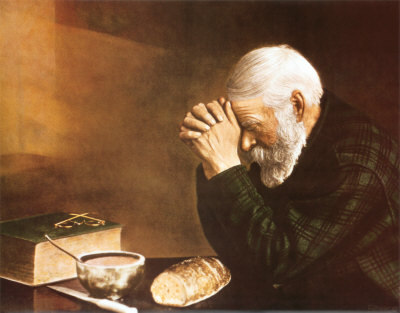
John 6: 31-33, 48-51, Matthew 6: 9-12
Give us this day our daily bread.
The emphasis on “today” is really what started the ball rolling for me in designing this sermon series. It occurred to me that the entire Lord’s prayer is centered on the present and the future.
The past is important, and we dare not forget what has come before us, but as a daily prayer, Jesus offers us the idea that we should be focused on the here and now.
Daily Bread. Jesus tells his followers to ask God to provide for them in the most basic of ways, but the reference to daily bread also calls to mind a story of relying on God day by day, and not taking more than we need to keep relying on God’s grace.
Manna in the wilderness story.
Perhaps since we sit in the relative lap of luxery—I imagine you are somewhat similar to me in that you could take the contents of your pantry right now and probably get by for about 3 or 4 months.
So, since we have removed ourselves in many ways from the kind of dependence upon God that this line of the prayer speaks about, perhaps the prayer to “give us this day our daily bread” should help us remember all those who are hungry day to day.
Perhaps it reminds us of the refugees around the world, who like the refugees in the Exodus story, count on God’s provision for them to eat. Perhaps it reminds us of those who are living in the ruin of war, where the water is polluted with death and the food supply is uncertain. Perhaps it might remind us of those fisherman whose livelihoods are being threatened by the disastrous oil spill in the gulf.
Yes, perhaps the “us” in the Lord’s prayer should in our case be a collective “us,” since for the most part, we have little concern for the whereabouts of our next meal
I also included the “bread of Life” narratives from John in today’s Gospel reading, because I wanted us all to be reminded how closely Jesus identified himself with the bread that sustains us on the journey.
Jesus said, “I am the bread come down from heaven.” Jesus gives himself to us in the form of bread and wine, because Jesus is the only food that can give us true life. Jesus does more than sustain us, he is the bread that transforms us. He is the original “Wonder Bread.”
And the petition to God to provide us with daily bread is followed by the most basic ingredient to our salvation: forgiveness.
Forgive us our sins/trespasses/debts. But God doesn’t just willy nilly forgive us our sins. God is interested in how we forgive. Are we willing to forgive those sins/trespasses/debts against us?
5/30 Sermon--Part 1 of Sermon Series on Lord's Prayer: Hallowed Be Thy Name
Sermon Texts:
Exodus 3: 1-15
Matthew 6: 5-10
Sermon Notes
Growing up, I always knew the name of God. I thought it was a funny name, I didn't really understand why we insisted every Sunday that "Hollow Ed" be thy name. Perhaps that's why they made the Chocolate Easter bunnies hollow in the middle, in order to pay homage to "Ol' Hollow Ed" who was the reason for the season anyway.
Beliefs and practices surrounding the name of God
"Our Father, which art in Heaven"
[edit]"Hallowed be thy Name"
[edit]"Thy kingdom come"
[edit]"Thy will be done, in earth as it is in heaven"
Exodus 3: 1-15
Matthew 6: 5-10
Sermon Notes
Growing up, I always knew the name of God. I thought it was a funny name, I didn't really understand why we insisted every Sunday that "Hollow Ed" be thy name. Perhaps that's why they made the Chocolate Easter bunnies hollow in the middle, in order to pay homage to "Ol' Hollow Ed" who was the reason for the season anyway.
I also knew God was an artist, and frequently pictured God at an Easel with a Mortimer Ichabod Marker that Bill Cosby used on "Picture Pages" that made funny sounds as he drew. My best friend Brandon had one of those pens. He got it by being a member of the Pickles book club. I figured God was probably the chief of the Pickles Book club, and thus must have the best one of those pens. He probably let Bill Cosby use his special pen for the t.v. show since it was the best. Or, perhaps he was like Simon in the Land of Chalk Drawings, since all that he drew came true. I knew all of these things about God, because I knew the Lord's prayer. Our Father, Who art in heaven, Hallowed be thy name.
We'll be focusing on prayer this summer in worship. I plan to offer a sermon series starting today and lasting through July that will each week bring up different themes raised by prayers that are found in our Holy Scriptures.
Name of God: the name of God has always been thought of as the most sacred thing anyone could say.
In the movement Imiaslavie ("Name glorification") opposed by the Russian Orthodox Church, the name of God is God Himself and can be used to evoke miracles.[citation needed]
Shangdi 上帝 (Hanyu Pinyin: shàng dì) (literally King Above) is also used to refer to the Christian god in the Standard Mandarin Union Version of the Bible. Likewise, Korean Christians and Vietnamese Christians also use cognates of this name, to refer to the Biblical god.[citation needed]
Shen 神 (lit. God, spirit, or deity) was adopted by Protestant missionaries in China to refer to the Christian god. In this context it is usually rendered with a space, " 神", to demonstrate reverence. (An alternate explanation for adding a space is that doing so simplified typesetting with two versions carrying 神 or 上帝 made parallel.)[citation needed]
Zhu, Tian Zhu 主,天主 (lit. Lord or Lord in Heaven) is translated from the English word, "Lord", which is a formal title of the Christian god in Mainland China's Christian churches.[citation needed]rase it if it is written. (SeeExodus 20:7) The tetragrammaton (Hebrew: יהוה, English: YHVH or YHWH) is the name for the group of four Hebrew letters which represent the name of God. The Tetragrammaton occurs 6,828 times in the Hebrew text in the Biblia Hebraica and the Biblia Hebraica Stuttgartensia. Neither vowels nor vowel points were used in ancient Hebrew writings.
Instead of pronouncing YHWH during prayer, Jews say Adonai ("Lord"). Halakha requires that secondary rules be placed around the primary law, to reduce the chance that the main law will be broken. As such, it is common Jewish practice to restrict the use of the word Adonai to prayer only. In conversation, many Jewish people, even when not speaking Hebrew, will call God "Hashem", השם, which is Hebrew for "the Name" (this appears in Leviticus 24:11).
A common title of God in the Hebrew Bible is Elohim (Hebrew: אלהים); as opposed to other titles of God in Judaism, this name also describes gods of other religions, angels, or even humans of great importance (John 10:34-36).
Because Judaism forbids pronouncing the name outside the Temple in Jerusalem, the correct pronunciation of the Tetragrammaton may have been lost, as the original Hebrew texts only included consonants. The Hebrew letters are named Yod-Heh-Vav-Heh: יהוה. In English it is written as YHWH, YHVH, or JHVHdepending on the transliteration convention that is used. The Tetragrammaton was written in contrasting Paleo-Hebrewcharacters in some of the oldest surviving square Aramaic Hebrew texts, and were not read as Adonai ("My Lord") until after the Rabbinic teachings after Israel went into Babylonian captivity.[2]
In appearance, YHWH is an archaic third person singular imperfect of the verb "to be", meaning, therefore, "He is". This explanation agrees with the meaning of the name given in Exodus 3:14, where God is represented as speaking, and hence as using the first person — "I am". It stems from the Hebrew conception of monotheism that God exists by himself for himself, and is the uncreated Creator who is independent of any concept, force, or entity; therefore "I am that I am".
This introduction to “Yahweh” as the personal name of God associates the divine name with the Hebrew verb “hayah” meaning “to be”.[29] “I will be what I will be” indicates “[m]y nature will become evident from my actions.”[30] Later in Exodus, God frequently declares that from his actions (such as the ten plagues) Israel and Egypt “shall know that I am Yahweh.”[31] Thus, as God, Yahweh is revealed by both his personal name and his mighty deeds in history rather than a list of characteristics.[32]
Moses askes God to tell him His name, God says, in a sense, Wait and See!”
Beliefs and practices surrounding the name of God
One the Ten Commandments is "You shall not make wrongful use of the name of the Lord your God". This is sometimes interpreted to mean that it is wrong to curse while making reference to God (ex. "Oh my God!" as an expression of frustration or anger)[citation needed]. Another interpretation of this passage is in relation to oath taking, where the command is to hold true to those commands made 'in God's name'. God's name being used in vain can also be interpreted as trying to invoke the power of God, as a means to impress, intimidate, punish, condemn, and/or control others. This can also be used to refer to the idea of saying that one acts "in God's behalf" when doing things that are clearly personal actions.
The Lord's Prayer contains the line "Hallowed be thy name", in reference to God the Father.[4]
Some Christians capitalize all references to God in writing, including pronouns. (ex. "The Lord, He is God, Holy is His Name.")
Most observant Jews forbid discarding holy objects, including any document with a name of God written on it. Once written, the name must be preserved indefinitely. This leads to several noteworthy practices:
§ Commonplace materials are written with an intentionally abbreviated form of the name. For instance, a Jewish letter-writer may substitute "G-d" for the name God. Thus, the letter may be discarded along with ordinary trash. (Note that not all Jews agree that non-Hebrew words like God are covered under the prohibition.)
§ Since the Divine presence (or possibly an appearance of God) can supposedly be called simply by pronouncing His true name correctly, substitute names are used.
§ Copies of the Torah are, like most scriptures, heavily used during worship services, and will eventually become worn out. Since they may not be disposed of in any way, including by burning, they are removed, traditionally to the synagogue attic. See genizah. There they remain until they are buried.
§ All religious texts that include the name of God are buried.
"Our Father, which art in Heaven"
Together, the first two words—Our Father—are a title used elsewhere in the New Testament, as well as in Jewish literature, to refer to God the Father. It also implies the close personal nature of the relationship between God the Father and those praying, like a father and child, as taught by Jesus in each of the four gospels. Nontrinitarians may take this line to refer to the positioning of God as the father of all things including Jesus who is normally positioned as the son.
[edit]"Hallowed be thy Name"
Having opened, the prayer begins in the same manner as the Kaddish, hallowing the name of God, and then going on to express hope that God's will and kingdom will happen. In Judaism the name of God is of extreme importance, and honouring the name central to piety. Names were seen not simply as labels, but as true reflections of the nature and identity of what they referred to. So, the prayer that God's name be hallowed was seen as equivalent to hallowing God himself. "Hallowed be" is in the passive voice and so does not indicate who is to do the hallowing. One interpretation is that it is a call for all believers to honour God's name. Those who see the prayer as primarily eschatologicalunderstand the prayer to be an expression of desire for the end times, when God's name, in the view of those saying the prayer, will beuniversally honoured.
[edit]"Thy kingdom come"
The request for God's kingdom to come is usually interpreted as a reference to the belief, common at the time, that a Messiah figure would bring about a Kingdom of God. Traditionally the coming of God's Kingdom is seen as a divine gift to be prayed for, not a human achievement. This idea is frequently challenged by groups who believe that the Kingdom will come by the hands of those faithful to work for a better world. It is believed by these individuals that Jesus' commands to feeding the hungry and clothing the needy is the Kingdom he was referring to.[11]
[edit]"Thy will be done, in earth as it is in heaven"
The prayer follows with an expression of hope for God's will to be done. Some see the expression of hope as an addendum to assert a request for earth to be under direct and manifest divine command. Others see it as a call on people to submit to God and his teachings. In the Gospels, these requests have the added clarification in earth, as it is in heaven, an ambiguous phrase in Greek which can either be a simile (i.e., make earth like heaven), or a couple (i.e., both in heaven and earth), though simile is the most significant common interpretation.
Ended last week’s sermon with a recording of the Lord’s prayer in Aramaic, which is the language Jesus hath spoken. The congregation seemed moved by it.
Didn’t say it should be their only prayer, do you think Jesus, a practicing Jew, would have expected that his Jewish disciples would quit practicing the traditions given to them by the very God who was redeeming them through him.
But, the focus of the Lord’s prayer, which he gave to his disciples as a daily prayer, is all about the present and future. Guide us, shape us. The most common form of prayer in the Scriptures Jesus and his disciples practiced in their religion grounded themselves in historical references. There was a significant change in focus between those prayers and the prayer that Jesus taught his own disciples.
We lose something when we are solely focused on the present and the future, but I don’t think that Jesus intended for us to ignore our history and the stories of our faith, instead, he saw that a person’s daily life is focused on the here and now and what will be. If we dwell in the past, we can be chained to the past. We can get stuck in the past and forget about the possibilities that are before us.
Prayer of Praise and Prayer of Intercession.
The Lord’s prayer has it right—the idea of God’s name being holy is followed immediately by the idea that God’s Kingdom is Coming, and that God’s Will should be done. “I am that I am.” I am that I become.
Perhaps taking God’s name in vain, by this line of thinking, is more about what we expect to happen and less about saying the wrong thing. Maybe it’s more about expecting too little of God. If God IS who God will be, then perhaps the proper way to honor God’s name is to really expect God to do great things. For “thy Kingdom to Come,” and “thy Will to be done, in earth as it is in heaven.”
How can we hallow God’s name? By hallowing our lives. By making our actions Holy. Because that’s how God’s name is spoken—God is what God will be. And though God “Is” completely independent from us and everything else in the universe, God chooses to be known in us. God chooses us for his Temple. So, keep God’s name Holy by striving toward the Kingdom and the Will of God in this day and time. Amen
Thursday, May 27, 2010
ReNew: The Green VBS moved to August 2-4 and 9th.

Annual Conference begins Sunday, May 30
You can watch things happen live online at this link.

Our representatives are your pastor, Nathan Mattox, and Linda King, your lay delegate. If you want to see what we'll be discussing and deciding on, go here. Worship is always fantastic at annual conference, so come on up to Tulsa and join us. It's also great to hear about the ministries that are happening in our conference and beyond.

Our representatives are your pastor, Nathan Mattox, and Linda King, your lay delegate. If you want to see what we'll be discussing and deciding on, go here. Worship is always fantastic at annual conference, so come on up to Tulsa and join us. It's also great to hear about the ministries that are happening in our conference and beyond.
Wednesday, May 26, 2010
Pentecost Sermon: Open Minds
Texts: Genesis and Acts from Pentecost
Motto: Open Minds. What does that convey? I’ve always found myself being attracted to other friends who I perceive as being “open minded.” I think “open mindedness” is a good thing. But, there are others who are skeptical about the value off open-mindedness. They see it, perhaps, as being wishy-washy, as being too relativistic, perhaps, as being unwilling to stake a claim.
Today we hear from two scriptures in which God opens minds to new realities. In the Genesis scripture, it seems like God is closing minds, doesn’t it, but perhaps God is doing something different.
From Babel to Pentecost: Open Minds see Unity amidst Diversity and Diversity Amidst Unity.
Unity is the real watchword for Christians, isn’t it? Unity is the goal, division is scandalous. More often than not, the divisions we experience in our lives are due to groups’ inability to be at the table with each other.
Perhaps God scatters the people in Genesis b/c of what we know about the wrong way to promote unity: Unity through intimidation, Unity through coercive behavior. What do we know about how things were built in the ancient times? Slaves were oppressed into the service of the elite. Sometimes unity isn’t so great.
So, God made the people diverse. God spread them to the winds and gave them different languages.
Pentecost, God makes the people understand one another and find unity in the midst of diversity. They begin speaking a language, in which people from all the nations can understand what they are saying
IN the first scripture reading, the main contention that God has with their unity project is that they are setting out to “make a name for themselves” by building a tower to the heavens.
In Acts 2, God reverses the decision at Babel because God wants them to make a name for themselves: The Church.
And while the people at Babel spoke with one another about their great power, the gift of the Spirit in Acts compels the people gathered there to speak in all the different languages about God’s great power.

If you’re intention is to do something in order to Glorify God, I have no doubt that you can do it.
New language: one in which we can all understand one another in the midst of diversity. Perhaps it is an unspoken language. Perhaps it’s a language of gesture.
Speech pathologists say that a large amount of our language is composed of gesture. We speak with one another in the way that speak.
New language uses gestures of love.
Preach the gospel wherever you go. If you have to, use words.
Dr. Seuss Book: On Beyond Zebra. Perhaps our faith is On Beyond Zebra. That’s what the first followers of Jesus were experiencing at Pentecost. Their experience of the Spirit was beyond words, so the Spirit gave them a language.
God’s gift at Pentecost, how do we uphold that tradition? In several instances in the book of Acts, the apostles verify that the gentiles are to be included in the church because they show that they have received the same gift that the disciples had received at Pentecost.
Some Christians say that we must display it by speaking in tongues too. That we must have a spiritual experience that causes us to lapse into a language that doesn’t seem to make sense to our ears, but does to our Spirits.
Our church tradition upholds that speaking in tongues is a gift of the Spirit, but unlike some of our Pentecostal friends, we don’t think of it as being necessary to our salvation. But, we do think it is an integral part of faith to respond in some way to the Spirit being poured out on you. Perhaps we find ourselves more compelled to speak out in non-verbal ways. To communicate to others “God’s deeds of power” through gestures of love, through maintaining an open heart, an open mind, and an open door.
Perhaps God has blessed this church with open minds so that we don’t miss the Lord’s prayer as it would have sounded coming out of our Lord’s mouth.
Sunday, May 23, 2010
Thursday, May 13, 2010
Mother's Day Sermon: Open Hearts
Sermon Texts:
Ezekiel 36: 24-27
Acts 16: 9-15
Sermon Notes:
Open hearts, Open Minds, Open Doors. You’ve most likely heard our church’s tagline and motto on television or the radio, and today, we hear it, or part of it at least, in our lesson from Acts.
Actually, looking over the scripture readings for the next 2 weeks as well, it is interesting to me that the rest of our motto is referenced in scripture as well. We’ll get a little out of order for next week, since it has more to do with open doors than open minds, but the following week, we’ll hear about the Pentecost narrative in relation to the minds that were opened on that fateful day.
Today we hear about the conversion of Lydia, and some other women who started the church at Philippi, which from the letters given to it is said to be “Paul’s favorite church.” With the story today, you can see why such a group of disciples came to be Paul’s favorite—after all, immediately after she and her household were baptized, Lydia provided a home for Paul and his fellow evangelists.
There are three things about Lydia’s conversion that stick out to me, especially in relation to the baptisms and professions of faith that we were privilidged to hear today from Wyatt and Shelby.
I imagine many of you have had similar experiences to me in my own life in that your baptism has been challenged by friends or acquaintances because it wasn’t what they call a “believer’s baptism.” Some of our friends in other denominations insist that the person being baptized must make the decision to become baptized, and it is only by receiving such a “believer’s baptism” that one may be saved.
Today’s baptisms were joined by Wyatt and Shelby’s “profession of faith,” and we United Methodists believe that a profession of faith is important and a necessary part of a journey of faith. We believe it is so important, that when young people who have been baptized as infants reach a certain age, they should go through a period of claiming the name “Christian” for their own, and should respond to their own baptism by making their own profession of faith. When you hear how many United Methodists there are in the world (It’s around 10 million) that is only the number of United Methodists who have made a profession of faith, or who have transferred their membership from another church where they made a profession of faith.
But, we are different from many of our friends and family in that we baptize infants. Sometimes, when a family comes forward to join the church, they want to join as a whole family, and so anyone who hasn’t been baptized thus far is baptized, regardless of the age or ability to answer for themselves. We do this because we think differently about baptism than most of our Christian neighbors here in Morris—and we root that thinking in the scriptures that we have been given to guide our lives as Christians.
You might have noticed today in the reading from Acts that when Lydia’s “heart is opened” to Paul’s teaching, not only she, but her “whole household” receives baptism. The text doesn’t say that Paul goes to preach to the members of that household and they each individually accept the teaching on their own—the text says that Lydia’s heart is opened, and then her household is baptized.
Our practice of baptism dates back to the first converts to Christianity. Our church is the only one in town that holds the same ideas and practices around baptism that were in place at the beginning of the church. “Believers’ baptism” is an idea that came along later in what is called the “radical reformation” that happened in Switzerland about 20 years after the reformation had started in Germany.
Just as an aside, I didn’t choose the first scripture that we heard today to build a defense for our understanding of baptism, I was instead thinking about the part of it that speaks about God giving us a new heart in relation to Lydia’s “open heart,” but just in case you’ve ever been castigated by other Christians because we don’t exclusively practice immersion baptism, you might point your friends who have all that friendly and helpful advice for you to Ezekiel 36:25, where God states, “I will sprinkle clean water on you, and you will be clean; I will cleanse you from all your impurities and from all your idols. 26 I will give you a new heart and put a new spirit in you; I will remove from you your heart of stone and give you a heart of flesh. 27 And I will put my Spirit in you and move you to follow my decrees and be careful to keep my laws.” This is as adequate and accurate description of baptism as the scriptures that are no doubt flung your way about Jesus going “down into the water” etc. etc.
Secondly, How was Lydia prompted to receive baptism? The text says that Lydia was prompted to receive baptism and join the movement of the Spirit by the “open heart” that God had given her.
Open Heart is all that God needs. God doesn’t need belief. God doesn’t need someone to understand all that there is to know about God in order for that person to be incorporated into the life of faith and into saving Grace. Our salvation only comes by God’s grace. It doesn’t come by our efforts or by our beliefs. It comes through God’s radical act of salvation that we are all blessed to receive. It isn’t about us or what we want or subscribe to. It is about God and who God is and what God subscribes to. Our allegiance to the covenant is and always has been imperfect. God alone abides by the covenant—and if God chooses to start molding us by the covenant when we are only 1 or two weeks old, then, as Peter said last week—“who are we to stand in the way of God’s grace?”
It is an obstruction to the movement of the Spirit to pretend that a person needs to have everything sorted out and all their beliefs in order for them to receive baptism and be saved. Being saved is a process as much as it is a specific moment in time, and thank God for that. God opens our heart, perhaps just a crack—just enough to let a little light in, and we celebrate that opening with baptism.
I really like our commercial tagline, “Open hearts, Open Minds, Open Doors.” It has really become a calling card for people to know what we are all about, and I’m glad that it begins with “Open hearts.” Open hearts conveys that the point of living a life of faith is to approach God and our neighbors with open hearts. Being guarded in our heart leads to cynicism, and cynicism leads to despair. Jesus calls us, even if it hurts us, to have open hearts, and if we ask God for anything, it should be for that gift.
An open heart, as Ezekiel says today, is a new heart. Bearing our hear to God for Him to open is sometimes as significant and radical an act as open heart surgery. And if we recognize what is happening when God opens our heart, it is truly a heart transplant. God takes our heart of stone, and replaces it with a living, beating heart.
Lastly, the gift of the open heart and the gift of the sacrament of baptism that follows in this scripture that we hear today is followed by the gift of hospitality.
In our tradition, we understand baptism to be the incorporation of the person receiving the sacrament into the family of faith. We, as the Christian community, are doing what Lydia does in the text—we are inviting the newcomer into our house.
However, the person receiving the sacrament is doing the same with us. By joining the community of faith, the recipient of baptism is opening themselves to the new family of faith as well. It is a mutual agreement, and it is not only a covenant between the person and God, but between the person and the family of faith. This is why I would never baptize someone alone. This sacrament must include the church.
The gift of hospitality is perfectly illustrated by a story I read in the UM Contact a couple years ago:
By Emily Sims, Weatherford Daily News
On June 5, Mychel Brooke Neuman, a college student in southern California, loaded her vehicle and set out to see her parents in Missouri.
She made it to Oklahoma. A fatal accident on Interstate 40 near Weatherford prevented her from making it home.
The collision introduced her family to members of Weatherford First United Methodist Church, who were there to help in the moment of need.
"We have an inordinate number of fatalities on I-40," Pastor Lynn Brack said. "It makes us sad, but we rarely ever know the story behind the people who were involved. Her family was grasping for straws, someone to help them. Even though they were Jewish, they reached out to us, and we were happy to help them in any way we could."
Father called from Missouri
All of Mychel’s belongings were strewn across the highway, Rev. Brack said. Then the wreckage was moved inside a security fence at a Weatherford business. Mychel’s father, Howard Neuman, reached out to Brack on June 12.
Neuman was desperate to retrieve his daughter’s belongings.
"Mr. Neuman was quite upset," the pastor said. "Everything had been handled very well by all officials in Weatherford involved with his daughter’s death, but he needed additional assistance in getting Mychel’s personal belongings shipped back to Missouri."
Brack learned Mychel was an English major at San Diego State. She was returning to her family’s home in Chesterfield, Mo., after completing her first year of course work.
"Mr. Neuman told me Mychel was also a very talented sketch artist and writer," Brack said. "He told me their home was adorned with her work."
The wrecked car was full of her journals and original artwork, Brack said.
Open hearts
"It was important to the family that as much as possible be salvaged and sent back to them," he said. "Her father searched the Internet to see if there was a Methodist church in Weatherford. Mr. Neuman asked, ‘Aren’t you the open doors and open hearts church? You people do things like this to help others, don’t you?’"
Brack assured Neuman the church members would do whatever they could.
On June 16, several members met at the wrecking yard.
"They sorted through all the belongings with loving care, respect, and dignity," Brack said. "We looked for things that may have been missed, and we found her passport. That’s when this became real. It really made an impact on us."
Using a truck and trailer furnished by member Arlen Hamburger, the group moved the items to the church’s fellowship hall. In all they prepared about 20 large boxes for shipment. At a Weatherford glass company, church members Stacy and Brian Fox stacked the boxes on two wooden pallets and secured them with shrink wrap. Helen Swearengin assisted her daughter, Stacy, with the pallets.
"The Methodist members assisting in the project all signed a sympathy card, with personal messages from each for the family," Brack said. Members also took photos of the project to create a record for the family that showed how Mychel’s effects were treated and prepared for shipment.
"Mr. Neuman has written us many lengthy e-mails" since that time, the pastor said.
Brack continued, "He said, ‘I will think of Mychel every day of my life. I hope at some point I will stop being selfish and allow myself to celebrate her life rather than mourn her death. Your church has helped me very much in the process. But I will always wonder. Why would you do this for complete strangers from Missouri?’
"I told him, ‘That’s just what Christians do for all God’s children."
May we be that church! Amen!
Saturday, May 08, 2010
May 2 Sermon: Eating Like a Christian
Sermon Texts: Revelation 21 and Acts 11
Notes:
Notes:
I’d call myself an adventurous eater. Especially in comparison with Lara, anyway. It’s either pork, chicken, or beef with her. At my bachelor’s party, we ate alligator tail. I’ve eaten swordfish steaks, gazelle, and elk. It even grosses Lara out when I order a buffalo burger. For this reason, I’ve taken to pointing to the menu silently when I decide to get something out of the ordinary. I think if Lara doesn’t hear it, it’s okay.
One time, Lara and I went out to a Japanese steakhouse with a good friend’s sister and her fiancé. The fiancé was from Texas, and wanted to impress everyone (as Texans seem to always want to do) so he picked up the tab for everyone at the table (his fiance’s parents were also eating) Before he did this however, he ordered the big sushi platter for everyone, and it included raw quail eggs. You can imagine Lara’s face as my brother in law and I and this girl’s fiancé all downed them like shots.
Perhaps the gentiles similarly grossed out Peter and the first Jewish disciples of Jesus. Much of the early church’s attention was on the eating habits of new converts. The kosher diet included prohibitions against shellfish, and animals without cloven hooves.
Deuteronomy 14:3-20
It may be that if not for this strange vision of Peter’s we wouldn’t be sitting here in this church today. If not for Peter advocating along with Paul for the mission to the gentiles, the followers of Jesus may have remained, and perhaps fizzled out, as a small sect of Judaism.
It may seem like an antiquated argument over an issue of identity that no longer applies to us, but think of all the distinctive diets that are part of our lives.
Vegetarians, radical political vegetarians, and those who tend to poke fun of all of them. I’m sure you’ve seen the bumper sticker “Save a cow, eat a vegetarian.” What is it about people who choose not to eat meat that so annoys people who do?
One of the little known facts about John Wesley (1703-1791), the founder of Methodism, was that for most of his adult life, he was a vegetarian. While it was true that Wesley was concerned over the suffering of animals and their participation in the future redemption of the world (see his sermon "General Deliverance"), it does not seem to be the case that Wesley refrained from eating meat for moral reasons, as some modern day vegetarians have suggested. He wrote to the Bishop of London, who criticized his vegetarian ways, mentioning that he did return to eating meat for a while in order to demonstrate to his detractors that moral scruples had nothing to do with his diet (quote below). It is also important to note that Wesley never encouraged others to become vegetarians.
Rather, Wesley refrained from meat and wine because of health concerns. He wrote in the same letter to the Bishop of London, "Since the time I gave up the use of flesh-meats and wine, I have been delivered from all physical ills."
He states the matter at length: "By 'extraordinary strictnesses and severities,' I presume your Lordship means the abstaining from wine and animal food; which, it is sure, Christianity does not require. But if you do, I fear your Lordship is not thoroughly informed of the matter of fact. I began to do this about twelve years ago, when I had no thought of 'annoying parochial ministers,' or of 'captivating' any 'people' thereby, unless it were the Chicasaw or Choctaw Indians. But I resumed the use of them both, about two years after, for the sake of some who thought I made it a point of conscience; telling them, 'I will eat flesh while the world standeth' rather than 'make my brother to offend.' Dr. Cheyne advised me to leave them off again, assuring me, 'Till you do, you will never be free from fevers.' And since I have taken his advice, I have been free (blessed be God) from all bodily disorders."
In addition, Wesley encouraged other behaviors related to health. He promoted moderation in food and drink and he discouraged the use of certain medicines (e.g. opium and quinine). Wesley recommended two hours of walking a day, he believed the sick should exercise in the fresh air, and he made a connection (virtually unknown in that day) between cleanliness and health.
Wesley understood the connections between health, diet and exercise, even though some of those particular connections he made may now be understood as tenuous. Nevertheless, since Father John believed Paul's claim that the body was a temple to the Holy Spirit, he also knew that health was a matter of discipleship.
In any case, Peter’s vision isn’t just a trump card for those who argue with vegetarians that they should eat meat. It is saying something about God’s priorities. God prioritizes our fellowship and willingness to love one another and make his message of grace known to the world more than he cares about cultural laws making a distinct community. God wants us to sit at the table with one another, not on the high horse looking down our noses at each other.
Paul also speaks to this issue in the church when he’s writing to the Romans (and the Corinthians). There are some in the community who are vegetarians because they don’t want to risk eating meat that has been sacrificed to idols
Fellowship if more important than dietary identity.
Chocolate summary. Pere Henri's (the young priest) Easter Sermon: “I want to talk about Christ’s humanity, I mean how he lived his life on earth: his kindness, his tolerance. We must measure our goodness, not by what we don’t do, what we deny ourselves, what we resist, or who we exclude. Instead, we should measure ourselves by what we embrace, what we create, and who we include.”
Because there is one loaf, we, who are many, are one body, for we all partake of the one loaf.
Subscribe to:
Posts (Atom)