TO: All United Methodists FROM: Joseph Harris, assistant to the bishop/director of communications, Oklahoma Conference of The United Methodist Church
URGENT: You are asked to contact state officials TODAY, via email, about House Bill 2774, a proposal that would negatively affect our United Methodist camp ministries, particularly Canyon Camp near Hinton. HB 2774 would repeal legal protections for nonprofit church camps and recreational areas under Title 82 (water and water rights). The proposal has been introduced in the state House and referred to the Committee on Natural Resources, chaired by Rep. Dale DeWitt. He has scheduled a meeting about the proposal for Tuesday. That timing causes Oklahoma Conference leaders to seek your quick response on this matter. Below is a copy of my letter, which you may choose to adapt for your own email message. In the subject line, put OPPOSE HB 2774. I am sending the letter to Rep. Dewitt, who is the author of HB 2774; to Rep. Chris Benge, speaker of the Oklahoma House; and to Jeanette Nance, who is the governor’s liaison to the Secretary of the Environment. Their e-mail addresses are: daledewitt@okhouse.gov Chrisbenge@okhouse.gov jeanette.nance@gov.ok.gov Your voice can be powerful to help stop this proposal in its early stages. Thank you. Joseph Harris
EMAIL MESSAGE-- The Honorable Rep. Dale DeWitt Natural Resources, Chairman Oklahoma State Capitol I oppose the passage of HB 2774, which seeks to repeal the protections afforded nonprofit camps and recreational areas in law under Title 82. There is no compelling reason to change the law, and I respectfully request that you withdraw this bill from consideration. HB 2774 would put legitimate recreational facilities in jeopardy, including destroying United Methodist Canyon Camp near Hinton, a ministry that has existed for more than 50 years, serving the people of Oklahoma. Title 82 protects our camps in unique ways because all swine-feeding operations require water permits, but not all swine operations require licenses from the Department of Agriculture. Procedures have become well established in the past 10 years and are working. The system is not broken. Respectfully, Rev. Dr. Joseph Harris Assistant to the Bishop, Oklahoma Conference of The United Methodist Church E-mail: jharris@okumc.org Phone: 405-530-2077

Tuesday, February 26, 2008

Monday, February 25, 2008
Feb 24th sermon inspiration: High Noon
When I was thinking about what I was going to say this past Sunday, I was inspired by a sermon of my dad's from a couple years ago. Though my homily was much briefer, here's his sermon on the John 4 text.
Biblical scholars tell us this story of Jesus’ conversation with the woman at the well is the longest recorded conversation of Jesus with anyone in scripture. Barbara Taylor expands that hermanuetical fact by saying, “Jesus talks… longer to the woman at the well than he talks to any of his disciples, longer than he talks to any of his accusers, longer than he talks to any of his own family!” (Christian Century, February 28, 1996)
In any other communications venue that fact alone would draw attention to itself, causing observers to focus on what is said, the context in which it is said, and what it might mean. In today’s world, notorious or famous people are often hounded by paparazzi and if they can’t get to the star himself, they try to at least get to the one the star talks to or is seen with the most. A frenzy of such is not associated with the story of the woman at the well, surprisingly enough. Perhaps there’s a reason
Being in “the wrong place at the wrong time” comes to mind as the story unfolds. It’s a centerpiece on the map that might chart the “tension” between peoples… yes, there’s some “history” between these people and they have “issues” based on years and years of hatred and distrust.
If we’re keeping a travel log with Jesus, John records the journey and says “Jesus left Judea (which is in the south) and started back to Galilee (which is in the north).” “But he had to go through Samaria.” Humm… Think of a place in your world that is fraught with tension between peoples—a place that is revered as the spot where that tension is memorialized and you might get a better picture of the tension Jesus’ disciples felt about being in Samaria. As to why Jesus had to go through Samaria and stop off at Sychar, who knows, but doing so wasn’t what typical Jews did. But then, what’s typical about Jesus? Because of the racial hatred of most Jews for Samaratins (and vice versa), most would have simply crossed the Jordan River and gone, out of their way, north, toward Galilee, to avoid any contact with these people who were considered half-breeds and hated since the time of Ezra and Nehemiah. Somehow, Jesus felt it was necessary to go straight through Samaria, ignoring custom. So yes, there Jesus was at what most would consider being at the “wrong place,” but what about the wrong time?
We learn immediately from the storyteller that it was “about noon,” straight up, sun at the top of the Palestinian sky, noon. Hot, I would presume. There Jesus sits, without a bucket, by Jacob’s well in the middle of Samaria, when a Samaritan woman walks up to the well with her own bucket, probably carried on top of her head. Nothing unusual about that…, right? High noon at Sychar by Jacob’s well? Humm… “Respectable women made their trips to the well in the cool of the morning, when they could greet one another and talk about ‘the news.’ But this woman was one of the people they talked about, and the fact that she showed up by herself at high noon was a sure sign that she was not welcome at their morning “go-to-the-well” social hour. (Taylor) So, before a word is even exchanged, the stage is set in this “wrong place at the wrong time” encounter in John’s symbolism-laden gospel for tension-filled moments.
The first person to speak is Jesus. “Give me a dink,” he says. Are you aware of some of the rabbinical tradition that surrounds what most of us would call such a simple request as his, “give me a drink?”
· “…A man should hold no conversation with a woman in the street, not even with his own wife, still less with any other woman, lest other men should gossip!” (Humm… and you though only women gossiped!)
· “A common theological ‘argument’ in Jesus’ day was: does a woman have a soul?” Women certainly were not allowed to worship with men, and one of the men’s devotional prayers in the morning went something like, “Thank God I am not a woman.”
· “The rabbinical tradition from Eliezer Ben Hyrcanus was ‘…he that eats the bread of Samaritans is like to one that eats the bread of swine!”
That makes the instruction I grew up with as a child, “don’t drink after strangers,” sound pretty lame.
Needless to say, the dominant feeling on the Jews side was repugnance toward their Samaritan neighbors. So, understandable, Jesus’ simple request, “…Give me something to drink,” was enough to throw the woman off guard. While Jesus might have had no problem in breaking his own culture’s racism and sexism in order to ask for a drink, there was certainly no guarantee that the woman would reciprocate!
The central issue for the discussion at the well is obvious—water! For two thirsty people (Jesus and the unnamed woman) I find it a bit funny that they both spend an inordinate amount of time talking about water, something they both long for… but such is the style of John’s gospel, full of symbolism, irony, and, of course, words!
Jesus ignores the woman’s barbed comment, referring to the so-called impropriety of a man asking a woman for a drink. In fact, he still asks for a drink, certainly aware of the custom in Palestine that a weary traveler, sharing a drink of water with another person actually enters into a social contract with that person. According to that custom, Jesus, asking for a drink of water was offering the woman friendship. Yet she was a Samaritan, there at Jacob’s well at high noon. John would have us see that Jesus could see more in this situation than the woman realized, as he would reveal later.
Jesus mentions “living water.” She replies curtly—“Where do you get that, you don’t even have a bucket!” Or, as we might say, “Who do you think you are?” And, instead of living water, bubbling to the top, all those years of ethnic hatred and division bubble to the top, so she asks sarcastically, “Are you greater than our ancestor Jacob who gave us this well?” Yet again, Jesus refuses to be pulled into the tension of ethnic squabbling. His reply is inclusive, “everyone who drinks this water I can give them will never be thirsty again!”
Who could blame her for her response… finding something which would quench a thirst eternally! Who wouldn’t want that? She wants it! Give it to me, so that I won’t have to keep coming here in the heat of the day when all the other women who judge me and scorn me come in the early morning cool of the day, leaving me to come here alone.
Then, it seems to me that Jesus says something that seems completely out of context for the story… “Go call your husband.” And with that, a Pandora’s Box is opened, revealing some of the saddest parts of this woman’s existence. She has no husband. While she may have longed for a relationship that would quench that thirst for companionship, love, and nurture, all she had found in five relationships was dryness, being used, and being used up… to the extent that even now, the relationship she is enduring is illicit. Little wonder that no townswomen have befriended her and invited her to the well to draw water at the more reasonable time of the day. She’s literally an outcast amongst the Samaratin outcasts! An outsider, as Taylor says, a “triple outsider”—a woman, a Samara- tin, and a woman whose relationships with men are in question. Yet she is the one Jesus talks to, longer than anyone else in the New Testament! She is the one to whom Jesus offers friendship, living water!
Her response is so revealing of the kind of people we are. First, she was bowed over that Jesus asked her for a drink of water in the first place, now he’s seeing right through her, it would seem, to the very depths of her soul, to her most intimate need; and she can’t take it! So, thank God for religion! She uses religion as a barrier for when things are get too personal! Sound familiar? No, she didn’t quibble about how to baptize or how much water to use. She didn’t talk about the nature of the Trinity or predestination or original sin, like we sometimes do. For her, there at Jacob’s well, a more relevant religious question was “What’s the most holy place, Jerusalem or Gerizim?” What a tactic! Hide from God and others behind religious quibbling.
“You can hardly blame her,” Taylor writes. “If he knows about all her husbands, there is no telling, what else he knows about her, and she decides she would rather not find out. It is time to introduce some mental static so that the man with the X-Ray eyes cannot read her so well, time to step back from him and cover herself up again. But it does not work. When she steps back, he steps toward her. When she steps out of the light, he steps into it. He will not let her retreat. If she is determined to show him less of herself, then he will show her more of himself. ‘I know that the Messiah is coming,’ she says, and he says, ‘I am he.’ It is the first time he has said that to another living soul. It is a moment of full disclosure, in which the triple outsider and the Messiah of God stand face to face with no pretense about who they are. Both stand fully lit at high noon for one bright moment in time, while all the rules, taboos and history that separate them fall forgotten to the ground.” (Taylor)
Understandably, she is changed! The disciples return from their go-for-lunch-run down the road, shocked (as any Jewish man would be) to see Jesus sitting by the well talking to a Samaratin women—but they don’t say a word about it.
And we see just what this evocative story is really all about. Belief in Jesus by a religiously ostracized group is what this story is all about. The story is about religious tensions and a church (the one to whom John addresses his gospel) which, in its origins, sought to overcome them, even while the attempt itself caused new tensions! (Interpretation Commentaries—John, Gerard Sloyan Fortress Press, p. 51)
The Church of the 21st century finds itself at high noon as well, midst some of the most controversial and tension filled places of our time. Our divisions have new names, but our self-righteousness and judgementalism are still the same. Like the Woman from Sychar, we too can engage in religious “dancing around the issues,” quibbling about this or that even when the Christ himself sits amongst us, ready to help us out of our parched, dry lives.
The woman’s testimony which was most compelling to even her fellow townspeople was: “Come see a man who told me everything I’ve ever done! Can he be the Messiah?” (John 4:39) The quench for her deepest thirst was found with that look into the very depths of her heart, as through Jesus’ love, he broke through all the barriers of racism, sexism, and even religion to find God! In so doing, she found her true self and found that that living water was there, within her, bubbling up to overflowing. God who made both Jew and Samaratin had put it there, though it was stifled and choked back by all of life’s “isms.” It mattered not that she was a woman. It mattered not that she was a sinner. It mattered not that she was a Samaritan. It mattered not that she could parrot religious arguments. She, like the apostle Paul, could say, “God proves his love for us in that while we were yet sinners, Christ died for us, through whom we have now received reconciliation.” (Romans 5:8)
I believe hers is that kind of testimony that makes a difference. It is that kind of testimony that draws others to Christ. It is that kind of testimony that breaks down all barriers… and, considering the tensions we face today, it’s the kind of testimony that must be made today.
If the ones making such a testimony today make you feel uncomfortable, remember the testimony of this woman who came to the well, dutifully seeking water but found living water. Many in her judgmental and self-righteous town became believers who truly knew that Jesus was the savior of the world. In the heat of the day and the tenseness of the moment we need such a savior. I pray we won’t turn his messengers away when they come shouting the good news… “I have found the Savior and he told me everything I have ever done!” If we do, we and our Church might die of thirst.
Biblical scholars tell us this story of Jesus’ conversation with the woman at the well is the longest recorded conversation of Jesus with anyone in scripture. Barbara Taylor expands that hermanuetical fact by saying, “Jesus talks… longer to the woman at the well than he talks to any of his disciples, longer than he talks to any of his accusers, longer than he talks to any of his own family!” (Christian Century, February 28, 1996)
In any other communications venue that fact alone would draw attention to itself, causing observers to focus on what is said, the context in which it is said, and what it might mean. In today’s world, notorious or famous people are often hounded by paparazzi and if they can’t get to the star himself, they try to at least get to the one the star talks to or is seen with the most. A frenzy of such is not associated with the story of the woman at the well, surprisingly enough. Perhaps there’s a reason
Being in “the wrong place at the wrong time” comes to mind as the story unfolds. It’s a centerpiece on the map that might chart the “tension” between peoples… yes, there’s some “history” between these people and they have “issues” based on years and years of hatred and distrust.
If we’re keeping a travel log with Jesus, John records the journey and says “Jesus left Judea (which is in the south) and started back to Galilee (which is in the north).” “But he had to go through Samaria.” Humm… Think of a place in your world that is fraught with tension between peoples—a place that is revered as the spot where that tension is memorialized and you might get a better picture of the tension Jesus’ disciples felt about being in Samaria. As to why Jesus had to go through Samaria and stop off at Sychar, who knows, but doing so wasn’t what typical Jews did. But then, what’s typical about Jesus? Because of the racial hatred of most Jews for Samaratins (and vice versa), most would have simply crossed the Jordan River and gone, out of their way, north, toward Galilee, to avoid any contact with these people who were considered half-breeds and hated since the time of Ezra and Nehemiah. Somehow, Jesus felt it was necessary to go straight through Samaria, ignoring custom. So yes, there Jesus was at what most would consider being at the “wrong place,” but what about the wrong time?
We learn immediately from the storyteller that it was “about noon,” straight up, sun at the top of the Palestinian sky, noon. Hot, I would presume. There Jesus sits, without a bucket, by Jacob’s well in the middle of Samaria, when a Samaritan woman walks up to the well with her own bucket, probably carried on top of her head. Nothing unusual about that…, right? High noon at Sychar by Jacob’s well? Humm… “Respectable women made their trips to the well in the cool of the morning, when they could greet one another and talk about ‘the news.’ But this woman was one of the people they talked about, and the fact that she showed up by herself at high noon was a sure sign that she was not welcome at their morning “go-to-the-well” social hour. (Taylor) So, before a word is even exchanged, the stage is set in this “wrong place at the wrong time” encounter in John’s symbolism-laden gospel for tension-filled moments.
The first person to speak is Jesus. “Give me a dink,” he says. Are you aware of some of the rabbinical tradition that surrounds what most of us would call such a simple request as his, “give me a drink?”
· “…A man should hold no conversation with a woman in the street, not even with his own wife, still less with any other woman, lest other men should gossip!” (Humm… and you though only women gossiped!)
· “A common theological ‘argument’ in Jesus’ day was: does a woman have a soul?” Women certainly were not allowed to worship with men, and one of the men’s devotional prayers in the morning went something like, “Thank God I am not a woman.”
· “The rabbinical tradition from Eliezer Ben Hyrcanus was ‘…he that eats the bread of Samaritans is like to one that eats the bread of swine!”
That makes the instruction I grew up with as a child, “don’t drink after strangers,” sound pretty lame.
Needless to say, the dominant feeling on the Jews side was repugnance toward their Samaritan neighbors. So, understandable, Jesus’ simple request, “…Give me something to drink,” was enough to throw the woman off guard. While Jesus might have had no problem in breaking his own culture’s racism and sexism in order to ask for a drink, there was certainly no guarantee that the woman would reciprocate!
The central issue for the discussion at the well is obvious—water! For two thirsty people (Jesus and the unnamed woman) I find it a bit funny that they both spend an inordinate amount of time talking about water, something they both long for… but such is the style of John’s gospel, full of symbolism, irony, and, of course, words!
Jesus ignores the woman’s barbed comment, referring to the so-called impropriety of a man asking a woman for a drink. In fact, he still asks for a drink, certainly aware of the custom in Palestine that a weary traveler, sharing a drink of water with another person actually enters into a social contract with that person. According to that custom, Jesus, asking for a drink of water was offering the woman friendship. Yet she was a Samaritan, there at Jacob’s well at high noon. John would have us see that Jesus could see more in this situation than the woman realized, as he would reveal later.
Jesus mentions “living water.” She replies curtly—“Where do you get that, you don’t even have a bucket!” Or, as we might say, “Who do you think you are?” And, instead of living water, bubbling to the top, all those years of ethnic hatred and division bubble to the top, so she asks sarcastically, “Are you greater than our ancestor Jacob who gave us this well?” Yet again, Jesus refuses to be pulled into the tension of ethnic squabbling. His reply is inclusive, “everyone who drinks this water I can give them will never be thirsty again!”
Who could blame her for her response… finding something which would quench a thirst eternally! Who wouldn’t want that? She wants it! Give it to me, so that I won’t have to keep coming here in the heat of the day when all the other women who judge me and scorn me come in the early morning cool of the day, leaving me to come here alone.
Then, it seems to me that Jesus says something that seems completely out of context for the story… “Go call your husband.” And with that, a Pandora’s Box is opened, revealing some of the saddest parts of this woman’s existence. She has no husband. While she may have longed for a relationship that would quench that thirst for companionship, love, and nurture, all she had found in five relationships was dryness, being used, and being used up… to the extent that even now, the relationship she is enduring is illicit. Little wonder that no townswomen have befriended her and invited her to the well to draw water at the more reasonable time of the day. She’s literally an outcast amongst the Samaratin outcasts! An outsider, as Taylor says, a “triple outsider”—a woman, a Samara- tin, and a woman whose relationships with men are in question. Yet she is the one Jesus talks to, longer than anyone else in the New Testament! She is the one to whom Jesus offers friendship, living water!
Her response is so revealing of the kind of people we are. First, she was bowed over that Jesus asked her for a drink of water in the first place, now he’s seeing right through her, it would seem, to the very depths of her soul, to her most intimate need; and she can’t take it! So, thank God for religion! She uses religion as a barrier for when things are get too personal! Sound familiar? No, she didn’t quibble about how to baptize or how much water to use. She didn’t talk about the nature of the Trinity or predestination or original sin, like we sometimes do. For her, there at Jacob’s well, a more relevant religious question was “What’s the most holy place, Jerusalem or Gerizim?” What a tactic! Hide from God and others behind religious quibbling.
“You can hardly blame her,” Taylor writes. “If he knows about all her husbands, there is no telling, what else he knows about her, and she decides she would rather not find out. It is time to introduce some mental static so that the man with the X-Ray eyes cannot read her so well, time to step back from him and cover herself up again. But it does not work. When she steps back, he steps toward her. When she steps out of the light, he steps into it. He will not let her retreat. If she is determined to show him less of herself, then he will show her more of himself. ‘I know that the Messiah is coming,’ she says, and he says, ‘I am he.’ It is the first time he has said that to another living soul. It is a moment of full disclosure, in which the triple outsider and the Messiah of God stand face to face with no pretense about who they are. Both stand fully lit at high noon for one bright moment in time, while all the rules, taboos and history that separate them fall forgotten to the ground.” (Taylor)
Understandably, she is changed! The disciples return from their go-for-lunch-run down the road, shocked (as any Jewish man would be) to see Jesus sitting by the well talking to a Samaratin women—but they don’t say a word about it.
And we see just what this evocative story is really all about. Belief in Jesus by a religiously ostracized group is what this story is all about. The story is about religious tensions and a church (the one to whom John addresses his gospel) which, in its origins, sought to overcome them, even while the attempt itself caused new tensions! (Interpretation Commentaries—John, Gerard Sloyan Fortress Press, p. 51)
The Church of the 21st century finds itself at high noon as well, midst some of the most controversial and tension filled places of our time. Our divisions have new names, but our self-righteousness and judgementalism are still the same. Like the Woman from Sychar, we too can engage in religious “dancing around the issues,” quibbling about this or that even when the Christ himself sits amongst us, ready to help us out of our parched, dry lives.
The woman’s testimony which was most compelling to even her fellow townspeople was: “Come see a man who told me everything I’ve ever done! Can he be the Messiah?” (John 4:39) The quench for her deepest thirst was found with that look into the very depths of her heart, as through Jesus’ love, he broke through all the barriers of racism, sexism, and even religion to find God! In so doing, she found her true self and found that that living water was there, within her, bubbling up to overflowing. God who made both Jew and Samaratin had put it there, though it was stifled and choked back by all of life’s “isms.” It mattered not that she was a woman. It mattered not that she was a sinner. It mattered not that she was a Samaritan. It mattered not that she could parrot religious arguments. She, like the apostle Paul, could say, “God proves his love for us in that while we were yet sinners, Christ died for us, through whom we have now received reconciliation.” (Romans 5:8)
I believe hers is that kind of testimony that makes a difference. It is that kind of testimony that draws others to Christ. It is that kind of testimony that breaks down all barriers… and, considering the tensions we face today, it’s the kind of testimony that must be made today.
If the ones making such a testimony today make you feel uncomfortable, remember the testimony of this woman who came to the well, dutifully seeking water but found living water. Many in her judgmental and self-righteous town became believers who truly knew that Jesus was the savior of the world. In the heat of the day and the tenseness of the moment we need such a savior. I pray we won’t turn his messengers away when they come shouting the good news… “I have found the Savior and he told me everything I have ever done!” If we do, we and our Church might die of thirst.
Thursday, February 21, 2008
Rest in Peace, Dilly
Dilly Russell, a resident of Okmulgee, went to be with the Lord on Wednesday, February 20, 2008 at the age of 90 years, 7 months and 21 days. She was born on Friday, June 29, 1917 to John and Orpha (Dye) Aggas in Morris, Oklahoma. On May 21, 1942, she married Jayrene Russell in Ayer, Massachusetts. She was lifetime member of the Morris United Methodist Church and she devoted her life to her family, church and her Lord.
She was preceded in death by her parents, John and Orpha Aggas; husband, Jayrene Russell in 1998; six sisters and five brothers.
Survivors include one son, Jim Russell and wife, Sofia of Tulsa; one daughter, Janet Ruckman and husband, Dean of Tulsa; five grandchildren; three great grandchildren; two step-grandchildren and five step-great grandchildren.
Services will be held at 2:00 p.m. Monday, February 25, 2008 at the Shurden Funeral Home Chapel in Okmulgee with Reverend Nathan Mattox officiating. Burial will follow the service at the Okmulgee Cemetery under the direction of the Shurden Funeral Home of Okmulgee.
Visitation will be held Sunday from 2:00 p.m. to 8:00 p.m. and Monday from 9:00 a.m. to 1:00 p.m. at the Shurden Funeral Home Chapel in Okmulgee.
Friends may send their condolences to www.shurdenkelley.com
She was preceded in death by her parents, John and Orpha Aggas; husband, Jayrene Russell in 1998; six sisters and five brothers.
Survivors include one son, Jim Russell and wife, Sofia of Tulsa; one daughter, Janet Ruckman and husband, Dean of Tulsa; five grandchildren; three great grandchildren; two step-grandchildren and five step-great grandchildren.
Services will be held at 2:00 p.m. Monday, February 25, 2008 at the Shurden Funeral Home Chapel in Okmulgee with Reverend Nathan Mattox officiating. Burial will follow the service at the Okmulgee Cemetery under the direction of the Shurden Funeral Home of Okmulgee.
Visitation will be held Sunday from 2:00 p.m. to 8:00 p.m. and Monday from 9:00 a.m. to 1:00 p.m. at the Shurden Funeral Home Chapel in Okmulgee.
Friends may send their condolences to www.shurdenkelley.com
Monday, February 18, 2008
Feb. 17 sermon "Ready to Go"
Genesis 12: 1-4
John 3: 1-17
I remember when I felt a calling into the ministry. I had grown up in a minister’s family, so the terrain wasn’t unfamiliar for me. The calling was nourished through the efforts of the church. I had been to a national event where attendees explored a calling into ministry held in Los Angeles of all places.
The calling was a collection of experiences, really, and I’ve shared some of those experiences before. When the calling into ministry crystallized for me, it was in a hotel room in Dallas that I was sharing with my dad. He was a DS in Little Rock recruiting black ministers at a conference there to come to Arkansas, and I was a youth minister at Bartlesville attending a week long school for Youth Ministry at SMU. When my father suggested to me that ministry was a profession where I could utilize and pursue all of the various passions that I had for teaching and organizing and visioning, I heard the idea again as if for the first time. The invitation to consider ministry had a freshness to it. So, I followed. I went home to Bartlesville and talked about it with Lara, and then began doing the various things that our denomination requires of a candidate for ministry.
I applied to seminaries, and Lara applied to post-doctoral internships, and we left it in God’s hands. Lara’s process of application left less room for “choice” than did my seminary application process. She applied and interviewed at several locations around the country, and then ranked her preferences. The internship sights ranked the candidates, and wherever one was “matched” was where one went for their internship. And lo, it came to pass that Lara was matched at her first choice at UCLA Neuropsychiatric Institute and the one seminary to offer me a full scholarship was Claremont School of Theology.
I remember envisioning I-40 as a Yellow Brick Road of sorts, that God had his hand in our journey and would give us guidance along the way. It was the kind of shepherding that even though I had heard the stories all my life, I didn’t realize I could actually depend on from God. I didn’t even panic when our U-haul broke down outside of Elk City!
Abram was called to go. God didn’t give the destination, He just called and asked if Abram was ready to go. God asked Abram to leave behind his country and clan and start over again. That is the theme of Lent. Are we ready to go? All of our self-examination should be oriented toward this question.
There is a promise involved. This is called the Abrahamic covenant. God does not give instructions for his journey, just a destination and a promise that God will make Abram great. Likewise we can’t rely on scripture to give us a detailed roadmap—instead what we find there is a promise of inheritance. But for this inheritance to be claimed, we must leave behind our self-constructed inheritances and reputations. We must not rely on our own efforts, but must learn to trust God’s promises.
Jesus speaks to Nicodemus about a journey as well. It is a journey from one state of being to another.
The Greek word anõthen can mean either "from above" or "again." Nicodemus takes it to mean "again," whereas Jesus has the first meaning in mind as is evident from the ensuing conversation. Nicodemus asks how anyone can be born again after having grown old. "Can one enter a second time into the mother’s womb and be born?"
John is fond of having Jesus say something, only to be misunderstood by the hearers, which then provides an opportunity for Jesus (or John) to explain the true meaning of what was said. Nicodemus grossly misunderstands what Jesus has said. Yet what Nicodemus says is utterly true on another level. One cannot start all over again. In a crassly literal sense, it is unthinkable to reenter the mother’s womb and be born again.
But even when understood metaphorically, a new beginning is not too likely in human terms. Can there be newness of life? Can hereditary characteristics be changed? Can old habits be broken? As long as one thinks in human terms as Nicodemus does, the possibilities are slim. But Jesus offers another possibility: one can be born from above, or as v. 5 states it, one can be born of "water and Spirit.
Are new beginnings possible? Can human beings be transformed? Can an older person like Nicodemus find spiritual renewal? The answer, ironically in this case, is that a miracle from heaven is needed! "You must be born from above." Human self-improvement and determination will not suffice. Scrupulous, Pharisaic adherence to the law will not do it. How can one experience a new beginning after a lifetime of entrenched habits, solidified routines, and hardened character, not to mention hereditary and genetic traits? Can such a person experience the renewing power of the kingdom of God and be transformed by it? Apparently that is how John’s community has understood the message of Jesus and is bearing witness to that message.
So, Abram is given the promised land, and that is one way of understanding God’s promise—a place which is physically bound and identifiable. Jesus speaks of another destination where we are said to have our “second birth:” the Kingdom of God.
One who enters the kingdom of God by being born of the Spirit has experienced the reign of God, which cannot be experienced by someone who is simply born of the flesh. This is in keeping with John 1:12, which states that those who have received the power to become children of God were born "not of blood or of the will of the flesh or of the will of man, but of God." This involves a complete reorientation of one’s goals, desires, affections, values, and the direction of life. Everything is oriented toward the kingdom of God as the center from which life is lived out.
In Paul’s letter to the Romans, Eugene Peterson translates Paul to speak of this journey or shift in orientation as relocating to a new continent. He says in chapter 6 1 So what do we do? Keep on sinning so God can keep on forgiving? 2 I should hope not! If we've left the country where sin is sovereign, how can we still live in our old house there? 3 Or didn't you realize we packed up and left there for good? That is what happened in baptism. When we went under the water, we left the old country of sin behind; when we came up out of the water, we entered into the new country of grace - a new life in a new land! 4 When we are lowered into the water, it is like the burial of Jesus; when we are raised up out of the water, it is like the resurrection of Jesus. 5 Each of us is raised into a light-filled world by our Father so that we can see where we're going in our new grace-sovereign country. 6 Could it be any clearer? Our old way of life was nailed to the Cross with Christ, a decisive end to that sin-miserable life - no longer at sin's every beck and call! What we believe is this: 7 8 If we get included in Christ's sin-conquering death, we also get included in his life-saving resurrection. 9 We know that when Jesus was raised from the dead it was a signal of the end of death-as-the-end. Never again will death have the last word. 10 When Jesus died, he took sin down with him, but alive he brings God down to us. 11 From now on, think of it this way: Sin speaks a dead language that means nothing to you; God speaks your mother tongue, and you hang on every word. You are dead to sin and alive to God. That's what Jesus did. 12 That means you must not give sin a vote in the way you conduct your lives. Don't give it the time of day. 13 Don't even run little errands that are connected with that old way of life. Throw yourselves wholeheartedly and full-time - remember, you've been raised from the dead! - into God's way of doing things. 14 Sin can't tell you how to live. After all, you're not living under that old tyranny any longer. You're living in the freedom of God.
So, the life of faith is not a destination. It is the journey itself. God calls and then continues to call, always unveiling more and more grace. God’s call sometimes makes things become clear, and it sometimes stirs up the waters and causes us to be conflicted. But if we keep journeying on, trusting in God’s promises, we will not fall.
John 3: 1-17
I remember when I felt a calling into the ministry. I had grown up in a minister’s family, so the terrain wasn’t unfamiliar for me. The calling was nourished through the efforts of the church. I had been to a national event where attendees explored a calling into ministry held in Los Angeles of all places.
The calling was a collection of experiences, really, and I’ve shared some of those experiences before. When the calling into ministry crystallized for me, it was in a hotel room in Dallas that I was sharing with my dad. He was a DS in Little Rock recruiting black ministers at a conference there to come to Arkansas, and I was a youth minister at Bartlesville attending a week long school for Youth Ministry at SMU. When my father suggested to me that ministry was a profession where I could utilize and pursue all of the various passions that I had for teaching and organizing and visioning, I heard the idea again as if for the first time. The invitation to consider ministry had a freshness to it. So, I followed. I went home to Bartlesville and talked about it with Lara, and then began doing the various things that our denomination requires of a candidate for ministry.
I applied to seminaries, and Lara applied to post-doctoral internships, and we left it in God’s hands. Lara’s process of application left less room for “choice” than did my seminary application process. She applied and interviewed at several locations around the country, and then ranked her preferences. The internship sights ranked the candidates, and wherever one was “matched” was where one went for their internship. And lo, it came to pass that Lara was matched at her first choice at UCLA Neuropsychiatric Institute and the one seminary to offer me a full scholarship was Claremont School of Theology.
I remember envisioning I-40 as a Yellow Brick Road of sorts, that God had his hand in our journey and would give us guidance along the way. It was the kind of shepherding that even though I had heard the stories all my life, I didn’t realize I could actually depend on from God. I didn’t even panic when our U-haul broke down outside of Elk City!
Abram was called to go. God didn’t give the destination, He just called and asked if Abram was ready to go. God asked Abram to leave behind his country and clan and start over again. That is the theme of Lent. Are we ready to go? All of our self-examination should be oriented toward this question.
There is a promise involved. This is called the Abrahamic covenant. God does not give instructions for his journey, just a destination and a promise that God will make Abram great. Likewise we can’t rely on scripture to give us a detailed roadmap—instead what we find there is a promise of inheritance. But for this inheritance to be claimed, we must leave behind our self-constructed inheritances and reputations. We must not rely on our own efforts, but must learn to trust God’s promises.
Jesus speaks to Nicodemus about a journey as well. It is a journey from one state of being to another.
The Greek word anõthen can mean either "from above" or "again." Nicodemus takes it to mean "again," whereas Jesus has the first meaning in mind as is evident from the ensuing conversation. Nicodemus asks how anyone can be born again after having grown old. "Can one enter a second time into the mother’s womb and be born?"
John is fond of having Jesus say something, only to be misunderstood by the hearers, which then provides an opportunity for Jesus (or John) to explain the true meaning of what was said. Nicodemus grossly misunderstands what Jesus has said. Yet what Nicodemus says is utterly true on another level. One cannot start all over again. In a crassly literal sense, it is unthinkable to reenter the mother’s womb and be born again.
But even when understood metaphorically, a new beginning is not too likely in human terms. Can there be newness of life? Can hereditary characteristics be changed? Can old habits be broken? As long as one thinks in human terms as Nicodemus does, the possibilities are slim. But Jesus offers another possibility: one can be born from above, or as v. 5 states it, one can be born of "water and Spirit.
Are new beginnings possible? Can human beings be transformed? Can an older person like Nicodemus find spiritual renewal? The answer, ironically in this case, is that a miracle from heaven is needed! "You must be born from above." Human self-improvement and determination will not suffice. Scrupulous, Pharisaic adherence to the law will not do it. How can one experience a new beginning after a lifetime of entrenched habits, solidified routines, and hardened character, not to mention hereditary and genetic traits? Can such a person experience the renewing power of the kingdom of God and be transformed by it? Apparently that is how John’s community has understood the message of Jesus and is bearing witness to that message.
So, Abram is given the promised land, and that is one way of understanding God’s promise—a place which is physically bound and identifiable. Jesus speaks of another destination where we are said to have our “second birth:” the Kingdom of God.
One who enters the kingdom of God by being born of the Spirit has experienced the reign of God, which cannot be experienced by someone who is simply born of the flesh. This is in keeping with John 1:12, which states that those who have received the power to become children of God were born "not of blood or of the will of the flesh or of the will of man, but of God." This involves a complete reorientation of one’s goals, desires, affections, values, and the direction of life. Everything is oriented toward the kingdom of God as the center from which life is lived out.
In Paul’s letter to the Romans, Eugene Peterson translates Paul to speak of this journey or shift in orientation as relocating to a new continent. He says in chapter 6 1 So what do we do? Keep on sinning so God can keep on forgiving? 2 I should hope not! If we've left the country where sin is sovereign, how can we still live in our old house there? 3 Or didn't you realize we packed up and left there for good? That is what happened in baptism. When we went under the water, we left the old country of sin behind; when we came up out of the water, we entered into the new country of grace - a new life in a new land! 4 When we are lowered into the water, it is like the burial of Jesus; when we are raised up out of the water, it is like the resurrection of Jesus. 5 Each of us is raised into a light-filled world by our Father so that we can see where we're going in our new grace-sovereign country. 6 Could it be any clearer? Our old way of life was nailed to the Cross with Christ, a decisive end to that sin-miserable life - no longer at sin's every beck and call! What we believe is this: 7 8 If we get included in Christ's sin-conquering death, we also get included in his life-saving resurrection. 9 We know that when Jesus was raised from the dead it was a signal of the end of death-as-the-end. Never again will death have the last word. 10 When Jesus died, he took sin down with him, but alive he brings God down to us. 11 From now on, think of it this way: Sin speaks a dead language that means nothing to you; God speaks your mother tongue, and you hang on every word. You are dead to sin and alive to God. That's what Jesus did. 12 That means you must not give sin a vote in the way you conduct your lives. Don't give it the time of day. 13 Don't even run little errands that are connected with that old way of life. Throw yourselves wholeheartedly and full-time - remember, you've been raised from the dead! - into God's way of doing things. 14 Sin can't tell you how to live. After all, you're not living under that old tyranny any longer. You're living in the freedom of God.
So, the life of faith is not a destination. It is the journey itself. God calls and then continues to call, always unveiling more and more grace. God’s call sometimes makes things become clear, and it sometimes stirs up the waters and causes us to be conflicted. But if we keep journeying on, trusting in God’s promises, we will not fall.
Sunday, February 10, 2008
Lent 1 Sermon, Feb. 10, 2008, "No Shortcuts"
Texts
Matthew 4: 1-11
If there’s one thing I love, it’s shortcuts. This is probably one reason I wouldn’t make a good farmer or rancher. Lara likes to repeat the dictum that her grandfather always said to the grandkids. “Do it right the first time,” and “If something’s worth doing, it’s worth doing well.” I can theoretically agree with those principles, but they aren’t the principles that come to me as naturally as they do to some, I suppose.
I get a big thrill out of finding a new and better way to do something than I knew previously existed. To me, trial and error is worth the effort if it yields a shorter, faster, or more fun path. Messing up doesn’t bother me too much. I recall as I have gone to visit Dilly Russell over at Baptist Village, which is on the furthest side of Okmulgee from here, I began to think, “hmm, I wonder where that road goes.” Sure enough, if you drive down by the bottling plant and then turn, you can get from Baptist Village to Morris and only wait through one stoplight! That’s one reason I like to try to find shortcuts: to bypass stoplights.
On the other hand, sometimes shortcuts lead me into dead ends or even worse, trouble. One time in Los Angeles I tried to find a shortcut and wound up in the Rampart neighborhood—you know the one that has a police crime ring scandal named after it! Fortunately I didn’t find any trouble, but it was an area where trouble certainly could have found me!
Today we hear a story about a man who didn’t take shortcuts. Jesus would have nodded his head if he overheard my wife telling me, “do it right the first time..” He would have been nodding his head because he didn’t have any room for error. He had to get it right the first time. For him, there was too much at stake to be finding an easier way.
He went into the wilderness because that’s where the Spirit led him. First, we need to hear that. The Spirit is always leading us, but more often than not we drown out her voice.
But when we do follow the Spirit’s guidance, we shouldn’t expect it to be easy. It wasn’t for Jesus, and it isn’t for us. The path of discipleship usually leads into the wilderness.
What are our wildernesses? Where are we tested?
Christ had just been baptized and had heard the voice of the Father saying, “this is my beloved son, with whom I am well pleased.” After that, he went to the wilderness, perhaps to concentrate on what that proclamation meant for him and his life. This is the beginning of Jesus’ ministry after all.
The way Matthew tells the story, Jesus experienced not only hunger and loneliness and perhaps doubt but also the temptation to relieve his suffering by turning stones into bread (just for himself, of course), and by testing God (just to make sure what he had heard down by the river was really true), and by grabbing power and glory even if it cost him his loyalty to the one true God whose Child he was.
Barbara Brown Taylor describes the pressure from the devil, who "subtly suggested that Jesus deserved better than God was giving him." As followers of Jesus today, we may hear a "devilish voice in our heads [that] says things like, 'If you are a child of God, shouldn't things be going a little smoother for you? If you are really a Christian, I mean -- shouldn't you be happier, healthier, richer, safer?'" It's a huge challenge to reconcile the spirit of this kind of Lenten reflection with the spirit of many of today's theologies that seem to skip over the part of our spiritual journey that demands sacrifice ("the cost of discipleship"), taking a detour around Calvary to enjoy the sweet, comforting time in the garden, alone, with the risen and glorified Jesus. But that's getting ahead of the story.
If we are imagining some red horned figure with goat’s feet when we picture this encounter with the tempter and deceiver, we are probably doing a disservice to ourselves. Satan is far sleeker than that. I read one sermon this week called “Friend of the Devil,” which used the old Grateful Dead song title to make the point that the Devil and Jesus probably got well acquainted with each other out there in the wilderness, and that the temptations probably came very enticingly. They might have sounded to Jesus as if they were coming from that friendly voice inside us that so easily lets us off the hook when we’ve messed up or consoled us when we’re feeling down.
Most scholars say that the word “if” at the beginning of each of the first two temptations can also be translated “since.” So, in a way, there is less a tone of challenging the truth of the statement, “you are the son of God,” than a logical proposition. You are the son of God, you should begin your work by turning stones into bread. Moses, after all, was given manna in the wilderness, and he struck a rock and was given water. It was an expectation of the Jews that their messiah would usher in a time of plentiful food supply, like the manna in the wilderness, so it makes sense that Jesus would begin his ministry by showing the bounty and goodness of God, Right?
But this was taking a shortcut. The devil was tempting Jesus to take things into his own hands rather than wait for God’s plan. God’s plan was for Jesus to show the people a source of spiritual nourishment that would never run dry or short. He said to the woman at the well, “those who drink of the water that I will give them will never be thirsty. The water that I will give will become in them a spring of water gushing up to eternal life.”
It's not unusual for our focus to be limited, and perhaps it's understandable when the world holds so much possibility for pain over on the other side of our defenses. We'll take care of ourselves, and our family, and maybe our church, and perhaps the neighborhood around it, but we really don't have time or energy or ability to reach beyond those narrow lines drawn protectively around us and our loved ones, "the people we know."
Thomas Long sees the first temptation that way: "The devil is attempting to beguile Jesus into making the nature of his work too small – satisfying hunger – and the recipients of his work too few – only one, himself. As Messiah, Jesus is called to a ministry of great size...a sweeping ministry, encompassing the whole of humanity; but the tempter places before him another idea – make it narrow." It's important, Long says, that we, like Jesus, not give in to the temptation "to make the gospel too small.”
Next the Devil presents another shortcut for Jesus. “Since you are the son of God, throw yourself down from the top of the temple and the angels will then catch you, since it’s even written in scripture that this will happen.” This could very well have been the “easy button” that Christ desired. Remember, temptations don’t come out of no-where. The come from the seat of our hearts. This kind of stunt would have won converts pretty quickly. It probably would have put the Romans in their place, they might have bowed down on the spot too, who knows. How appealing! One act of clear-eyed confidence, and he’d have the people in his palm.
By the way, the phrase “if you are the son of God,” is used on Jesus again in his lifetime, but the next time it comes from those who are watching Jesus hang on a cross. “If you are the son of God, then come down from the cross.” Perhaps these words are one last temptation from the mouth of the deceiver. One last opportunity to take things into his own hands rather than yield his Spirit into the hands of the Father.
But before all of that transpired, Jesus had one more opportunity in the wilderness to rule the nations not by the cross, but by adopting the ways of the world. Satan speaks with authority here. He has the power to give. The world is his.
I’m reminded of that scene in Return of the Jedi when Darth Vader reaches out his hand to Luke. “Join me and we’ll rule the galaxy together as father and son. Come to the dark side.” But Luke relents and in so doing brings his father back from the darkness and into the light. God has another plan too. It is his destiny to rule the world, but he’s going about it the long way. Jesus Doesn’t cut the corners. Shortcuts lead to shortcomings.
It is interesting that with all the Devil’s temptations, Jesus answers with the Scriptures. And if you go back and look where all these scriptures come from, they are all from the 6-8 chapters of Deuteronomy where Moses is addressing the people of Israel with Canan in their sights. They are at the end of their 40 year sojurn in the wilderness just like Jesus is at the end of his 40 day sojourn in the wilderness. Israel is about to enter it’s birthright, and Jesus is about to begin the ministry for which he was destined. But where Israel grasped so imperfectly the concepts of living not only on bread but on God’s word, of not putting God to the test, and of not worshipping anything but God, Jesus is faithful to them.
Fred Craddock writes, “Jesus survives the test in the desert … Not simply by quoting Scripture (Deut. 6:13; 6:16; 8:3) , although the Scriptures were for him an enormous source of strength. The sword of the spirit is the Word of God (Eph. 6:17) . Neither was Jesus’ victory in the desert achieved by denouncing the tempting offers. On the contrary, in the course of his ministry he did feed the poor, he did perform wonders among the people, his ministry did have and continues to have enormous political impact. Rather, Jesus’ response to every test was to refuse to try to be like God or to be God. As Paul put it, he "did not count equality with God a thing to be grasped, but emptied himself, taking the form of a servant" (Phil. 2:6-7) . He did not use the power of the spirit to claim exemption or to avoid the painful difficulties of the path of service. He did not use God to claim something for himself. And it was this serving, suffering, dying Jesus whom God vindicated by raising him from the dead. A church too fond of power, place and claims would do well to walk in his steps.”
Those steps aren’t a shortcut. We understand that we are saved by free, unmerited grace. But that grace doesn’t just leave us where we are. It takes us and fills us and moves us into a way of living that reflects God’s image in the world. Oftentimes this makes things more difficult than if we were to just “blend in” to the darkness.
Matthew 4: 1-11
If there’s one thing I love, it’s shortcuts. This is probably one reason I wouldn’t make a good farmer or rancher. Lara likes to repeat the dictum that her grandfather always said to the grandkids. “Do it right the first time,” and “If something’s worth doing, it’s worth doing well.” I can theoretically agree with those principles, but they aren’t the principles that come to me as naturally as they do to some, I suppose.
I get a big thrill out of finding a new and better way to do something than I knew previously existed. To me, trial and error is worth the effort if it yields a shorter, faster, or more fun path. Messing up doesn’t bother me too much. I recall as I have gone to visit Dilly Russell over at Baptist Village, which is on the furthest side of Okmulgee from here, I began to think, “hmm, I wonder where that road goes.” Sure enough, if you drive down by the bottling plant and then turn, you can get from Baptist Village to Morris and only wait through one stoplight! That’s one reason I like to try to find shortcuts: to bypass stoplights.
On the other hand, sometimes shortcuts lead me into dead ends or even worse, trouble. One time in Los Angeles I tried to find a shortcut and wound up in the Rampart neighborhood—you know the one that has a police crime ring scandal named after it! Fortunately I didn’t find any trouble, but it was an area where trouble certainly could have found me!
Today we hear a story about a man who didn’t take shortcuts. Jesus would have nodded his head if he overheard my wife telling me, “do it right the first time..” He would have been nodding his head because he didn’t have any room for error. He had to get it right the first time. For him, there was too much at stake to be finding an easier way.
He went into the wilderness because that’s where the Spirit led him. First, we need to hear that. The Spirit is always leading us, but more often than not we drown out her voice.
But when we do follow the Spirit’s guidance, we shouldn’t expect it to be easy. It wasn’t for Jesus, and it isn’t for us. The path of discipleship usually leads into the wilderness.
What are our wildernesses? Where are we tested?
Christ had just been baptized and had heard the voice of the Father saying, “this is my beloved son, with whom I am well pleased.” After that, he went to the wilderness, perhaps to concentrate on what that proclamation meant for him and his life. This is the beginning of Jesus’ ministry after all.
The way Matthew tells the story, Jesus experienced not only hunger and loneliness and perhaps doubt but also the temptation to relieve his suffering by turning stones into bread (just for himself, of course), and by testing God (just to make sure what he had heard down by the river was really true), and by grabbing power and glory even if it cost him his loyalty to the one true God whose Child he was.
Barbara Brown Taylor describes the pressure from the devil, who "subtly suggested that Jesus deserved better than God was giving him." As followers of Jesus today, we may hear a "devilish voice in our heads [that] says things like, 'If you are a child of God, shouldn't things be going a little smoother for you? If you are really a Christian, I mean -- shouldn't you be happier, healthier, richer, safer?'" It's a huge challenge to reconcile the spirit of this kind of Lenten reflection with the spirit of many of today's theologies that seem to skip over the part of our spiritual journey that demands sacrifice ("the cost of discipleship"), taking a detour around Calvary to enjoy the sweet, comforting time in the garden, alone, with the risen and glorified Jesus. But that's getting ahead of the story.
If we are imagining some red horned figure with goat’s feet when we picture this encounter with the tempter and deceiver, we are probably doing a disservice to ourselves. Satan is far sleeker than that. I read one sermon this week called “Friend of the Devil,” which used the old Grateful Dead song title to make the point that the Devil and Jesus probably got well acquainted with each other out there in the wilderness, and that the temptations probably came very enticingly. They might have sounded to Jesus as if they were coming from that friendly voice inside us that so easily lets us off the hook when we’ve messed up or consoled us when we’re feeling down.
Most scholars say that the word “if” at the beginning of each of the first two temptations can also be translated “since.” So, in a way, there is less a tone of challenging the truth of the statement, “you are the son of God,” than a logical proposition. You are the son of God, you should begin your work by turning stones into bread. Moses, after all, was given manna in the wilderness, and he struck a rock and was given water. It was an expectation of the Jews that their messiah would usher in a time of plentiful food supply, like the manna in the wilderness, so it makes sense that Jesus would begin his ministry by showing the bounty and goodness of God, Right?
But this was taking a shortcut. The devil was tempting Jesus to take things into his own hands rather than wait for God’s plan. God’s plan was for Jesus to show the people a source of spiritual nourishment that would never run dry or short. He said to the woman at the well, “those who drink of the water that I will give them will never be thirsty. The water that I will give will become in them a spring of water gushing up to eternal life.”
It's not unusual for our focus to be limited, and perhaps it's understandable when the world holds so much possibility for pain over on the other side of our defenses. We'll take care of ourselves, and our family, and maybe our church, and perhaps the neighborhood around it, but we really don't have time or energy or ability to reach beyond those narrow lines drawn protectively around us and our loved ones, "the people we know."
Thomas Long sees the first temptation that way: "The devil is attempting to beguile Jesus into making the nature of his work too small – satisfying hunger – and the recipients of his work too few – only one, himself. As Messiah, Jesus is called to a ministry of great size...a sweeping ministry, encompassing the whole of humanity; but the tempter places before him another idea – make it narrow." It's important, Long says, that we, like Jesus, not give in to the temptation "to make the gospel too small.”
Next the Devil presents another shortcut for Jesus. “Since you are the son of God, throw yourself down from the top of the temple and the angels will then catch you, since it’s even written in scripture that this will happen.” This could very well have been the “easy button” that Christ desired. Remember, temptations don’t come out of no-where. The come from the seat of our hearts. This kind of stunt would have won converts pretty quickly. It probably would have put the Romans in their place, they might have bowed down on the spot too, who knows. How appealing! One act of clear-eyed confidence, and he’d have the people in his palm.
By the way, the phrase “if you are the son of God,” is used on Jesus again in his lifetime, but the next time it comes from those who are watching Jesus hang on a cross. “If you are the son of God, then come down from the cross.” Perhaps these words are one last temptation from the mouth of the deceiver. One last opportunity to take things into his own hands rather than yield his Spirit into the hands of the Father.
But before all of that transpired, Jesus had one more opportunity in the wilderness to rule the nations not by the cross, but by adopting the ways of the world. Satan speaks with authority here. He has the power to give. The world is his.
I’m reminded of that scene in Return of the Jedi when Darth Vader reaches out his hand to Luke. “Join me and we’ll rule the galaxy together as father and son. Come to the dark side.” But Luke relents and in so doing brings his father back from the darkness and into the light. God has another plan too. It is his destiny to rule the world, but he’s going about it the long way. Jesus Doesn’t cut the corners. Shortcuts lead to shortcomings.
It is interesting that with all the Devil’s temptations, Jesus answers with the Scriptures. And if you go back and look where all these scriptures come from, they are all from the 6-8 chapters of Deuteronomy where Moses is addressing the people of Israel with Canan in their sights. They are at the end of their 40 year sojurn in the wilderness just like Jesus is at the end of his 40 day sojourn in the wilderness. Israel is about to enter it’s birthright, and Jesus is about to begin the ministry for which he was destined. But where Israel grasped so imperfectly the concepts of living not only on bread but on God’s word, of not putting God to the test, and of not worshipping anything but God, Jesus is faithful to them.
Fred Craddock writes, “Jesus survives the test in the desert … Not simply by quoting Scripture (Deut. 6:13; 6:16; 8:3) , although the Scriptures were for him an enormous source of strength. The sword of the spirit is the Word of God (Eph. 6:17) . Neither was Jesus’ victory in the desert achieved by denouncing the tempting offers. On the contrary, in the course of his ministry he did feed the poor, he did perform wonders among the people, his ministry did have and continues to have enormous political impact. Rather, Jesus’ response to every test was to refuse to try to be like God or to be God. As Paul put it, he "did not count equality with God a thing to be grasped, but emptied himself, taking the form of a servant" (Phil. 2:6-7) . He did not use the power of the spirit to claim exemption or to avoid the painful difficulties of the path of service. He did not use God to claim something for himself. And it was this serving, suffering, dying Jesus whom God vindicated by raising him from the dead. A church too fond of power, place and claims would do well to walk in his steps.”
Those steps aren’t a shortcut. We understand that we are saved by free, unmerited grace. But that grace doesn’t just leave us where we are. It takes us and fills us and moves us into a way of living that reflects God’s image in the world. Oftentimes this makes things more difficult than if we were to just “blend in” to the darkness.
Monday, February 04, 2008
Online Labyrinth

Here's another spiritual discipline to use during Lent if you wish. Click the picture to go to an online Labyrinth.
Lectio Divina

Lent is almost upon us! If you are looking for a spiritual discipline to practice during Lent, you might check the "spiritual disciplines" link to the right. Or, you might try lectio divina. It is a very rewarding exercise with scripture. This site also seemed to have a lot of good ideas for being attentive to God during the Lenten season. Find a practice---and stick with it!
Join us on Ash Wednesday

Ash Wednesday marks the beginning of the 40 day period of Lent: when we remember the 40 days of fasting and prayer that Jesus spent in the wilderness to begin his ministry and the the 40 years that the children of Israel spent in the wilderness to begin their sojourn to the promised land. Our church will have an Ash Wednesday service at 6pm on February 6. Come and join us.
Transfiguration Midrash

I wrote this a couple years ago as an exercise to "get inside the scripture." Later I found out that this practice of "fleshing out the details" of a Biblical story was practiced by Jewish Rabbis in an art called "midrash." When we give ourselves the opportunity to put into words or on a canvas what our mind sees when we read a scripture, it sometimes illuminates more of the truth of that particular passage in our devotional life. I recommend doing this yourself as a discipline of Lent. Here's an example:
Transfiguration Mountain
One evening, a week after our master had asked us who we believed he was, we were all slumbering in a grove of trees outside Cesarea Phillippi. The night had the chill of crisp air and I had not yet drifted into sleep. I was still imagining if I would be one that Jesus spoke of when he had said earlier, “there are some standing here who will not taste death before they see the Son of Man coming in his kingdom.” Lately, I could see that Jesus was beginning to get frustrated about something. He kept telling us that we weren’t getting the point of his stories. Then, as my eyelids were growing heavier, I heard the Master say out loud, “Who will accompany me up the mountain to pray?” Most of the disciples were asleep, but next to me James snapped out of a dream. He said to me, “Brother John, Am I dreaming? I thought I heard the teacher ask if someone would walk with him up the mountain, and I saw he was wearing a crown made of thorns!?” “You’re dreaming,” I answered, “but he did call for us to accompany him up the mountain, let’s go!” All of us usually argued over who of us would get to accompany the Master on walks alone. I relished the chance to walk at his side. Peter had been standing against a tree, away from the fire, so he could watch the woods and warn us if we were being approached by intruders. Jesus, James and I walked down to Peter and Jesus asked him if he wanted to come with us on a hike.
We were camped halfway up the mountain already, so the climb became tedious quickly. We were climbing around large rocks and the ground was not stable. Our feet kept stepping on loose areas and little landslides of rocks and dirt would slide down the mountain in clouds of dust. Soon we reached the snow. Jesus was walking a few paces ahead of us, and in the moonlight I saw that there were sets of footprints on either side of his! When I looked up, it seemed as though the moonlight had left the rest of the world and all concentrated on him. Then, I could see that in the light reflected from the Master, the owners of the other footprints had appeared! I could sense, much like you can hear your father’s sneeze in a busy marketplace, but in this same way I could see—I knew that the other footprints belonged to Moses and Elijah! They were speaking with one another, and I could tell by the looks on their faces that Moses and Elijah felt about as proud to be walking with Jesus as we did. I wondered if all the prophets and angels argued, like we did, over who got to accompany our Master different places.
We were all stupefied. Peter seemed to be the most effective at fishing his voice out of his stomach and stammered: “Master, it is most fortunate that we have come with you….I, I, I can pitch three tents for you and for Elijah, and for Moses.” Moses looked at Peter fondly. He understood that we were homeless and on the run with Jesus like he and his followers were homeless and on the run from the Egyptians—with Yahweh on the run with them in a tent of His own. It seemed that the tents were no longer the right idea---but the cloud of our unknowing grew thicker, and actually seemed to materialize around us. From it, I could feel the words surging through my body like I was standing inside a thundercloud and the lightening was entering my ears and grasping my heart. The words confirmed what Peter had exclaimed to the Master’s question a week earlier—“Who do you say that I am?” “My Son…My Beloved, with whom I am well pleased.” the voice uttered. “Listen to him!” I could not even turn my head to look at James, but I felt him grab my hand, and through it, I could feel that he was seeing and hearing the same thing. The voice sounded like the sweetest notes from the lyre—and like a person’s dying breath. We were all stuck, hearts pounding, breathing heavily. We began to pray the prayer that our Lord had taught us to pray. My knees hit the snow, then ----------I could feel his hand burning me like the electric words that had burned my heart. Jesus said, “Get up and do not be afraid.” It seemed that the cloud evaporated as I took in what I thought was going to be my last breath. I saw Jesus standing in front of us with his hands on our joined hands. The night was dark again, and in the moonlight I saw that a host of footprints were all around us in the snow. Jesus started back down the mountain, and we quickly followed. He turned his head and said, “Tell no one about this vision until after the Son of Man has been raised from the dead.” The questions were popping in my mind like a rabbit darts into her hole. As the rabbit feels safety and contentment in her hole though, the questions seemed to be put to rest as soon as they entered my mind. Peter, though, asked him question after question. He needed to hear from the mouth of our teacher what I felt in my heart. We were walking with the Savior!
Transfiguration Mountain
One evening, a week after our master had asked us who we believed he was, we were all slumbering in a grove of trees outside Cesarea Phillippi. The night had the chill of crisp air and I had not yet drifted into sleep. I was still imagining if I would be one that Jesus spoke of when he had said earlier, “there are some standing here who will not taste death before they see the Son of Man coming in his kingdom.” Lately, I could see that Jesus was beginning to get frustrated about something. He kept telling us that we weren’t getting the point of his stories. Then, as my eyelids were growing heavier, I heard the Master say out loud, “Who will accompany me up the mountain to pray?” Most of the disciples were asleep, but next to me James snapped out of a dream. He said to me, “Brother John, Am I dreaming? I thought I heard the teacher ask if someone would walk with him up the mountain, and I saw he was wearing a crown made of thorns!?” “You’re dreaming,” I answered, “but he did call for us to accompany him up the mountain, let’s go!” All of us usually argued over who of us would get to accompany the Master on walks alone. I relished the chance to walk at his side. Peter had been standing against a tree, away from the fire, so he could watch the woods and warn us if we were being approached by intruders. Jesus, James and I walked down to Peter and Jesus asked him if he wanted to come with us on a hike.
We were camped halfway up the mountain already, so the climb became tedious quickly. We were climbing around large rocks and the ground was not stable. Our feet kept stepping on loose areas and little landslides of rocks and dirt would slide down the mountain in clouds of dust. Soon we reached the snow. Jesus was walking a few paces ahead of us, and in the moonlight I saw that there were sets of footprints on either side of his! When I looked up, it seemed as though the moonlight had left the rest of the world and all concentrated on him. Then, I could see that in the light reflected from the Master, the owners of the other footprints had appeared! I could sense, much like you can hear your father’s sneeze in a busy marketplace, but in this same way I could see—I knew that the other footprints belonged to Moses and Elijah! They were speaking with one another, and I could tell by the looks on their faces that Moses and Elijah felt about as proud to be walking with Jesus as we did. I wondered if all the prophets and angels argued, like we did, over who got to accompany our Master different places.
We were all stupefied. Peter seemed to be the most effective at fishing his voice out of his stomach and stammered: “Master, it is most fortunate that we have come with you….I, I, I can pitch three tents for you and for Elijah, and for Moses.” Moses looked at Peter fondly. He understood that we were homeless and on the run with Jesus like he and his followers were homeless and on the run from the Egyptians—with Yahweh on the run with them in a tent of His own. It seemed that the tents were no longer the right idea---but the cloud of our unknowing grew thicker, and actually seemed to materialize around us. From it, I could feel the words surging through my body like I was standing inside a thundercloud and the lightening was entering my ears and grasping my heart. The words confirmed what Peter had exclaimed to the Master’s question a week earlier—“Who do you say that I am?” “My Son…My Beloved, with whom I am well pleased.” the voice uttered. “Listen to him!” I could not even turn my head to look at James, but I felt him grab my hand, and through it, I could feel that he was seeing and hearing the same thing. The voice sounded like the sweetest notes from the lyre—and like a person’s dying breath. We were all stuck, hearts pounding, breathing heavily. We began to pray the prayer that our Lord had taught us to pray. My knees hit the snow, then ----------I could feel his hand burning me like the electric words that had burned my heart. Jesus said, “Get up and do not be afraid.” It seemed that the cloud evaporated as I took in what I thought was going to be my last breath. I saw Jesus standing in front of us with his hands on our joined hands. The night was dark again, and in the moonlight I saw that a host of footprints were all around us in the snow. Jesus started back down the mountain, and we quickly followed. He turned his head and said, “Tell no one about this vision until after the Son of Man has been raised from the dead.” The questions were popping in my mind like a rabbit darts into her hole. As the rabbit feels safety and contentment in her hole though, the questions seemed to be put to rest as soon as they entered my mind. Peter, though, asked him question after question. He needed to hear from the mouth of our teacher what I felt in my heart. We were walking with the Savior!
Books at Lent
I've added a few books to "My Library" that you might consider reading during the season of Lent. They all have themes of struggle, journey, repentance, and the like. Go to "my library" and then click the "tags" tab at the top of the screen. You'll find them listed under the tag "Lent."
Transfiguration Sunday Sermon
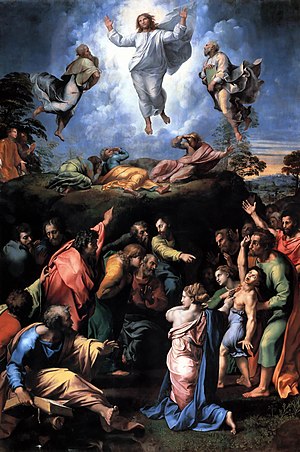
Once again, I just have notes for you today. If you would like to complain, speak to the management.
Highlight a few things in this passage. I’m usually fixed on the odd suggestion to build three tents, and what that can mean to us in this present day, trying to shelter the divine, and I almost preached on that.
But last night I looked at this again and decided on another focus. I want us to fix our attention on two things: God’s instructions to “listen to Jesus,” and the path that Jesus takes down the mountain: what occurs afterward.
This is “transfiguration Sunday,” it is the last glimpse of power and glory before we give ourselves a 40 day hiatus from. It is the last Sunday in the season of Epiphany, when we celebrate the light of Christ before the seasonal “dark night of the soul” that is lent. This rhythm is important, because it reflects the spiritual life.
After this event we read about today, Jesus instructs his disciples to tell no one of it, and then plunges down the mountain to be met by disciples and a “faithless generation” that seems to frustrate and fatigue him.
Seasonally and spiritually, we are oftentimes led away from our mountaintop experiences into the valleys of darkness. Sometimes when I have had memorable and profound spiritual awakenings, the days that follow are often mundane and grey. I begin to experience the dull ache for a return to the mountaintop because by comparison, it is fleeting.
Annie Dillard notes: "The question from agnosticism is `Who turned on the lights?' The question from faith is `Whatever for?'" The mountaintop's holy light was meant not to dazzle or overwhelm, but to empower and set free. It was intended to aid those first disciples in putting into perspective Jesus' teachings about carrying one's cross, and suffering and death. It was meant to light the way of their journey with him to the cross and beyond. It enabled them to see in the dark by giving them the tools of night vision. Then they could rise at his command, like Lazarus, and pursue the fullness of life without fear.
Sometimes the light comes before the darkness in order to help us remember hope and freedom.
Mother Theresa started her career among the poor with an ecstatic, connected experience of God, and then her journals show that for the rest of her life she did not hear another word from God. She called Christ “the Silent One.”
As the Hebrew people marched across the Red Sea, with God’s power and glory abounding, could they imagine that they were embarking on a 40 year journey through the wilderness when many of them would begin to pine away for the “good ol’ days” of slavery?
The mountaintop is real, but so is the valley. There are many shadows for us to confront, and many dark places to reach with the message of light and goodness and love and forgiveness.
But we don’t begin work on others before we begin work on ourselves. God says to the disciples, “Listen to him,” and to listen to Jesus is to be changed by Jesus.
Listening to him involves us confronting our fears. Are we afraid to live our lives the way that he perceives is possible in us?
When we open our hearts to the transforming, transfiguring love of Christ, we’re blinded by the light—when we recover from this life changing event, it oftentimes means that we may find love in our heart for the very people we THOUGHT God hates.
Saul knew with all his heart that God hated the Christians. The scriptures tell us that he held the coats of those who stoned the early Christian martyrs. He was right there cheering them on, and probably even participated.
Then Christ shows up, blinds him with a vision of love he can’t quite wrap his mind around, then when the scales fall from his eyes, he loves Christ so much that he ends up finding him in groups of people that the early Christians didn’t even imagine could be possible! Do you recognize this?!
Are we ready and willing to be changed by and then bear the transforming power of Christ in the world? I’m not talking about Christ’s blinding power changing other people—I’m talking about that blinding power changing you!!!! And me!!!!
We don’t have any business saying someone else should be changed and healed and transformed by God until we step up to the plate and take a swing at what that means for us---for our rigid notions and our usual habits and our sacred cows. God smashes those things up and makes them into ashes and smears them on our face.
That’s what we’ll do this Wednesday—swallow our own finitude and accept God’s gracious everlastingness. Grace lasts forever—walls crumble!!!!!
CS Lewis writes that God makes us perfect, whether we like it or not. God doesn’t let us just make half changes. I find a good many people have been bothered by what I said in the previous chapter about Our Lord's words, `Be ye perfect.' Some people seem to think this means 'Unless you are perfect, I will not help you'; and as we cannot be perfect, then, if He meant that, our position is hopeless. But I do not think He did mean that. I think He meant 'The only help I will give is help to become perfect. You may want something less: but I will give you nothing less.'
Let me explain. When I was a child I often had toothache, and I knew that if I went to my mother she would give me something which would deaden the pain for that night and let me get to sleep. But I did not go to my mother-at least, not till the pain became very bad. And the reason I did not go was this. I did not doubt she would give me the aspirin; but I knew she would also do something else. I knew she would take me to the dentist next morning. I could not get what I wanted out of her without getting something more, which I did not want. I wanted immediate relief from pain: but I could not get it without having my teeth set permanently right. And I knew those dentists; I knew they started fiddling about with all sorts of other teeth which had not yet begun to ache. They would not let sleeping dogs lie; if you gave them an inch they took an ell.
Now, if I may put it that way, Our Lord is like the dentists. If you give Him an inch, He will take an ell. Dozens of people go to Him to be cured of some one particular sin which they are ashamed of (like masturbation or physical cowardice) or which is obviously spoiling daily life (like bad temper or drunkenness). Well, He will cure it all right: but He will not stop there. That may be all you asked; but if once you call Him in, He will give you the full treatment.
That is why He warned people to 'count the cost' before becoming Christians. 'Make no mistake; He says, 'if you let me, I will make you perfect. The moment you put yourself in My hands, that is what you are in for. Nothing less, or other, than that. You have free will, and if you choose, you can push Me away. But if you do not push Me away, understand that I am going to see this job through. Whatever suffering it may cost you in your earthly life, whatever inconceivable purification it may cost you after death, whatever it costs Me, I will never rest, nor let you rest, until you are literally perfect-until my Father can say without reservation that He is well pleased with you, as He said He was well pleased with me. This I can do and will do. But I will not do anything less.'
So, may we go headlong into Lent like the disciples follow Christ down from the mountain of Transfiguration.
May we understand that walking along with this man means that we will be perfected in him and by him and through him.
May the light of the transfiguration un-blind our eyes to the power and presence of Christ even in what seem like trying times and dark times.
May we hold the light of those times in our own experience when we have felt God closest to us as a powerful moment that compels us to charge into the valleys of darkness unwavering from our master’s footprints.
And may we begin this journey here, at the table, where the transfigured Christ meets us in the bread and wine that we believe is transfigured into Christ’s body and blood given for all of us.
But last night I looked at this again and decided on another focus. I want us to fix our attention on two things: God’s instructions to “listen to Jesus,” and the path that Jesus takes down the mountain: what occurs afterward.
This is “transfiguration Sunday,” it is the last glimpse of power and glory before we give ourselves a 40 day hiatus from. It is the last Sunday in the season of Epiphany, when we celebrate the light of Christ before the seasonal “dark night of the soul” that is lent. This rhythm is important, because it reflects the spiritual life.
After this event we read about today, Jesus instructs his disciples to tell no one of it, and then plunges down the mountain to be met by disciples and a “faithless generation” that seems to frustrate and fatigue him.
Seasonally and spiritually, we are oftentimes led away from our mountaintop experiences into the valleys of darkness. Sometimes when I have had memorable and profound spiritual awakenings, the days that follow are often mundane and grey. I begin to experience the dull ache for a return to the mountaintop because by comparison, it is fleeting.
Annie Dillard notes: "The question from agnosticism is `Who turned on the lights?' The question from faith is `Whatever for?'" The mountaintop's holy light was meant not to dazzle or overwhelm, but to empower and set free. It was intended to aid those first disciples in putting into perspective Jesus' teachings about carrying one's cross, and suffering and death. It was meant to light the way of their journey with him to the cross and beyond. It enabled them to see in the dark by giving them the tools of night vision. Then they could rise at his command, like Lazarus, and pursue the fullness of life without fear.
Sometimes the light comes before the darkness in order to help us remember hope and freedom.
Mother Theresa started her career among the poor with an ecstatic, connected experience of God, and then her journals show that for the rest of her life she did not hear another word from God. She called Christ “the Silent One.”
As the Hebrew people marched across the Red Sea, with God’s power and glory abounding, could they imagine that they were embarking on a 40 year journey through the wilderness when many of them would begin to pine away for the “good ol’ days” of slavery?
The mountaintop is real, but so is the valley. There are many shadows for us to confront, and many dark places to reach with the message of light and goodness and love and forgiveness.
But we don’t begin work on others before we begin work on ourselves. God says to the disciples, “Listen to him,” and to listen to Jesus is to be changed by Jesus.
Listening to him involves us confronting our fears. Are we afraid to live our lives the way that he perceives is possible in us?
When we open our hearts to the transforming, transfiguring love of Christ, we’re blinded by the light—when we recover from this life changing event, it oftentimes means that we may find love in our heart for the very people we THOUGHT God hates.
Saul knew with all his heart that God hated the Christians. The scriptures tell us that he held the coats of those who stoned the early Christian martyrs. He was right there cheering them on, and probably even participated.
Then Christ shows up, blinds him with a vision of love he can’t quite wrap his mind around, then when the scales fall from his eyes, he loves Christ so much that he ends up finding him in groups of people that the early Christians didn’t even imagine could be possible! Do you recognize this?!
Are we ready and willing to be changed by and then bear the transforming power of Christ in the world? I’m not talking about Christ’s blinding power changing other people—I’m talking about that blinding power changing you!!!! And me!!!!
We don’t have any business saying someone else should be changed and healed and transformed by God until we step up to the plate and take a swing at what that means for us---for our rigid notions and our usual habits and our sacred cows. God smashes those things up and makes them into ashes and smears them on our face.
That’s what we’ll do this Wednesday—swallow our own finitude and accept God’s gracious everlastingness. Grace lasts forever—walls crumble!!!!!
CS Lewis writes that God makes us perfect, whether we like it or not. God doesn’t let us just make half changes. I find a good many people have been bothered by what I said in the previous chapter about Our Lord's words, `Be ye perfect.' Some people seem to think this means 'Unless you are perfect, I will not help you'; and as we cannot be perfect, then, if He meant that, our position is hopeless. But I do not think He did mean that. I think He meant 'The only help I will give is help to become perfect. You may want something less: but I will give you nothing less.'
Let me explain. When I was a child I often had toothache, and I knew that if I went to my mother she would give me something which would deaden the pain for that night and let me get to sleep. But I did not go to my mother-at least, not till the pain became very bad. And the reason I did not go was this. I did not doubt she would give me the aspirin; but I knew she would also do something else. I knew she would take me to the dentist next morning. I could not get what I wanted out of her without getting something more, which I did not want. I wanted immediate relief from pain: but I could not get it without having my teeth set permanently right. And I knew those dentists; I knew they started fiddling about with all sorts of other teeth which had not yet begun to ache. They would not let sleeping dogs lie; if you gave them an inch they took an ell.
Now, if I may put it that way, Our Lord is like the dentists. If you give Him an inch, He will take an ell. Dozens of people go to Him to be cured of some one particular sin which they are ashamed of (like masturbation or physical cowardice) or which is obviously spoiling daily life (like bad temper or drunkenness). Well, He will cure it all right: but He will not stop there. That may be all you asked; but if once you call Him in, He will give you the full treatment.
That is why He warned people to 'count the cost' before becoming Christians. 'Make no mistake; He says, 'if you let me, I will make you perfect. The moment you put yourself in My hands, that is what you are in for. Nothing less, or other, than that. You have free will, and if you choose, you can push Me away. But if you do not push Me away, understand that I am going to see this job through. Whatever suffering it may cost you in your earthly life, whatever inconceivable purification it may cost you after death, whatever it costs Me, I will never rest, nor let you rest, until you are literally perfect-until my Father can say without reservation that He is well pleased with you, as He said He was well pleased with me. This I can do and will do. But I will not do anything less.'
So, may we go headlong into Lent like the disciples follow Christ down from the mountain of Transfiguration.
May we understand that walking along with this man means that we will be perfected in him and by him and through him.
May the light of the transfiguration un-blind our eyes to the power and presence of Christ even in what seem like trying times and dark times.
May we hold the light of those times in our own experience when we have felt God closest to us as a powerful moment that compels us to charge into the valleys of darkness unwavering from our master’s footprints.
And may we begin this journey here, at the table, where the transfigured Christ meets us in the bread and wine that we believe is transfigured into Christ’s body and blood given for all of us.
Monday, January 28, 2008
Jan 27 Sermon: Gone Fishin'
The past two Sundays, I've been experimenting a little with my preaching style. I've simply created notes and preached from the floor instead of the pulpit. From what I can tell, that has afforded me a little more laid back, engaging sermon, but it also means I can't give you my manuscript, because I don't record the sermons. Perhaps we'll start doing that if I continue on with this style of preaching. Until then, here's what I can remember:
Scriptures: 1 Corinthians 1: 10-18
Matthew 4: 12-23
I fished quite a bit as a kid, but I must admit I haven’t been in a while. There are certain things I remember though, and those things I do remember are translatable to the kind of fishing that Jesus asks his disciples to engage in: fishing for people. (I must admit that I haven’t done that as recently as I should as well though). some lessons i learned about fishing when I was a boy translate well to what Jesus is calling his disciples to do.
Fishing Requires patience. You don’t cast your line with any assurance that is going to be bitten. Cast many times.
There's a woman I know named Margaret who is bubbling over with invitation. She wants everyone she meets to walk with her on the path of discipleship. She's always casting out her line. She'll invite the grocery clerk, the lady at the drive through bank window, or the police officer who had just pulled her over for a ticket. I used to look at her with wonder and amazement because she felt so comfortable doing something that made me so uncomfortable. When I became a minister, I discovered that like it or not, I would need a portion of her spirit to help people feel welcome and excited about the ministry we were doing at the church to which I was appointed. We must be willing to cast our line into the water without any assurance that our invitation will be taken or not. We are surrounded by people who need to be "caught" by Christ. They may have gone to church once or twice a year here or elsewhere, or they may have never been involved with a church, but we quite literally surrounded by people who have no home for their faith.
Strategy and a knowledge of the ins and outs of the area helps tremendously.
the best fishers know their environment like the back of their hand. They know that a nest of brim usually congregate around that old fallen tree, or that the bend in the river usually contains a group of trout resting and in the mood for an occasional fly. To be effective evangelists, we should best know our own context and what we offer to our community.
You need bait and a willingness to go with different bait if what you’re using isn’t catching.
One of my favorite lures in my boyhood tacklebox was a big, colorful bellied fish with two multipronged hooks coming out of it. I think I liked it because even if I didn't have any fish on it, I still felt like I was reeling something in time after time. But for the little pond that I fished in, that lure didn't make much sense. It probably scared off the fish more than attracting them, because I was primarily catching perch and brim and the occasional bass.
Sometimes, in order to catch fish for Jesus, we have to be willing to change our lure. Sometimes we have to put aside our "pet projects" and favorite ways of doing things if we are going to attract new people.
You don’t just go from a fish biting to the fish being in your basket, you’ve got to reel them in.
One "hello" on a visitor's first visit isn't enough. We need to have consistent and continued contact with those who have taken an interest in our faith community.
Dynamite is an immoral way to fish. I used to enjoy tossing in an m-60 firecracker into the pond and watch all the little water creatures float up to the surface. but looking back on it, I really regret that I used to do that as a kid.
Some brands of Christianity employ the "scare the hell out of people" approach to evangelism. They harp on the crux of believing certain things in a certain way and the consequences they perceive are in the future for those who don't subscribe to their ideas. In my opinion, this isn't the kind of "Good news" that we are called to share in our community. We are here to invite people to walk with us the path of discipleship. We don't have a privileged standpoint, we are broken and faulty people seeking the companionship and shared journey of other broken and faulty people.
Those churches that use the "dynamite" of fear, threats, and damnation are likely to get the human equivalent of dead fish floating to the surface. We're looking for someone different: vital and vibrant fish who can contribute to our community.
Cleaning fish can be a stinky process. Cleaning catfish is one of the worst smells I've ever encountered.
Likewise, when we do attract fish who've been scouring the bottom of the pond for nourishment, the process that the Spirit undertakes to "clean" that fish sometimes causes an unpleasant environment. We must persevere in our calling to "fish for people" even when the results of that action cause consternation and strife in the community.
But all these analogies are built on the image of a fisherman with a rod and line. And so we probably make the equation in our own minds, since we go fishing as a past time, that perhaps evangelism is a past time. Perhaps evangelism is only something for those who enjoy it. You probably notice that Andrew and Simon Peter and James and John aren’t standing on the lakeshore artfully casting a line into the water. No idealistic soft lit river with Robert Redford’s narrative voice in the back ground. These men are doing hard labor with heavy nets. They are making a living.
I think Jesus expects us to “fish for people” with that kind of mentality. Inviting people into a life of discipleship to Christ, reaching out to those whom we know and love and pulling them along to follow Christ with us, is not a past-time. Fishing for people should be a livelihood for us. It should be basic to our walk with Christ. Part of the invitation that I’m giving to you to give to others is to worship the Living God with us here in community. But that’s not all and that certainly doesn’t have to come first. Sometimes, folks will respond to the invitation to join us in service to the poor or unfortunate. Sometimes we might invite others to look at the world around them with a different perspective when we encounter hostility or racism or narrow mindedness.
These are all invitations into discipleship. If you think I’m trying to convince you today that you all need to go out and invite someone to church, you’re hearing me too specifically. Think more broadly about what your life of discipleship means to you. That’s what you can best “advertise” when it comes to sharing the grace of Christ with others. Coming to church to be in worship is important, but it isn’t all there is.
I heard about a pastor who used this fishing model for evangelism, and a woman in our congregation said to him, "You know something, I hate fishing. And as for fishing for people -- I don't have the kind of time available you talked about. Does Christ have any place for a harried mom with four children?"
The pastor thought about that and came to the conclusion that the principles behind the text were not, "Help wanted - Fishermen Only!" The point is that you and I were meant to become a part of the tremendous divine plan to bring light to a dark world right whoever and wherever we happen to be. The carpenter's invitation reads, "Follow me and I will make you build people." The accountant will hear it as, "Follow me and I will make you help people know they count." The waitress will hear, "Follow me and I will make you serve the spiritual hunger of people." The physician will hear, "Follow me and I will make you a healer of people's souls." A beleaguered mom's call is, "Follow me and I will make you a builder of children."
Do you see? You were meant to be a part of God's divine plan to bring light, hope and meaning to a dark world. You can do this where you are. In fact, Christ needs you where you are. Fishermen will reach the fishermen. Teachers will reach the teachers. Truck drivers will reach the truck drivers. Moms (and Dads) will reach the kids.
What an amazing wonderful thing that you were designed to bring the light of God to a corner of the world that only you could possibly reach. Somewhere, someday, you will encounter that person that no one else in all of God's creation could reach with the light of God.
The only question left is -- "Are you available to bring the light of God to them?" It's what you were meant to do!
Scriptures: 1 Corinthians 1: 10-18
Matthew 4: 12-23
I fished quite a bit as a kid, but I must admit I haven’t been in a while. There are certain things I remember though, and those things I do remember are translatable to the kind of fishing that Jesus asks his disciples to engage in: fishing for people. (I must admit that I haven’t done that as recently as I should as well though). some lessons i learned about fishing when I was a boy translate well to what Jesus is calling his disciples to do.
Fishing Requires patience. You don’t cast your line with any assurance that is going to be bitten. Cast many times.
There's a woman I know named Margaret who is bubbling over with invitation. She wants everyone she meets to walk with her on the path of discipleship. She's always casting out her line. She'll invite the grocery clerk, the lady at the drive through bank window, or the police officer who had just pulled her over for a ticket. I used to look at her with wonder and amazement because she felt so comfortable doing something that made me so uncomfortable. When I became a minister, I discovered that like it or not, I would need a portion of her spirit to help people feel welcome and excited about the ministry we were doing at the church to which I was appointed. We must be willing to cast our line into the water without any assurance that our invitation will be taken or not. We are surrounded by people who need to be "caught" by Christ. They may have gone to church once or twice a year here or elsewhere, or they may have never been involved with a church, but we quite literally surrounded by people who have no home for their faith.
Strategy and a knowledge of the ins and outs of the area helps tremendously.
the best fishers know their environment like the back of their hand. They know that a nest of brim usually congregate around that old fallen tree, or that the bend in the river usually contains a group of trout resting and in the mood for an occasional fly. To be effective evangelists, we should best know our own context and what we offer to our community.
You need bait and a willingness to go with different bait if what you’re using isn’t catching.
One of my favorite lures in my boyhood tacklebox was a big, colorful bellied fish with two multipronged hooks coming out of it. I think I liked it because even if I didn't have any fish on it, I still felt like I was reeling something in time after time. But for the little pond that I fished in, that lure didn't make much sense. It probably scared off the fish more than attracting them, because I was primarily catching perch and brim and the occasional bass.
Sometimes, in order to catch fish for Jesus, we have to be willing to change our lure. Sometimes we have to put aside our "pet projects" and favorite ways of doing things if we are going to attract new people.
You don’t just go from a fish biting to the fish being in your basket, you’ve got to reel them in.
One "hello" on a visitor's first visit isn't enough. We need to have consistent and continued contact with those who have taken an interest in our faith community.
Dynamite is an immoral way to fish. I used to enjoy tossing in an m-60 firecracker into the pond and watch all the little water creatures float up to the surface. but looking back on it, I really regret that I used to do that as a kid.
Some brands of Christianity employ the "scare the hell out of people" approach to evangelism. They harp on the crux of believing certain things in a certain way and the consequences they perceive are in the future for those who don't subscribe to their ideas. In my opinion, this isn't the kind of "Good news" that we are called to share in our community. We are here to invite people to walk with us the path of discipleship. We don't have a privileged standpoint, we are broken and faulty people seeking the companionship and shared journey of other broken and faulty people.
Those churches that use the "dynamite" of fear, threats, and damnation are likely to get the human equivalent of dead fish floating to the surface. We're looking for someone different: vital and vibrant fish who can contribute to our community.
Cleaning fish can be a stinky process. Cleaning catfish is one of the worst smells I've ever encountered.
Likewise, when we do attract fish who've been scouring the bottom of the pond for nourishment, the process that the Spirit undertakes to "clean" that fish sometimes causes an unpleasant environment. We must persevere in our calling to "fish for people" even when the results of that action cause consternation and strife in the community.
But all these analogies are built on the image of a fisherman with a rod and line. And so we probably make the equation in our own minds, since we go fishing as a past time, that perhaps evangelism is a past time. Perhaps evangelism is only something for those who enjoy it. You probably notice that Andrew and Simon Peter and James and John aren’t standing on the lakeshore artfully casting a line into the water. No idealistic soft lit river with Robert Redford’s narrative voice in the back ground. These men are doing hard labor with heavy nets. They are making a living.
I think Jesus expects us to “fish for people” with that kind of mentality. Inviting people into a life of discipleship to Christ, reaching out to those whom we know and love and pulling them along to follow Christ with us, is not a past-time. Fishing for people should be a livelihood for us. It should be basic to our walk with Christ. Part of the invitation that I’m giving to you to give to others is to worship the Living God with us here in community. But that’s not all and that certainly doesn’t have to come first. Sometimes, folks will respond to the invitation to join us in service to the poor or unfortunate. Sometimes we might invite others to look at the world around them with a different perspective when we encounter hostility or racism or narrow mindedness.
These are all invitations into discipleship. If you think I’m trying to convince you today that you all need to go out and invite someone to church, you’re hearing me too specifically. Think more broadly about what your life of discipleship means to you. That’s what you can best “advertise” when it comes to sharing the grace of Christ with others. Coming to church to be in worship is important, but it isn’t all there is.
I heard about a pastor who used this fishing model for evangelism, and a woman in our congregation said to him, "You know something, I hate fishing. And as for fishing for people -- I don't have the kind of time available you talked about. Does Christ have any place for a harried mom with four children?"
The pastor thought about that and came to the conclusion that the principles behind the text were not, "Help wanted - Fishermen Only!" The point is that you and I were meant to become a part of the tremendous divine plan to bring light to a dark world right whoever and wherever we happen to be. The carpenter's invitation reads, "Follow me and I will make you build people." The accountant will hear it as, "Follow me and I will make you help people know they count." The waitress will hear, "Follow me and I will make you serve the spiritual hunger of people." The physician will hear, "Follow me and I will make you a healer of people's souls." A beleaguered mom's call is, "Follow me and I will make you a builder of children."
Do you see? You were meant to be a part of God's divine plan to bring light, hope and meaning to a dark world. You can do this where you are. In fact, Christ needs you where you are. Fishermen will reach the fishermen. Teachers will reach the teachers. Truck drivers will reach the truck drivers. Moms (and Dads) will reach the kids.
What an amazing wonderful thing that you were designed to bring the light of God to a corner of the world that only you could possibly reach. Somewhere, someday, you will encounter that person that no one else in all of God's creation could reach with the light of God.
The only question left is -- "Are you available to bring the light of God to them?" It's what you were meant to do!
Jan 20 sermon: Come and See
These are just notes from my sermon. I preached more extemporaniously here than I usually do.
I'm intrigued by this invitation that Jesus gives his disciples to "Come and See" when he is asked where he lives.
Where does Jesus live around here? He might be telling us to "come and see" and we're not hearing it. Come and see where Chrsit lives.
Whereas the story tells us that Jesus took the disciples to his house, perhaps now when we respond to Christ's call to "come and see," we'll find that he's not staying in one place. In order to see where he's staying, we must follow him.
When we respond, when we follow, Christ takes us by the arm and opens our eyes to the depths of things much like Amelie takes the blind man on the curb and describes to him in beautiful detail the world around him. Perhaps we are blind, since we fail to see the utterly intense beauty of the world and people around us. We pass through it like we are living in the darkness, as Isaiah says, but if we respond to the invitation to "come and see," we will be blessed with our eyes being opened for us. Christ describes all whom we encounter in ways that we were previously blind to. He helps us sense the "thou" in those whom we meet.
Friday, January 18, 2008
Wesleyan Covenant Renewal Sermon
Scriptures: Isaiah and Matthew
I was thinking the other day about an article I read in the Christian Century a couple years ago. The article was about a poll that was conducted nationwide regarding teenagers and belief. Perhaps surprisingly, Most Teens learn beliefs from parents! But most parents don’t feel competent in transferring beliefs.
Religious traditions understand themselves as presenting a truth revealed by a holy and almighty God who calls human beings from a self-centered focus to a life of serving God and neighbor….but most teens and probably most parents too think
religion is to help them make good life choices and be happy.
This focus of beliefs is what the poll conductors ended up terming “Moralistic Theraputic Deism,” moralistic in terms of being rule and ethic based, therapeutic in the sense that the point is to make you feel good about living life, and Deistic in the sense of the theological worldview that many of our founding fathers had—God created the world, but then kind of stepped back and didn’t do anything to influence the world. God is not active in the world other than in how the natural consequences of his original creative act have panned out throughout space and time.
Why we don’t affirm Moralistic Theraputic Deism:
We have a much richer, more theologically deep religion, and the distintinctive elements of it are the unique parts of the revelation—we could come up with “be happy and feel good about oneself” without a revelation from God. Furthermore, we don’t believe that God is satisfied with “being happy and feeling good about oneself.” It’s not that God wants us to feel worthless and bad about ourselves, but God wants us for us a happiness that sometimes defies our worldly sense of happiness. The old saying goes, “God loves us just as we are, and loves us too much to leave us that way.”
Wesley wrote in the covenant oath that we will take today, “Christ has many services to be done. Some are more easy and honorable, others are more difficult and disgraceful. Some are suitable to our inclinations and interests, others are contrary to both. In some ways we may please Christ and please ourselves. But then there are other works where we cannot please Christ except by denying ourselves.”
I believe we are what the book of Revelation calls “lukewarm” if and when we all believe Christ has called all of us to “easy and honorable” service for Christ. When you respond to Christ’s call to “follow me,” and then the path you walk is never among and with the poor or sick or outcast, then perhaps you’ve sleepwalked off the road of discipleship. Perhaps the calling you responded to wasn’t Christ’s, but the prophet of “moralistic, therapeutic, Deism.”
In our expression of Christianity, we believe there is a moment of being “saved,” but we believe the process of salvation involves a continual outpouring of grace propelling us toward a higher plane of living and loving.
A covenant is an expression of living into a higher plane of trust and commitment. At first glance a covenant looks a lot like a contract because it is an agreement. One way of looking at it would be turning over our own will freely to the will of God. Certainly, later in the covenant service, you will all say the words, “I renounce my own will, and take your will as my law.” However, I believe a better way of thinking about it would be making a formal commitment in the presence of God and our community to consistently strive for the Vision and Goals we find expressed by God in the Scriptures.
At the end of the covenant service, we will also all say together, “O mighty God, you have now become my Covenant Friend, and I, through your infinite grace, have become your covenant servant.”
As Jesus proclaims in the Gospel, by acknowledging our connection to the life giving vine—which is Christ himself, we will bear much fruit. A covenant is this kind of connection, and fruit bearing is the activity of a Christian who is “plugged in” to the radically life changing grace and love that we find in the person of Jesus Christ.
Christ causes us to live outside ourselves. Christ calls us to sacrifice for others, to confess our sins and to turn around on a new course. Christ calls us to live according to a new law—the law of Love. Seperated from this Vine, we shrivel up in the dry depravity of self-centeredness. We whither in the wasteland of want. Covenant making is public declaration—it calls our attention to our own connectedness. We serve God both individually and together as one body. We are fed spiritual food individually and as one body. We bear fruit individually and as one body. We make a covenant both individually and as one body. Making a covenant is an audible, visual, experiential reminder that we are indeed connected to the vine, and therefore SHOULD bear fruit.
As Wesley wrote, “I do here willingly put my neck under your yoke, to carry your burden. All your laws are holy, just, and good. I therefore take them as the rule for my words, thoughts, and actions, prominsing that I will strive to order my whole life according to your direction, and not allow myself to neglect anything I know to be my duty.” Keep in mind that Jesus says that his yoke is easy, and his burden is light. This isn’t because Jesus calls us all to “easy and honorable service.” This isn’t because taking on Jesus’ yoke is simply about “making good life choices and being happy.” Christ’s yoke is easy and his burden is light because God lifts us up and propels us forward with the Holy Spirit to advance the Kingdom of God when we give ourselves to him. We aren’t on our own—through covenant, God vows to be on our side. And unlike us, God never abandons this Holy covenant. Thanks be to God!
The Covenant service can be read here
I was thinking the other day about an article I read in the Christian Century a couple years ago. The article was about a poll that was conducted nationwide regarding teenagers and belief. Perhaps surprisingly, Most Teens learn beliefs from parents! But most parents don’t feel competent in transferring beliefs.
Religious traditions understand themselves as presenting a truth revealed by a holy and almighty God who calls human beings from a self-centered focus to a life of serving God and neighbor….but most teens and probably most parents too think
religion is to help them make good life choices and be happy.
This focus of beliefs is what the poll conductors ended up terming “Moralistic Theraputic Deism,” moralistic in terms of being rule and ethic based, therapeutic in the sense that the point is to make you feel good about living life, and Deistic in the sense of the theological worldview that many of our founding fathers had—God created the world, but then kind of stepped back and didn’t do anything to influence the world. God is not active in the world other than in how the natural consequences of his original creative act have panned out throughout space and time.
Why we don’t affirm Moralistic Theraputic Deism:
We have a much richer, more theologically deep religion, and the distintinctive elements of it are the unique parts of the revelation—we could come up with “be happy and feel good about oneself” without a revelation from God. Furthermore, we don’t believe that God is satisfied with “being happy and feeling good about oneself.” It’s not that God wants us to feel worthless and bad about ourselves, but God wants us for us a happiness that sometimes defies our worldly sense of happiness. The old saying goes, “God loves us just as we are, and loves us too much to leave us that way.”
Wesley wrote in the covenant oath that we will take today, “Christ has many services to be done. Some are more easy and honorable, others are more difficult and disgraceful. Some are suitable to our inclinations and interests, others are contrary to both. In some ways we may please Christ and please ourselves. But then there are other works where we cannot please Christ except by denying ourselves.”
I believe we are what the book of Revelation calls “lukewarm” if and when we all believe Christ has called all of us to “easy and honorable” service for Christ. When you respond to Christ’s call to “follow me,” and then the path you walk is never among and with the poor or sick or outcast, then perhaps you’ve sleepwalked off the road of discipleship. Perhaps the calling you responded to wasn’t Christ’s, but the prophet of “moralistic, therapeutic, Deism.”
In our expression of Christianity, we believe there is a moment of being “saved,” but we believe the process of salvation involves a continual outpouring of grace propelling us toward a higher plane of living and loving.
A covenant is an expression of living into a higher plane of trust and commitment. At first glance a covenant looks a lot like a contract because it is an agreement. One way of looking at it would be turning over our own will freely to the will of God. Certainly, later in the covenant service, you will all say the words, “I renounce my own will, and take your will as my law.” However, I believe a better way of thinking about it would be making a formal commitment in the presence of God and our community to consistently strive for the Vision and Goals we find expressed by God in the Scriptures.
At the end of the covenant service, we will also all say together, “O mighty God, you have now become my Covenant Friend, and I, through your infinite grace, have become your covenant servant.”
As Jesus proclaims in the Gospel, by acknowledging our connection to the life giving vine—which is Christ himself, we will bear much fruit. A covenant is this kind of connection, and fruit bearing is the activity of a Christian who is “plugged in” to the radically life changing grace and love that we find in the person of Jesus Christ.
Christ causes us to live outside ourselves. Christ calls us to sacrifice for others, to confess our sins and to turn around on a new course. Christ calls us to live according to a new law—the law of Love. Seperated from this Vine, we shrivel up in the dry depravity of self-centeredness. We whither in the wasteland of want. Covenant making is public declaration—it calls our attention to our own connectedness. We serve God both individually and together as one body. We are fed spiritual food individually and as one body. We bear fruit individually and as one body. We make a covenant both individually and as one body. Making a covenant is an audible, visual, experiential reminder that we are indeed connected to the vine, and therefore SHOULD bear fruit.
As Wesley wrote, “I do here willingly put my neck under your yoke, to carry your burden. All your laws are holy, just, and good. I therefore take them as the rule for my words, thoughts, and actions, prominsing that I will strive to order my whole life according to your direction, and not allow myself to neglect anything I know to be my duty.” Keep in mind that Jesus says that his yoke is easy, and his burden is light. This isn’t because Jesus calls us all to “easy and honorable service.” This isn’t because taking on Jesus’ yoke is simply about “making good life choices and being happy.” Christ’s yoke is easy and his burden is light because God lifts us up and propels us forward with the Holy Spirit to advance the Kingdom of God when we give ourselves to him. We aren’t on our own—through covenant, God vows to be on our side. And unlike us, God never abandons this Holy covenant. Thanks be to God!
The Covenant service can be read here
Wednesday, January 09, 2008
Paintball this Sunday!
Hey paintball fans--this Sunday is our day. It will be good weather to shoot at each other with little plastic balls of paint. If you want to go, make sure you check out all the information in the newsletter. You'll need $15 and an ounce of courage. Here's a link to the place we're going: Go there and print out a waiver form and if you're under 18, get a parent or guardian signiture. We'll leave at 1:30 and return by 6pm. See you there!
Pastor's reading list
With all the travelling I've been doing lately, I've been listening to a lot of audio books. Those, along with the books I'm reading the old fashioned way, have often contained little sections that I have read and then thought, "wow, I'd love to share that and discuss that with a group from the church!" The problem is that we already have a book study scheduled to begin this Sunday (on the book of Exodus) and there are only a certain number of days in the week when you and I are available to do that kind of thing. So here's the deal. From now on, you'll be able to access "my library" on the sidebar under "Pastor's reading list." You can click there, which will take you to a website called "Library Thing," where you can share your comments on "my profile" or just start a conversation with others on the world wide web who also have read that book. It's a way to have a book group without really having a book group. Get it?
Sunday, January 06, 2008
Epiphany Sermon, Jan. 6, 2008
Isaiah 60: 1-6
Matthew 2: 1-12
I begin the sermon by showing a photo of some friends of ours, and the picture is folded in half where you can only see them and not Lara and me. They look like your average folks. Then when I unfold the picture you see that they are giants. The woman is about half a foot taller than me (I’m 5’10’’), and the guy is a foot taller than me. Lara is standing next to me, and the female friend is about a foot taller than her. Your perspective is re-oriented.
I’ve always enjoyed mind tricks and optical illusions. I have a pack of playing cards that has all sorts of patterns and pictures that play a trick on you. Do you remember those posters they used to sell at the mall that had some patterns that if you stared at them long enough, if you focused on staring “through the poster” it would suddenly shift into three dimensions, and you could see a hidden picture within it? If you don’t know what I’m talking about, go here and here.
I think I’ve always liked these things because they involve a realization that our perspective can be shifted, it can be altered. One of my favorite “movie moments” is in Dead Poet’s Society where Robin Williams, playing an inspiring teacher at a prep school, convinces his strait laced students to stand up on top of their desks and look at their classroom from that perspective, and thus see their education in a new, more invested way. Toward the end of the movie, I always get chills when the students collectively show their respect and admiration for their teacher by standing on their desks and shouting, “O Captain, my captain!”
Today we heard a story that Matthew tells to make it plain that gentiles are to be included in this revolution the God of Israel is beginning in a manger. The gentile magi saw a star that alerted them to the birth of a new king. They had no doubt heard of the famous star that legend said appeared when Alexander the Great was born some 300 years previous. In their worldview, the stars were living beings, even gods, who observed the world and gave signs to the people on earth.
Astrology was not a problem to the people of the ancient world, in fact it was not a problem to the church for a majority of the church’s history. It was simply accepted that the “heaven’s proclaim the glory of God” in ways that could be studied and read. Jesus himself says in Luke’s gospel that “there shall be signs in the sun and the moon and the stars.” Luke 21 Perhaps if we still lived in a world without electricity, we’d still have more of a natural wonderment when it comes to the stars above us.
Last year we all tried to smell the frankencinse and myrrh and get our senses engaged in an experience of wonder. That’s a change in perspective. We usually live so tangled up in what goes on inside our heads that we forget what it is like to smell something deeply. An encounter with the living God is something that charges us up, body and soul.
So these Magi are Matthew’s way of saying that we’re included too. Gentiles played a part in the unfolding of this story from the start. And these Magi have their world altered, their perspective changed, just like all who encounter the living Christ.
According to the text, when they followed the star, the Magi were seeking “a child that has been born king of the Jews.” When they arrived in Bethlehem, “they were overwhelmed with joy.” I think they were filled with such joy because they had not just found “a king,” but “THE King.” They had turned from star-gazers into sun-gazers, Son-gazers, and responded by offering gifts that legend says made possible the Holy family’s flight and refuge in Egypt. Their epiphany was that this was a much more important pilgrimage than they had perhaps at first realized.
I’m interested in the “overwhelming joy” that Matthew reports these Magi experiencing. Haven’t you had those kinds of moments in your life when things just came into focus for you? Perhaps you had a great sense of joy and belonging and peace and connection. You felt at home in yourself. Have you had those types of experiences? We sometimes call them “Epiphanies,” because this experience usually involves some sort of new thought or feeling that is brought to light to us. Epiphany means “a sudden realization or comprehension of the essence or meaning of something or someone.”
I hope that this time of worship, when we come to the chancel and receive the communion meal can be a time of epiphany for you. This journey to the altar is symbolic of us joining the magi on their pilgrimage. Just like God gives the invitation to the uninitiated magi, practitioners of a different religion, we make the invitation to this table open to all who are here and searching.
When the magi finally find the house of Mary and Joseph and Jesus, Matthew tells us they are “filled with overwhelming joy.” They are wrapped up in the experience of being in the presence of a mystery. Perhaps it wasn’t what they were expecting. Perhaps they had expected to find this child king in a palace, or in a temple. But they found him in humble dwellings. Likewise, it might not naturally occur to us that we can find the God of our creation in a piece of bread and a sip of Welch’s grape juice, but we may be surprised!
So at this time, I ask that you prepare your hearts to experience the overwhelming joy of the epiphany that Jesus Christ is here with us in this very moment. Come to this table as the wise men came to Bethlehem, expecting to meet the king and pay their tribute and homage. Come to this table with the hope that our perspective can be changed and we can strike out on a new road.
Matthew 2: 1-12
I begin the sermon by showing a photo of some friends of ours, and the picture is folded in half where you can only see them and not Lara and me. They look like your average folks. Then when I unfold the picture you see that they are giants. The woman is about half a foot taller than me (I’m 5’10’’), and the guy is a foot taller than me. Lara is standing next to me, and the female friend is about a foot taller than her. Your perspective is re-oriented.
I’ve always enjoyed mind tricks and optical illusions. I have a pack of playing cards that has all sorts of patterns and pictures that play a trick on you. Do you remember those posters they used to sell at the mall that had some patterns that if you stared at them long enough, if you focused on staring “through the poster” it would suddenly shift into three dimensions, and you could see a hidden picture within it? If you don’t know what I’m talking about, go here and here.
I think I’ve always liked these things because they involve a realization that our perspective can be shifted, it can be altered. One of my favorite “movie moments” is in Dead Poet’s Society where Robin Williams, playing an inspiring teacher at a prep school, convinces his strait laced students to stand up on top of their desks and look at their classroom from that perspective, and thus see their education in a new, more invested way. Toward the end of the movie, I always get chills when the students collectively show their respect and admiration for their teacher by standing on their desks and shouting, “O Captain, my captain!”
Today we heard a story that Matthew tells to make it plain that gentiles are to be included in this revolution the God of Israel is beginning in a manger. The gentile magi saw a star that alerted them to the birth of a new king. They had no doubt heard of the famous star that legend said appeared when Alexander the Great was born some 300 years previous. In their worldview, the stars were living beings, even gods, who observed the world and gave signs to the people on earth.
Astrology was not a problem to the people of the ancient world, in fact it was not a problem to the church for a majority of the church’s history. It was simply accepted that the “heaven’s proclaim the glory of God” in ways that could be studied and read. Jesus himself says in Luke’s gospel that “there shall be signs in the sun and the moon and the stars.” Luke 21 Perhaps if we still lived in a world without electricity, we’d still have more of a natural wonderment when it comes to the stars above us.
Last year we all tried to smell the frankencinse and myrrh and get our senses engaged in an experience of wonder. That’s a change in perspective. We usually live so tangled up in what goes on inside our heads that we forget what it is like to smell something deeply. An encounter with the living God is something that charges us up, body and soul.
So these Magi are Matthew’s way of saying that we’re included too. Gentiles played a part in the unfolding of this story from the start. And these Magi have their world altered, their perspective changed, just like all who encounter the living Christ.
According to the text, when they followed the star, the Magi were seeking “a child that has been born king of the Jews.” When they arrived in Bethlehem, “they were overwhelmed with joy.” I think they were filled with such joy because they had not just found “a king,” but “THE King.” They had turned from star-gazers into sun-gazers, Son-gazers, and responded by offering gifts that legend says made possible the Holy family’s flight and refuge in Egypt. Their epiphany was that this was a much more important pilgrimage than they had perhaps at first realized.
I’m interested in the “overwhelming joy” that Matthew reports these Magi experiencing. Haven’t you had those kinds of moments in your life when things just came into focus for you? Perhaps you had a great sense of joy and belonging and peace and connection. You felt at home in yourself. Have you had those types of experiences? We sometimes call them “Epiphanies,” because this experience usually involves some sort of new thought or feeling that is brought to light to us. Epiphany means “a sudden realization or comprehension of the essence or meaning of something or someone.”
I hope that this time of worship, when we come to the chancel and receive the communion meal can be a time of epiphany for you. This journey to the altar is symbolic of us joining the magi on their pilgrimage. Just like God gives the invitation to the uninitiated magi, practitioners of a different religion, we make the invitation to this table open to all who are here and searching.
When the magi finally find the house of Mary and Joseph and Jesus, Matthew tells us they are “filled with overwhelming joy.” They are wrapped up in the experience of being in the presence of a mystery. Perhaps it wasn’t what they were expecting. Perhaps they had expected to find this child king in a palace, or in a temple. But they found him in humble dwellings. Likewise, it might not naturally occur to us that we can find the God of our creation in a piece of bread and a sip of Welch’s grape juice, but we may be surprised!
So at this time, I ask that you prepare your hearts to experience the overwhelming joy of the epiphany that Jesus Christ is here with us in this very moment. Come to this table as the wise men came to Bethlehem, expecting to meet the king and pay their tribute and homage. Come to this table with the hope that our perspective can be changed and we can strike out on a new road.
Sunday, December 30, 2007
Christ our Refuge and Refugee
Scriptures:
Isaiah 63: 7-9
Matthew 2: 13-23
Once again, in today’s scripture, Matthew lets us in on one of Joseph’s angelic dreams. Once again, the angel gives Joseph information that will save Jesus. Once again, Matthew gives testimony to God’s vulnerable power.
Herod, who was the Jewish Roman appointee over Israel, was infamous for his cruelty and suspicion. The Jewish historian Josephus records that Herod's later years were full of attempts to defend his throne against the Jewish Hasmoneans, the descendants of the Maccabees. In the final years of his reign his three eldest sons were killed on suspicion of plotting to seize Herod's throne. Earlier in his reign he eliminated all the prominent Hasmoneans. He had an elaborate network of spies, and he often executed people for real or imagined conspiracies against his throne. Josephus even talks about a plan, never carried out, to have all the Jewish nobility slaughtered at the time of his own death to ensure that everyone would be mourning at his death
However, Matthew’s account of the plot to slaughter the innocent boys under two years of age in Bethlehem is not recorded in Josephus or other historical records. population statisticians estimate that the “slaughter of the innocents” probably took the lives of around 20 children: By historical standards, not enough to recount.
So, with God’s warning, Mary and Joseph take their little baby out of Israel and into a land where their ancestors had before been subject to another paranoid plot by a Pharoah to thin out the population of Hebrew slaves by killing the infants because they were becoming too numerous and threatened his authority.
Matthew’s story also begins the commonalities with the Exodus narrative of Moses, also born under the threat of a tyrannical ruler executing children for fear of being overthrown. Matthew is the only gospel writer to show Mary and Joseph taking Jesus into Egypt, further highlighting the similarities between Moses leading his people out of bondage and Jesus leading the world out of bondage to sin and death.
Though I do my best to relate to Jesus and let him relate to me through our commonly shared humanity, I cannot claim to be a refugee like he was. Just because I have at points in my life “run away from my problems” doesn’t make me a refugee, and Jesus never ran away from his problems. But there are many in this world for whom today’s scripture reading provides a special touchstone of connection to their own lives.
Through scouting around on the United Nations High Commissioner for Refugees website, I learned that the total number of "people of concern" in the world stood at 21 million at the end of 2005. By the close of 2006 it was 33 million, the most dramatic one year increase in memory.
Hundreds of thousands of people became newly displaced in Columbia, Iraq, Lebanon, Sri-Lanka and Timor. Increased data-gathering in other nations such as the Cote d'Ivoire, Congo and Uganda increased the numbers dramatically. Even North America experienced dramatic rises in internally displaced persons as a result of Hurricane Katrina.
The point is that we now have a world that is increasingly "on the move" against its will. I hope that “hearing the numbers” in the context of today’s scripture reading gives you a stronger sense of connection with this issue than would normally be the case when hearing statistics of “millions of people.” Those of us who deny the issue or consider it unimportant remind me of the lazy person condemned in Prov. 24:33, "A little sleep, a little slumber, a little folding of the hands to rest.."
One of the issues of justice that I have covenanted to work on through our covenant discipleship group has been to appeal to our national representatives in Congress to take a more diligent approach in facilitating the resettlement of Iraqi refugees displaced by our war in that country. The “land of opportunity” that we call home has been less enthusiastic about receiving refugees than we have been creating them. There are currently around 2.5 million internally displaced people in Iraq, meaning they have either lost their homes to destruction, or have been evacuated, but have not left the country of Iraq, and there are another approximately 1.5 million refugees in the neighboring countries of Syria and Jordan.
Of the comparatively small number who are actually processed as asylum seekers by the UN and submitted to industrialized countries for processing, this year the USA was given almost 15,000 applications, and as of Dec. 1st has only accepted around 2400. 2.5 internally displaced people in Iraq, and we absorb .1% of the load. I think we can do better, I think our representatives can do something about it, so I let them know that. We are currently being out-hospitalitized by the notoriously open-armed Swedes, who received almost half of the asylum seekers in 2007.
And so our savior shares this in common not with us, but with those Iraqis, Haitians, Lebanese, and Eritreans. How do our actions cause the Son of Man and sons of men to seek shelter? How does our callous disregard for and disinterest in the actions and inactions of our super-powerful empire of a culture contribute to the life of the little Sudanese baby who goes to sleep each night in the dirt in a refugee camp in Chad?
What about the little girls who pass the hours not going to school or talking on the phone, but standing in line waiting for their daily rations at an internally displaced person’s camp in Iraq? “The foxes have their holes, and the birds have their nests, but the son of man has no place to lay his head and rest.”
The Good news for us is that God doesn’t judge us for having things easy. God doesn’t judge us for being born into fortunate circumstances just because his own son was born into such desperation. But God does judge us for sitting in the lap of luxury and doing nothing for those who are sitting in squalor. We are the goats whom Matthew tells us are turned away at the judgment seat when Christ says to us, 'Depart from me, you who are cursed, into the eternal fire prepared for the devil and his angels. 42 For I was hungry and you gave me nothing to eat, I was thirsty and you gave me nothing to drink, 43 I was a stranger and you did not invite me in, I needed clothes and you did not clothe me, I was sick and in prison and you did not look after me.' 44 "They also will answer, 'Lord, when did we see you hungry or thirsty or a stranger or needing clothes or sick or in prison, and did not help you?' 45 "He will reply, 'I tell you the truth, whatever you did not do for one of the least of these, you did not do for me.' 46 "Then they will go away to eternal punishment, but the righteous to eternal life."
God, being incarnate in the life of a little boy who had to be whisked away into hiding, was a refugee, but through the sharing of a human life also became our ultimate refuge. We can take comfort in God because we know God has been though it. And we can offer our sisters and brothers who are hurting comfort by assuring them that Christ walks with them. God has experienced the hardships of life, and usually more so than we. So when we seek refuge in God, it is not in some distant Deity: it is in a shared experience.
Isaiah says that “It was no messenger or angel but his presence that saved them; in his love and in his pity he redeemed them; he lifted them up and carried them all the days of old.” God doesn’t redeem or love or pity from a pedestal. It is his “presence” that saves us.
And it is his presence in the least of those among us where we will find salvation. Through the giving of our lives, or the giving of some portion of our lives, to the alleviation of suffering in the world, Christ presents us with the salvation from the damnation of believing the word revolves around us.
While Christ is a refugee, and because Christ is a refugee, he is also a refuge. He is an embodiment of God’s empathy. He cannot offer us refuge in the form of protection from the world. Belief in him will not keep you from getting into a car wreck or suffering from cancer, but he can offer refuge in the way of a loving embrace, a held hand as we face our days and trials. His name is Immanuel, God is with us. Amen
Isaiah 63: 7-9
Matthew 2: 13-23
Once again, in today’s scripture, Matthew lets us in on one of Joseph’s angelic dreams. Once again, the angel gives Joseph information that will save Jesus. Once again, Matthew gives testimony to God’s vulnerable power.
Herod, who was the Jewish Roman appointee over Israel, was infamous for his cruelty and suspicion. The Jewish historian Josephus records that Herod's later years were full of attempts to defend his throne against the Jewish Hasmoneans, the descendants of the Maccabees. In the final years of his reign his three eldest sons were killed on suspicion of plotting to seize Herod's throne. Earlier in his reign he eliminated all the prominent Hasmoneans. He had an elaborate network of spies, and he often executed people for real or imagined conspiracies against his throne. Josephus even talks about a plan, never carried out, to have all the Jewish nobility slaughtered at the time of his own death to ensure that everyone would be mourning at his death
However, Matthew’s account of the plot to slaughter the innocent boys under two years of age in Bethlehem is not recorded in Josephus or other historical records. population statisticians estimate that the “slaughter of the innocents” probably took the lives of around 20 children: By historical standards, not enough to recount.
So, with God’s warning, Mary and Joseph take their little baby out of Israel and into a land where their ancestors had before been subject to another paranoid plot by a Pharoah to thin out the population of Hebrew slaves by killing the infants because they were becoming too numerous and threatened his authority.
Matthew’s story also begins the commonalities with the Exodus narrative of Moses, also born under the threat of a tyrannical ruler executing children for fear of being overthrown. Matthew is the only gospel writer to show Mary and Joseph taking Jesus into Egypt, further highlighting the similarities between Moses leading his people out of bondage and Jesus leading the world out of bondage to sin and death.
Though I do my best to relate to Jesus and let him relate to me through our commonly shared humanity, I cannot claim to be a refugee like he was. Just because I have at points in my life “run away from my problems” doesn’t make me a refugee, and Jesus never ran away from his problems. But there are many in this world for whom today’s scripture reading provides a special touchstone of connection to their own lives.
Through scouting around on the United Nations High Commissioner for Refugees website, I learned that the total number of "people of concern" in the world stood at 21 million at the end of 2005. By the close of 2006 it was 33 million, the most dramatic one year increase in memory.
Hundreds of thousands of people became newly displaced in Columbia, Iraq, Lebanon, Sri-Lanka and Timor. Increased data-gathering in other nations such as the Cote d'Ivoire, Congo and Uganda increased the numbers dramatically. Even North America experienced dramatic rises in internally displaced persons as a result of Hurricane Katrina.
The point is that we now have a world that is increasingly "on the move" against its will. I hope that “hearing the numbers” in the context of today’s scripture reading gives you a stronger sense of connection with this issue than would normally be the case when hearing statistics of “millions of people.” Those of us who deny the issue or consider it unimportant remind me of the lazy person condemned in Prov. 24:33, "A little sleep, a little slumber, a little folding of the hands to rest.."
One of the issues of justice that I have covenanted to work on through our covenant discipleship group has been to appeal to our national representatives in Congress to take a more diligent approach in facilitating the resettlement of Iraqi refugees displaced by our war in that country. The “land of opportunity” that we call home has been less enthusiastic about receiving refugees than we have been creating them. There are currently around 2.5 million internally displaced people in Iraq, meaning they have either lost their homes to destruction, or have been evacuated, but have not left the country of Iraq, and there are another approximately 1.5 million refugees in the neighboring countries of Syria and Jordan.
Of the comparatively small number who are actually processed as asylum seekers by the UN and submitted to industrialized countries for processing, this year the USA was given almost 15,000 applications, and as of Dec. 1st has only accepted around 2400. 2.5 internally displaced people in Iraq, and we absorb .1% of the load. I think we can do better, I think our representatives can do something about it, so I let them know that. We are currently being out-hospitalitized by the notoriously open-armed Swedes, who received almost half of the asylum seekers in 2007.
And so our savior shares this in common not with us, but with those Iraqis, Haitians, Lebanese, and Eritreans. How do our actions cause the Son of Man and sons of men to seek shelter? How does our callous disregard for and disinterest in the actions and inactions of our super-powerful empire of a culture contribute to the life of the little Sudanese baby who goes to sleep each night in the dirt in a refugee camp in Chad?
What about the little girls who pass the hours not going to school or talking on the phone, but standing in line waiting for their daily rations at an internally displaced person’s camp in Iraq? “The foxes have their holes, and the birds have their nests, but the son of man has no place to lay his head and rest.”
The Good news for us is that God doesn’t judge us for having things easy. God doesn’t judge us for being born into fortunate circumstances just because his own son was born into such desperation. But God does judge us for sitting in the lap of luxury and doing nothing for those who are sitting in squalor. We are the goats whom Matthew tells us are turned away at the judgment seat when Christ says to us, 'Depart from me, you who are cursed, into the eternal fire prepared for the devil and his angels. 42 For I was hungry and you gave me nothing to eat, I was thirsty and you gave me nothing to drink, 43 I was a stranger and you did not invite me in, I needed clothes and you did not clothe me, I was sick and in prison and you did not look after me.' 44 "They also will answer, 'Lord, when did we see you hungry or thirsty or a stranger or needing clothes or sick or in prison, and did not help you?' 45 "He will reply, 'I tell you the truth, whatever you did not do for one of the least of these, you did not do for me.' 46 "Then they will go away to eternal punishment, but the righteous to eternal life."
God, being incarnate in the life of a little boy who had to be whisked away into hiding, was a refugee, but through the sharing of a human life also became our ultimate refuge. We can take comfort in God because we know God has been though it. And we can offer our sisters and brothers who are hurting comfort by assuring them that Christ walks with them. God has experienced the hardships of life, and usually more so than we. So when we seek refuge in God, it is not in some distant Deity: it is in a shared experience.
Isaiah says that “It was no messenger or angel but his presence that saved them; in his love and in his pity he redeemed them; he lifted them up and carried them all the days of old.” God doesn’t redeem or love or pity from a pedestal. It is his “presence” that saves us.
And it is his presence in the least of those among us where we will find salvation. Through the giving of our lives, or the giving of some portion of our lives, to the alleviation of suffering in the world, Christ presents us with the salvation from the damnation of believing the word revolves around us.
While Christ is a refugee, and because Christ is a refugee, he is also a refuge. He is an embodiment of God’s empathy. He cannot offer us refuge in the form of protection from the world. Belief in him will not keep you from getting into a car wreck or suffering from cancer, but he can offer refuge in the way of a loving embrace, a held hand as we face our days and trials. His name is Immanuel, God is with us. Amen
Sunday, December 23, 2007
Advent 4 Sermon: Vulnerable Power
Sermon Texts:
Deuteronomy 22: 13-30
Matthew 1: 18-25
I like word games. I sometimes get on the internet and play scrabble with people from all around the world. That’s fun. I also love a game called “Boggle” where you shake up this game-board that has all these dice with letters on each side, an then you try to make words out of the die that are touching each other.
Another of my favorites is called “Balderdash,” where you are given a word that you most likely don’t know, and then you make up a definition that you think will convince other people. You submit your definition for the word along with all the other players in the game, and the real definition is read too. The object is to try and guess for the right definition, and make other people vote for yours.
One game that kind of gets the engine in my mind working for sermon writing is free association. I read a word, and then I write down all the words or images that come to my mind when I hear that word.
When playing “free association” with the word “power,” or even more specifically “the power to conquer sin,” I can’t help myself but think of things like “triumphant,” “strength,” “overwhelming,” “defeating.” I may think of images like a “Mighty Wind,” or “an Empty Tomb,” or the “Fourth Horseman.” In my own mind, the word “Power” may be associated with a million other words and never attract the word “vulnerable.” “The Power to Conquer sin” might take on various costumes without ever reaching the image of a baby’s hand reaching out of a straw filled manger.
So this is how we know this idea comes from the mind of God and not from the mind of mankind. It just doesn’t correlate for us. It isn’t natural. It is non-sense. Power is the ability to have no vulnerability, right? A newborn baby can’t even conquer the art of standing on two feet, much less conquering sin.
Such things just don’t spring out of a creative author’s imagination, they are too counter-cultural and counter intuitive. So, we read this story in Matthew and in Luke with wonder and awe and mystery. Some have discounted the stories as factual accounts of history, but it matters not. Whether or not they are factual, they are true!
Never has such power been so vulnerable at any time in history as what we witness in this passage of scripture. Though it wasn’t what the lectionary prescribed for today, I wanted us to all hear Deuteronomy 22 so that we would all know just how vulnerable the Christ child was!
This Power is so vulnerable, All it would have taken for it to not have come into being would have been for one person to shut her heart to the prompting of the Spirit. It would have only taken one man closing his mind to the possibilities presented to him in a dream. If instead he had thought of those laws prescribed by Deuteronomy and said to himself, “It was only a dream, this is what the law requires.” How many of us act on what comes to us in our dreams, anyway?
This sin conquering power that is embodied in this little child might have not even made it to the world if Joseph had of followed the letter of the law found in Deuteronomy. Our Lord, the conquering Lion of the tribe of Judah, the lamb who takes away the sin of the world, might have been stoned to death in the womb, along with his mother, Mary in the doorway of his grandfather’s house. But this vulnerable power prevailed!
Matthew describes Joseph as a “righteous” man. By “righteous” he means that Joseph lives by the Law. He is a just man. Yet, Matthew shows Joseph balancing the words of the law with what the Spirit stirs in his heart, he portrays Joseph opting for compassion over strict adherence. What does the Lord require of us?
The New Interpreter’s Bible Suggests:
As modern hearers of this story, we’re struck by the similarity between Joseph’s quandary and their own. We want to “do the right thing,” and we believe that somehow it is revealed in the Bible. We may belong to a church that claims to accept the Bible as the norm for its faith and practice and, yet, sense that the “Christian thing to do” does not follow the letter of the Bible.
There are some biblical commands that many churches, in all good conscience and with reverence for the Bible as the Word of God, simply do not obey. This is not only in such matters as the washing of feet (John 13:12-17) and holy kisses (1 Cor 16:20), but in more basic directions concerning divorce (Mark 10:2-12) and household structure and lines of authority (1 Pet 3:1-6).
Matthew writes for the same kind of church. As Jewish Christians who had always reverenced the Law, they sometimes found themselves torn between strict adherence to the letter of the Torah and the supreme demand of love to which their new faith called them (22:39-40). If they neglected the Law, they were accused by others, and perhaps by themselves, of rejecting Bible and tradition as the “unrighteous.”
But Joseph is pictured as “righteous,” even though he had decided to act out of care for another person’s dignity rather than strictly adhere to the Law. As it turned out, Joseph did not have to carry through on his decision, but the point is made: Matthew wants to instruct his church in being “righteous” (just, committed to justice) in a way that respects both the Law of the Bible and the Christian orientation to love, even if it seems to violate the Law.
Thus Joseph stands, at the beginning of Matthew’s Gospel, as a model of what Matthew hopes for all disciples—indeed, for each reader of the Gospel. Joseph is already facing the “you-have-heard-that-it-was-said- but-I-say-to-you” tension that will be displayed in the Sermon on the Mount (5:21-48)—the tension between the prevailing understanding of God’s commandments and the new thing that God is doing in Jesus.
By Joseph’s decision to obey the startling and unexpected command of God, he is already living the heart of the law and not its letter, already living out the new and higher righteousness of the kingdom (5:20). In a difficult moral situation, he attends to the voice of God, and he is willing to set aside his previous understanding of God’s will in favor of this word from the living and saving God.
Truth be told, the rabbinic tradition had mitigated this portion of the Law by the time Mary and Joseph were faced with their respective decisions. The teachers of Law had decided that Deut. 22 was a bit harsh, and it was already uncommon to find people adhering strictly to these tenants, but still—the Power of God incarnate came into some pretty precarious circumstances, nonetheless.
The mysterious and earth changing power that is brought to life in this story about a boy coming into the world in precarious circumstances is a revelation to us about our God: who show’s forgiveness in a Father’s embrace, who takes flight in something like a gentle dove, in one whose power is through suffering, death, and finally resurrection.
God’s power is shown in our lives when we love our enemies, when we turn the other cheek to those who wrong us, and when we help those who are dire straits. The power of our God takes place in humble human lives and loves, and in this way we are part of this manger story.
Likewise, Joseph’s choice to follow his heart over the letter of the law is an example of power in vulnerability, because he is making himself vulnerable to the possibility is doing a “new thing,” instead of just “sticking to the ‘gameplan.’” The law is solid, it is cornerstone of Joseph’s culture, and yet Joseph opts for another path. He’s going out on the limb that God is communicating to him, an ordinary carpenter. He’s willing to trust the angel’s message in a dream: that the unknown baby his fiancé is carrying will save his people from their sins. And instead of distancing himself from such a crazy circumstance, he embraces that vulnerable power.
The vulnerable power becomes a boy, and Joseph teaches him and raises him. That vulnerable power grows into a man who teaches and loves and forgives his people. He walks up a mountain with a beam on his back and nails that vulnerable power up on a cross. And through this vulnerable power he saves his people from their sins, and lives up to his name: Immanuel, Jesus, God is with Us! This is how God is with us!
Amen
Deuteronomy 22: 13-30
Matthew 1: 18-25
I like word games. I sometimes get on the internet and play scrabble with people from all around the world. That’s fun. I also love a game called “Boggle” where you shake up this game-board that has all these dice with letters on each side, an then you try to make words out of the die that are touching each other.
Another of my favorites is called “Balderdash,” where you are given a word that you most likely don’t know, and then you make up a definition that you think will convince other people. You submit your definition for the word along with all the other players in the game, and the real definition is read too. The object is to try and guess for the right definition, and make other people vote for yours.
One game that kind of gets the engine in my mind working for sermon writing is free association. I read a word, and then I write down all the words or images that come to my mind when I hear that word.
When playing “free association” with the word “power,” or even more specifically “the power to conquer sin,” I can’t help myself but think of things like “triumphant,” “strength,” “overwhelming,” “defeating.” I may think of images like a “Mighty Wind,” or “an Empty Tomb,” or the “Fourth Horseman.” In my own mind, the word “Power” may be associated with a million other words and never attract the word “vulnerable.” “The Power to Conquer sin” might take on various costumes without ever reaching the image of a baby’s hand reaching out of a straw filled manger.
So this is how we know this idea comes from the mind of God and not from the mind of mankind. It just doesn’t correlate for us. It isn’t natural. It is non-sense. Power is the ability to have no vulnerability, right? A newborn baby can’t even conquer the art of standing on two feet, much less conquering sin.
Such things just don’t spring out of a creative author’s imagination, they are too counter-cultural and counter intuitive. So, we read this story in Matthew and in Luke with wonder and awe and mystery. Some have discounted the stories as factual accounts of history, but it matters not. Whether or not they are factual, they are true!
Never has such power been so vulnerable at any time in history as what we witness in this passage of scripture. Though it wasn’t what the lectionary prescribed for today, I wanted us to all hear Deuteronomy 22 so that we would all know just how vulnerable the Christ child was!
This Power is so vulnerable, All it would have taken for it to not have come into being would have been for one person to shut her heart to the prompting of the Spirit. It would have only taken one man closing his mind to the possibilities presented to him in a dream. If instead he had thought of those laws prescribed by Deuteronomy and said to himself, “It was only a dream, this is what the law requires.” How many of us act on what comes to us in our dreams, anyway?
This sin conquering power that is embodied in this little child might have not even made it to the world if Joseph had of followed the letter of the law found in Deuteronomy. Our Lord, the conquering Lion of the tribe of Judah, the lamb who takes away the sin of the world, might have been stoned to death in the womb, along with his mother, Mary in the doorway of his grandfather’s house. But this vulnerable power prevailed!
Matthew describes Joseph as a “righteous” man. By “righteous” he means that Joseph lives by the Law. He is a just man. Yet, Matthew shows Joseph balancing the words of the law with what the Spirit stirs in his heart, he portrays Joseph opting for compassion over strict adherence. What does the Lord require of us?
The New Interpreter’s Bible Suggests:
As modern hearers of this story, we’re struck by the similarity between Joseph’s quandary and their own. We want to “do the right thing,” and we believe that somehow it is revealed in the Bible. We may belong to a church that claims to accept the Bible as the norm for its faith and practice and, yet, sense that the “Christian thing to do” does not follow the letter of the Bible.
There are some biblical commands that many churches, in all good conscience and with reverence for the Bible as the Word of God, simply do not obey. This is not only in such matters as the washing of feet (John 13:12-17) and holy kisses (1 Cor 16:20), but in more basic directions concerning divorce (Mark 10:2-12) and household structure and lines of authority (1 Pet 3:1-6).
Matthew writes for the same kind of church. As Jewish Christians who had always reverenced the Law, they sometimes found themselves torn between strict adherence to the letter of the Torah and the supreme demand of love to which their new faith called them (22:39-40). If they neglected the Law, they were accused by others, and perhaps by themselves, of rejecting Bible and tradition as the “unrighteous.”
But Joseph is pictured as “righteous,” even though he had decided to act out of care for another person’s dignity rather than strictly adhere to the Law. As it turned out, Joseph did not have to carry through on his decision, but the point is made: Matthew wants to instruct his church in being “righteous” (just, committed to justice) in a way that respects both the Law of the Bible and the Christian orientation to love, even if it seems to violate the Law.
Thus Joseph stands, at the beginning of Matthew’s Gospel, as a model of what Matthew hopes for all disciples—indeed, for each reader of the Gospel. Joseph is already facing the “you-have-heard-that-it-was-said- but-I-say-to-you” tension that will be displayed in the Sermon on the Mount (5:21-48)—the tension between the prevailing understanding of God’s commandments and the new thing that God is doing in Jesus.
By Joseph’s decision to obey the startling and unexpected command of God, he is already living the heart of the law and not its letter, already living out the new and higher righteousness of the kingdom (5:20). In a difficult moral situation, he attends to the voice of God, and he is willing to set aside his previous understanding of God’s will in favor of this word from the living and saving God.
Truth be told, the rabbinic tradition had mitigated this portion of the Law by the time Mary and Joseph were faced with their respective decisions. The teachers of Law had decided that Deut. 22 was a bit harsh, and it was already uncommon to find people adhering strictly to these tenants, but still—the Power of God incarnate came into some pretty precarious circumstances, nonetheless.
The mysterious and earth changing power that is brought to life in this story about a boy coming into the world in precarious circumstances is a revelation to us about our God: who show’s forgiveness in a Father’s embrace, who takes flight in something like a gentle dove, in one whose power is through suffering, death, and finally resurrection.
God’s power is shown in our lives when we love our enemies, when we turn the other cheek to those who wrong us, and when we help those who are dire straits. The power of our God takes place in humble human lives and loves, and in this way we are part of this manger story.
Likewise, Joseph’s choice to follow his heart over the letter of the law is an example of power in vulnerability, because he is making himself vulnerable to the possibility is doing a “new thing,” instead of just “sticking to the ‘gameplan.’” The law is solid, it is cornerstone of Joseph’s culture, and yet Joseph opts for another path. He’s going out on the limb that God is communicating to him, an ordinary carpenter. He’s willing to trust the angel’s message in a dream: that the unknown baby his fiancé is carrying will save his people from their sins. And instead of distancing himself from such a crazy circumstance, he embraces that vulnerable power.
The vulnerable power becomes a boy, and Joseph teaches him and raises him. That vulnerable power grows into a man who teaches and loves and forgives his people. He walks up a mountain with a beam on his back and nails that vulnerable power up on a cross. And through this vulnerable power he saves his people from their sins, and lives up to his name: Immanuel, Jesus, God is with Us! This is how God is with us!
Amen
Monday, December 17, 2007
Advent 3 Sermon: Shall we wait for another?
Sermon Texts:
Isaiah 35: 1-10
Matthew 11: 2-11
What do we expect from our Messiah?
Though it may have felt weird, there is a reason we sang “The Battle Hymn of the Republic” followed by “Lo, How a Rose e’er blooming” this morning. I wanted us to have a tangible experience of these shifting expectations the followers of God have always had about our messiah.
The triumphal “glory of the coming of the Lord;” who “is trampling out the vintage where the grapes of wrath are stored;” and who “hath loosed the fateful lightning of his terrible swift sword; his truth is marching on” clashes, both tonally and thematically with the “Flower, whose fragrance tender with sweetness fills the air, dispelling in glorious splendor the darkness everywhere.” We can’t just gloss over these unmet expectations for the messiah, especially when today’s passage from Matthew reminds us that John the Baptist himself wondered—“Was I mistaken? Is this the guy we’ve been waiting for?”
We didn’t spend much time on the first half of Isaiah’s prophecy about the Messiah last week, other than to say that the qualities of human behavior that are exhibited by the branch from the stump of Jesse (a metaphorical way of saying the Messiah would come from the line of David, who was Jesse’s son.) was “unnatural behavior,” and that sometimes our call as Christians is to behave in very unnatural ways. Since, after all, violence, vengeance, fear, and self-preservation are fairly natural things.
We didn’t really focus in on things in Isaiah’s prediction that this Messiah would “strike the earth with the rod of his mouth, and with the breath of his lips he shall kill the wicked.” We also kind of skipped over Matthew’s account of John the Baptist, where he is inspired by this text in his ushering in of the Messianic age, saying
“Even now the ax is lying at the root of the trees; every tree therefore that does not bear good fruit is cut down and thrown into the fire. 11“I baptize you with water for repentance, but one who is more powerful than I is coming after me; I am not worthy to carry his sandals. He will baptize you with the Holy Spirit and fire. 12His winnowing fork is in his hand, and he will clear his threshing floor and will gather his wheat into the granary; but the chaff he will burn with unquenchable fire.”
You can’t blame all the Jews who took a look at Jesus, and thought: “nice guy, but not the Messiah.” You can’t blame them because Jesus wasn’t doing the things that the Messiah was prophesied to do. This was even a bone of contention later on when the first generation of Christians were trying to persuade the Jews that Jesus was the Messiah, even though he didn’t accomplish what the scriptures said he would.
The Second Coming of Christ was an idea developed throughout the beginnings of Christianity to help explain to the Jews how Jesus could be the Messiah, accomplish some of the tasks foretold by Isaiah and the like, and then return later (what they all expected to be in their lifetime) and accomplish the other things, such as destroying the wicked, reigning in majesty, expelling the invaders, etc.
But in the midst of Jesus’ first appearance, John, who had heralded his appearance at the Jordan, and had knelt before his feet, claiming to be unworthy to baptize him. This same John is growing somewhat impatient.
Leah Goodwin, of the Swedenborgian Chapel in Cambridge, MA writes,
Isaiah 35: 1-10
Matthew 11: 2-11
What do we expect from our Messiah?
Though it may have felt weird, there is a reason we sang “The Battle Hymn of the Republic” followed by “Lo, How a Rose e’er blooming” this morning. I wanted us to have a tangible experience of these shifting expectations the followers of God have always had about our messiah.
The triumphal “glory of the coming of the Lord;” who “is trampling out the vintage where the grapes of wrath are stored;” and who “hath loosed the fateful lightning of his terrible swift sword; his truth is marching on” clashes, both tonally and thematically with the “Flower, whose fragrance tender with sweetness fills the air, dispelling in glorious splendor the darkness everywhere.” We can’t just gloss over these unmet expectations for the messiah, especially when today’s passage from Matthew reminds us that John the Baptist himself wondered—“Was I mistaken? Is this the guy we’ve been waiting for?”
We didn’t spend much time on the first half of Isaiah’s prophecy about the Messiah last week, other than to say that the qualities of human behavior that are exhibited by the branch from the stump of Jesse (a metaphorical way of saying the Messiah would come from the line of David, who was Jesse’s son.) was “unnatural behavior,” and that sometimes our call as Christians is to behave in very unnatural ways. Since, after all, violence, vengeance, fear, and self-preservation are fairly natural things.
We didn’t really focus in on things in Isaiah’s prediction that this Messiah would “strike the earth with the rod of his mouth, and with the breath of his lips he shall kill the wicked.” We also kind of skipped over Matthew’s account of John the Baptist, where he is inspired by this text in his ushering in of the Messianic age, saying
“Even now the ax is lying at the root of the trees; every tree therefore that does not bear good fruit is cut down and thrown into the fire. 11“I baptize you with water for repentance, but one who is more powerful than I is coming after me; I am not worthy to carry his sandals. He will baptize you with the Holy Spirit and fire. 12His winnowing fork is in his hand, and he will clear his threshing floor and will gather his wheat into the granary; but the chaff he will burn with unquenchable fire.”
You can’t blame all the Jews who took a look at Jesus, and thought: “nice guy, but not the Messiah.” You can’t blame them because Jesus wasn’t doing the things that the Messiah was prophesied to do. This was even a bone of contention later on when the first generation of Christians were trying to persuade the Jews that Jesus was the Messiah, even though he didn’t accomplish what the scriptures said he would.
The Second Coming of Christ was an idea developed throughout the beginnings of Christianity to help explain to the Jews how Jesus could be the Messiah, accomplish some of the tasks foretold by Isaiah and the like, and then return later (what they all expected to be in their lifetime) and accomplish the other things, such as destroying the wicked, reigning in majesty, expelling the invaders, etc.
But in the midst of Jesus’ first appearance, John, who had heralded his appearance at the Jordan, and had knelt before his feet, claiming to be unworthy to baptize him. This same John is growing somewhat impatient.
Leah Goodwin, of the Swedenborgian Chapel in Cambridge, MA writes,
John knows exactly who Jesus is. According to the story about Mary
visiting Elizabeth, John’s mother, while they were both in the womb, John knows
the very sound of Mary’s voice, even from the darkness of his own mother’s
belly. John knows, even before he or Jesus has a name, that this other fetus is
the anointed one, the Messiah. And knowing that, despite the cramped quarters,
he quite clearly expresses his joy with what must have been, for Elizabeth, a
startling lurch.
But times change, and the experiences of life complicate
what once seemed so clear. In this morning’s Gospel reading we find John the
Baptist, the great messenger of God’s coming reign, the prophet of the
wilderness, in a dark enclosure vastly different from the safety of his mother’s
womb.
We find him in prison - though, ironically, still in the wilderness,
for he is imprisoned, according to other sources, in the dungeon of Herod’s
wilderness palace at Machaerus. And this time, news of Jesus’ work in the world
does not have John leaping for joy. Jesus’ lordship, at least as far as John
sees it, is not quite so self-evident as it used to be.
Matthew writes, “When
John heard in prison what the Messiah was doing…” What Matthew might as well
have written is “when John heard what the Messiah was NOT doing,” because as far
as he was concerned Jesus was not sticking to the script. Healing, liberation,
good news, all right, but let’s get down to some apocalyptic business. Where was
the smiting? Where was the ax lying at the root of the trees about which John
had warned his disciples? Where was the unquenchable fire?
And so John, from
prison, sends his own disciples to inquire about the matter. “Are you the one
who is to come, or shall we look for another?” they are told to ask.
The
question is a bit shocking, if you think about it. How can John, of all people,
John who baptized Jesus all unwilling because he thought Jesus should baptize
HIM - how can John question whether Jesus is “the one who is to
come?”
Actually, it’s a legitimate question. Jesus was not the only person
claiming to be the Messiah, the “Anointed One,” running around in first-century
Palestine. He was also not the only folk healer, not the only social justice
speaker, not the only imparter of secret knowledge in the region, either. And
John, remember, is in prison, which does not immediately seem an appropriate
place for the Messiah’s forerunner and relative.
So, the question presents
itself: “Are you the one who is to come, or shall we look for another?” Thus
confronted, Jesus uses the words of Isaiah, as well as a matter-of-fact call
upon empirical evidence, to answer. “Go and tell John what you hear and see,” he
says to the Baptizer’s messengers. “The blind receive their sight, the lame
walk, the lepers are cleansed, and the poor have good news brought to them.”
Actually, yes, Jesus seems to say, look for another. Or rather, look at me
another way. Shift your perspective. No, my ways are not precisely as John
prophesied - but look around you. Quit ruminating about the missing winnowing
fork and the disappointingly absent unquenchable fire and the ax which is so
conspicuously NOT laid at the root of the tree. Wake up! What do you hear? What
do you see?
What John's disciples had heard was the Sermon on the Mount,
with its message of forgiveness, generosity, gentleness of spirit, heavenly
reward, and God’s care. What they had seen consisted of ten miracles, which
Matthew depicts as having been accomplished with an endearing mixture of
tenderness and authority. What they had not heard was a good dose of smiting, or
separating wheat from chaff.
Meanwhile, Jesus has the wherewithal to hold
the work of his own ministry alongside Isaiah’s promises of restoration and
healing. He specifically claims compassion as the sign of Messiahship. Jesus’
deeds reveal that the kingdom of God is already at work - already present and
spread out among the people whose lives are changed by his deeds. Jesus,
clearly, is not precisely the Messiah that John expected. “One who is more
powerful than John” has indeed arrived -- but his power is different, and
unexpected, and not altogether satisfying to John, John who is in prison, John
who will die an awful death, John who is not convinced that healing infirmities
alone is going to redeem Israel.
John the Baptist struggled to square his
vision of the Messiah with the reality of Jesus -- and he had every reason to.
We struggle, too. This struggle, in fact, is what the season of Advent calls us
toward. Advent is a reminder to us to let God out of the box, to let go of our
preconceptions about who this Messiah should be, to release our grasp on just
what we think our salvation should look like and where the Lord is going to lead
us in our soul’s journey.
Advent is a time in which we are called,
individually and communally, to open our eyes to the kingdom which we claim to
believe is already spread out among us. It is a time, I suggest, in which it is
worth asking this question: Shall I follow the living Lord, or shall I simply
follow my notion of who the Lord should be?
For Jesus is saying to us what
he says to John: “I did not come for titles, or to collect my kingly dues. I
came to bring life to the dead. Do not ask me who I am - look, instead, at the
life I am stirring inside of you.” The Lord abides within us, is present in
every level of our existence from inmost soul to the tips of our fingers. And he
wants to heal us. He desires that we be whole. The Lord awaits his chance at
advent within us, and he will never leave us. There is, after all, no need to
look for another.
Subscribe to:
Posts (Atom)