Thursday, May 27, 2010
ReNew: The Green VBS moved to August 2-4 and 9th.

Annual Conference begins Sunday, May 30
You can watch things happen live online at this link.

Our representatives are your pastor, Nathan Mattox, and Linda King, your lay delegate. If you want to see what we'll be discussing and deciding on, go here. Worship is always fantastic at annual conference, so come on up to Tulsa and join us. It's also great to hear about the ministries that are happening in our conference and beyond.
Our representatives are your pastor, Nathan Mattox, and Linda King, your lay delegate. If you want to see what we'll be discussing and deciding on, go here. Worship is always fantastic at annual conference, so come on up to Tulsa and join us. It's also great to hear about the ministries that are happening in our conference and beyond.
Wednesday, May 26, 2010
Pentecost Sermon: Open Minds
Texts: Genesis and Acts from Pentecost
Motto: Open Minds. What does that convey? I’ve always found myself being attracted to other friends who I perceive as being “open minded.” I think “open mindedness” is a good thing. But, there are others who are skeptical about the value off open-mindedness. They see it, perhaps, as being wishy-washy, as being too relativistic, perhaps, as being unwilling to stake a claim.
Today we hear from two scriptures in which God opens minds to new realities. In the Genesis scripture, it seems like God is closing minds, doesn’t it, but perhaps God is doing something different.
From Babel to Pentecost: Open Minds see Unity amidst Diversity and Diversity Amidst Unity.
Unity is the real watchword for Christians, isn’t it? Unity is the goal, division is scandalous. More often than not, the divisions we experience in our lives are due to groups’ inability to be at the table with each other.
Perhaps God scatters the people in Genesis b/c of what we know about the wrong way to promote unity: Unity through intimidation, Unity through coercive behavior. What do we know about how things were built in the ancient times? Slaves were oppressed into the service of the elite. Sometimes unity isn’t so great.
So, God made the people diverse. God spread them to the winds and gave them different languages.
Pentecost, God makes the people understand one another and find unity in the midst of diversity. They begin speaking a language, in which people from all the nations can understand what they are saying
IN the first scripture reading, the main contention that God has with their unity project is that they are setting out to “make a name for themselves” by building a tower to the heavens.
In Acts 2, God reverses the decision at Babel because God wants them to make a name for themselves: The Church.
And while the people at Babel spoke with one another about their great power, the gift of the Spirit in Acts compels the people gathered there to speak in all the different languages about God’s great power.
If you’re intention is to do something in order to Glorify God, I have no doubt that you can do it.
New language: one in which we can all understand one another in the midst of diversity. Perhaps it is an unspoken language. Perhaps it’s a language of gesture.
Speech pathologists say that a large amount of our language is composed of gesture. We speak with one another in the way that speak.
New language uses gestures of love.
Preach the gospel wherever you go. If you have to, use words.
Dr. Seuss Book: On Beyond Zebra. Perhaps our faith is On Beyond Zebra. That’s what the first followers of Jesus were experiencing at Pentecost. Their experience of the Spirit was beyond words, so the Spirit gave them a language.
God’s gift at Pentecost, how do we uphold that tradition? In several instances in the book of Acts, the apostles verify that the gentiles are to be included in the church because they show that they have received the same gift that the disciples had received at Pentecost.
Some Christians say that we must display it by speaking in tongues too. That we must have a spiritual experience that causes us to lapse into a language that doesn’t seem to make sense to our ears, but does to our Spirits.
Our church tradition upholds that speaking in tongues is a gift of the Spirit, but unlike some of our Pentecostal friends, we don’t think of it as being necessary to our salvation. But, we do think it is an integral part of faith to respond in some way to the Spirit being poured out on you. Perhaps we find ourselves more compelled to speak out in non-verbal ways. To communicate to others “God’s deeds of power” through gestures of love, through maintaining an open heart, an open mind, and an open door.
Perhaps God has blessed this church with open minds so that we don’t miss the Lord’s prayer as it would have sounded coming out of our Lord’s mouth.
Sunday, May 23, 2010
Thursday, May 13, 2010
Mother's Day Sermon: Open Hearts
Sermon Texts:
Ezekiel 36: 24-27
Acts 16: 9-15
Sermon Notes:
Open hearts, Open Minds, Open Doors. You’ve most likely heard our church’s tagline and motto on television or the radio, and today, we hear it, or part of it at least, in our lesson from Acts.
Actually, looking over the scripture readings for the next 2 weeks as well, it is interesting to me that the rest of our motto is referenced in scripture as well. We’ll get a little out of order for next week, since it has more to do with open doors than open minds, but the following week, we’ll hear about the Pentecost narrative in relation to the minds that were opened on that fateful day.
Today we hear about the conversion of Lydia, and some other women who started the church at Philippi, which from the letters given to it is said to be “Paul’s favorite church.” With the story today, you can see why such a group of disciples came to be Paul’s favorite—after all, immediately after she and her household were baptized, Lydia provided a home for Paul and his fellow evangelists.
There are three things about Lydia’s conversion that stick out to me, especially in relation to the baptisms and professions of faith that we were privilidged to hear today from Wyatt and Shelby.
I imagine many of you have had similar experiences to me in my own life in that your baptism has been challenged by friends or acquaintances because it wasn’t what they call a “believer’s baptism.” Some of our friends in other denominations insist that the person being baptized must make the decision to become baptized, and it is only by receiving such a “believer’s baptism” that one may be saved.
Today’s baptisms were joined by Wyatt and Shelby’s “profession of faith,” and we United Methodists believe that a profession of faith is important and a necessary part of a journey of faith. We believe it is so important, that when young people who have been baptized as infants reach a certain age, they should go through a period of claiming the name “Christian” for their own, and should respond to their own baptism by making their own profession of faith. When you hear how many United Methodists there are in the world (It’s around 10 million) that is only the number of United Methodists who have made a profession of faith, or who have transferred their membership from another church where they made a profession of faith.
But, we are different from many of our friends and family in that we baptize infants. Sometimes, when a family comes forward to join the church, they want to join as a whole family, and so anyone who hasn’t been baptized thus far is baptized, regardless of the age or ability to answer for themselves. We do this because we think differently about baptism than most of our Christian neighbors here in Morris—and we root that thinking in the scriptures that we have been given to guide our lives as Christians.
You might have noticed today in the reading from Acts that when Lydia’s “heart is opened” to Paul’s teaching, not only she, but her “whole household” receives baptism. The text doesn’t say that Paul goes to preach to the members of that household and they each individually accept the teaching on their own—the text says that Lydia’s heart is opened, and then her household is baptized.
Our practice of baptism dates back to the first converts to Christianity. Our church is the only one in town that holds the same ideas and practices around baptism that were in place at the beginning of the church. “Believers’ baptism” is an idea that came along later in what is called the “radical reformation” that happened in Switzerland about 20 years after the reformation had started in Germany.
Just as an aside, I didn’t choose the first scripture that we heard today to build a defense for our understanding of baptism, I was instead thinking about the part of it that speaks about God giving us a new heart in relation to Lydia’s “open heart,” but just in case you’ve ever been castigated by other Christians because we don’t exclusively practice immersion baptism, you might point your friends who have all that friendly and helpful advice for you to Ezekiel 36:25, where God states, “I will sprinkle clean water on you, and you will be clean; I will cleanse you from all your impurities and from all your idols. 26 I will give you a new heart and put a new spirit in you; I will remove from you your heart of stone and give you a heart of flesh. 27 And I will put my Spirit in you and move you to follow my decrees and be careful to keep my laws.” This is as adequate and accurate description of baptism as the scriptures that are no doubt flung your way about Jesus going “down into the water” etc. etc.
Secondly, How was Lydia prompted to receive baptism? The text says that Lydia was prompted to receive baptism and join the movement of the Spirit by the “open heart” that God had given her.
Open Heart is all that God needs. God doesn’t need belief. God doesn’t need someone to understand all that there is to know about God in order for that person to be incorporated into the life of faith and into saving Grace. Our salvation only comes by God’s grace. It doesn’t come by our efforts or by our beliefs. It comes through God’s radical act of salvation that we are all blessed to receive. It isn’t about us or what we want or subscribe to. It is about God and who God is and what God subscribes to. Our allegiance to the covenant is and always has been imperfect. God alone abides by the covenant—and if God chooses to start molding us by the covenant when we are only 1 or two weeks old, then, as Peter said last week—“who are we to stand in the way of God’s grace?”
It is an obstruction to the movement of the Spirit to pretend that a person needs to have everything sorted out and all their beliefs in order for them to receive baptism and be saved. Being saved is a process as much as it is a specific moment in time, and thank God for that. God opens our heart, perhaps just a crack—just enough to let a little light in, and we celebrate that opening with baptism.
I really like our commercial tagline, “Open hearts, Open Minds, Open Doors.” It has really become a calling card for people to know what we are all about, and I’m glad that it begins with “Open hearts.” Open hearts conveys that the point of living a life of faith is to approach God and our neighbors with open hearts. Being guarded in our heart leads to cynicism, and cynicism leads to despair. Jesus calls us, even if it hurts us, to have open hearts, and if we ask God for anything, it should be for that gift.
An open heart, as Ezekiel says today, is a new heart. Bearing our hear to God for Him to open is sometimes as significant and radical an act as open heart surgery. And if we recognize what is happening when God opens our heart, it is truly a heart transplant. God takes our heart of stone, and replaces it with a living, beating heart.
Lastly, the gift of the open heart and the gift of the sacrament of baptism that follows in this scripture that we hear today is followed by the gift of hospitality.
In our tradition, we understand baptism to be the incorporation of the person receiving the sacrament into the family of faith. We, as the Christian community, are doing what Lydia does in the text—we are inviting the newcomer into our house.
However, the person receiving the sacrament is doing the same with us. By joining the community of faith, the recipient of baptism is opening themselves to the new family of faith as well. It is a mutual agreement, and it is not only a covenant between the person and God, but between the person and the family of faith. This is why I would never baptize someone alone. This sacrament must include the church.
The gift of hospitality is perfectly illustrated by a story I read in the UM Contact a couple years ago:
By Emily Sims, Weatherford Daily News
On June 5, Mychel Brooke Neuman, a college student in southern California, loaded her vehicle and set out to see her parents in Missouri.
She made it to Oklahoma. A fatal accident on Interstate 40 near Weatherford prevented her from making it home.
The collision introduced her family to members of Weatherford First United Methodist Church, who were there to help in the moment of need.
"We have an inordinate number of fatalities on I-40," Pastor Lynn Brack said. "It makes us sad, but we rarely ever know the story behind the people who were involved. Her family was grasping for straws, someone to help them. Even though they were Jewish, they reached out to us, and we were happy to help them in any way we could."
Father called from Missouri
All of Mychel’s belongings were strewn across the highway, Rev. Brack said. Then the wreckage was moved inside a security fence at a Weatherford business. Mychel’s father, Howard Neuman, reached out to Brack on June 12.
Neuman was desperate to retrieve his daughter’s belongings.
"Mr. Neuman was quite upset," the pastor said. "Everything had been handled very well by all officials in Weatherford involved with his daughter’s death, but he needed additional assistance in getting Mychel’s personal belongings shipped back to Missouri."
Brack learned Mychel was an English major at San Diego State. She was returning to her family’s home in Chesterfield, Mo., after completing her first year of course work.
"Mr. Neuman told me Mychel was also a very talented sketch artist and writer," Brack said. "He told me their home was adorned with her work."
The wrecked car was full of her journals and original artwork, Brack said.
Open hearts
"It was important to the family that as much as possible be salvaged and sent back to them," he said. "Her father searched the Internet to see if there was a Methodist church in Weatherford. Mr. Neuman asked, ‘Aren’t you the open doors and open hearts church? You people do things like this to help others, don’t you?’"
Brack assured Neuman the church members would do whatever they could.
On June 16, several members met at the wrecking yard.
"They sorted through all the belongings with loving care, respect, and dignity," Brack said. "We looked for things that may have been missed, and we found her passport. That’s when this became real. It really made an impact on us."
Using a truck and trailer furnished by member Arlen Hamburger, the group moved the items to the church’s fellowship hall. In all they prepared about 20 large boxes for shipment. At a Weatherford glass company, church members Stacy and Brian Fox stacked the boxes on two wooden pallets and secured them with shrink wrap. Helen Swearengin assisted her daughter, Stacy, with the pallets.
"The Methodist members assisting in the project all signed a sympathy card, with personal messages from each for the family," Brack said. Members also took photos of the project to create a record for the family that showed how Mychel’s effects were treated and prepared for shipment.
"Mr. Neuman has written us many lengthy e-mails" since that time, the pastor said.
Brack continued, "He said, ‘I will think of Mychel every day of my life. I hope at some point I will stop being selfish and allow myself to celebrate her life rather than mourn her death. Your church has helped me very much in the process. But I will always wonder. Why would you do this for complete strangers from Missouri?’
"I told him, ‘That’s just what Christians do for all God’s children."
May we be that church! Amen!
Ezekiel 36: 24-27
Acts 16: 9-15
Sermon Notes:
Open hearts, Open Minds, Open Doors. You’ve most likely heard our church’s tagline and motto on television or the radio, and today, we hear it, or part of it at least, in our lesson from Acts.
Actually, looking over the scripture readings for the next 2 weeks as well, it is interesting to me that the rest of our motto is referenced in scripture as well. We’ll get a little out of order for next week, since it has more to do with open doors than open minds, but the following week, we’ll hear about the Pentecost narrative in relation to the minds that were opened on that fateful day.
Today we hear about the conversion of Lydia, and some other women who started the church at Philippi, which from the letters given to it is said to be “Paul’s favorite church.” With the story today, you can see why such a group of disciples came to be Paul’s favorite—after all, immediately after she and her household were baptized, Lydia provided a home for Paul and his fellow evangelists.
There are three things about Lydia’s conversion that stick out to me, especially in relation to the baptisms and professions of faith that we were privilidged to hear today from Wyatt and Shelby.
I imagine many of you have had similar experiences to me in my own life in that your baptism has been challenged by friends or acquaintances because it wasn’t what they call a “believer’s baptism.” Some of our friends in other denominations insist that the person being baptized must make the decision to become baptized, and it is only by receiving such a “believer’s baptism” that one may be saved.
Today’s baptisms were joined by Wyatt and Shelby’s “profession of faith,” and we United Methodists believe that a profession of faith is important and a necessary part of a journey of faith. We believe it is so important, that when young people who have been baptized as infants reach a certain age, they should go through a period of claiming the name “Christian” for their own, and should respond to their own baptism by making their own profession of faith. When you hear how many United Methodists there are in the world (It’s around 10 million) that is only the number of United Methodists who have made a profession of faith, or who have transferred their membership from another church where they made a profession of faith.
But, we are different from many of our friends and family in that we baptize infants. Sometimes, when a family comes forward to join the church, they want to join as a whole family, and so anyone who hasn’t been baptized thus far is baptized, regardless of the age or ability to answer for themselves. We do this because we think differently about baptism than most of our Christian neighbors here in Morris—and we root that thinking in the scriptures that we have been given to guide our lives as Christians.
You might have noticed today in the reading from Acts that when Lydia’s “heart is opened” to Paul’s teaching, not only she, but her “whole household” receives baptism. The text doesn’t say that Paul goes to preach to the members of that household and they each individually accept the teaching on their own—the text says that Lydia’s heart is opened, and then her household is baptized.
Our practice of baptism dates back to the first converts to Christianity. Our church is the only one in town that holds the same ideas and practices around baptism that were in place at the beginning of the church. “Believers’ baptism” is an idea that came along later in what is called the “radical reformation” that happened in Switzerland about 20 years after the reformation had started in Germany.
Just as an aside, I didn’t choose the first scripture that we heard today to build a defense for our understanding of baptism, I was instead thinking about the part of it that speaks about God giving us a new heart in relation to Lydia’s “open heart,” but just in case you’ve ever been castigated by other Christians because we don’t exclusively practice immersion baptism, you might point your friends who have all that friendly and helpful advice for you to Ezekiel 36:25, where God states, “I will sprinkle clean water on you, and you will be clean; I will cleanse you from all your impurities and from all your idols. 26 I will give you a new heart and put a new spirit in you; I will remove from you your heart of stone and give you a heart of flesh. 27 And I will put my Spirit in you and move you to follow my decrees and be careful to keep my laws.” This is as adequate and accurate description of baptism as the scriptures that are no doubt flung your way about Jesus going “down into the water” etc. etc.
Secondly, How was Lydia prompted to receive baptism? The text says that Lydia was prompted to receive baptism and join the movement of the Spirit by the “open heart” that God had given her.
Open Heart is all that God needs. God doesn’t need belief. God doesn’t need someone to understand all that there is to know about God in order for that person to be incorporated into the life of faith and into saving Grace. Our salvation only comes by God’s grace. It doesn’t come by our efforts or by our beliefs. It comes through God’s radical act of salvation that we are all blessed to receive. It isn’t about us or what we want or subscribe to. It is about God and who God is and what God subscribes to. Our allegiance to the covenant is and always has been imperfect. God alone abides by the covenant—and if God chooses to start molding us by the covenant when we are only 1 or two weeks old, then, as Peter said last week—“who are we to stand in the way of God’s grace?”
It is an obstruction to the movement of the Spirit to pretend that a person needs to have everything sorted out and all their beliefs in order for them to receive baptism and be saved. Being saved is a process as much as it is a specific moment in time, and thank God for that. God opens our heart, perhaps just a crack—just enough to let a little light in, and we celebrate that opening with baptism.
I really like our commercial tagline, “Open hearts, Open Minds, Open Doors.” It has really become a calling card for people to know what we are all about, and I’m glad that it begins with “Open hearts.” Open hearts conveys that the point of living a life of faith is to approach God and our neighbors with open hearts. Being guarded in our heart leads to cynicism, and cynicism leads to despair. Jesus calls us, even if it hurts us, to have open hearts, and if we ask God for anything, it should be for that gift.
An open heart, as Ezekiel says today, is a new heart. Bearing our hear to God for Him to open is sometimes as significant and radical an act as open heart surgery. And if we recognize what is happening when God opens our heart, it is truly a heart transplant. God takes our heart of stone, and replaces it with a living, beating heart.
Lastly, the gift of the open heart and the gift of the sacrament of baptism that follows in this scripture that we hear today is followed by the gift of hospitality.
In our tradition, we understand baptism to be the incorporation of the person receiving the sacrament into the family of faith. We, as the Christian community, are doing what Lydia does in the text—we are inviting the newcomer into our house.
However, the person receiving the sacrament is doing the same with us. By joining the community of faith, the recipient of baptism is opening themselves to the new family of faith as well. It is a mutual agreement, and it is not only a covenant between the person and God, but between the person and the family of faith. This is why I would never baptize someone alone. This sacrament must include the church.
The gift of hospitality is perfectly illustrated by a story I read in the UM Contact a couple years ago:
By Emily Sims, Weatherford Daily News
On June 5, Mychel Brooke Neuman, a college student in southern California, loaded her vehicle and set out to see her parents in Missouri.
She made it to Oklahoma. A fatal accident on Interstate 40 near Weatherford prevented her from making it home.
The collision introduced her family to members of Weatherford First United Methodist Church, who were there to help in the moment of need.
"We have an inordinate number of fatalities on I-40," Pastor Lynn Brack said. "It makes us sad, but we rarely ever know the story behind the people who were involved. Her family was grasping for straws, someone to help them. Even though they were Jewish, they reached out to us, and we were happy to help them in any way we could."
Father called from Missouri
All of Mychel’s belongings were strewn across the highway, Rev. Brack said. Then the wreckage was moved inside a security fence at a Weatherford business. Mychel’s father, Howard Neuman, reached out to Brack on June 12.
Neuman was desperate to retrieve his daughter’s belongings.
"Mr. Neuman was quite upset," the pastor said. "Everything had been handled very well by all officials in Weatherford involved with his daughter’s death, but he needed additional assistance in getting Mychel’s personal belongings shipped back to Missouri."
Brack learned Mychel was an English major at San Diego State. She was returning to her family’s home in Chesterfield, Mo., after completing her first year of course work.
"Mr. Neuman told me Mychel was also a very talented sketch artist and writer," Brack said. "He told me their home was adorned with her work."
The wrecked car was full of her journals and original artwork, Brack said.
Open hearts
"It was important to the family that as much as possible be salvaged and sent back to them," he said. "Her father searched the Internet to see if there was a Methodist church in Weatherford. Mr. Neuman asked, ‘Aren’t you the open doors and open hearts church? You people do things like this to help others, don’t you?’"
Brack assured Neuman the church members would do whatever they could.
On June 16, several members met at the wrecking yard.
"They sorted through all the belongings with loving care, respect, and dignity," Brack said. "We looked for things that may have been missed, and we found her passport. That’s when this became real. It really made an impact on us."
Using a truck and trailer furnished by member Arlen Hamburger, the group moved the items to the church’s fellowship hall. In all they prepared about 20 large boxes for shipment. At a Weatherford glass company, church members Stacy and Brian Fox stacked the boxes on two wooden pallets and secured them with shrink wrap. Helen Swearengin assisted her daughter, Stacy, with the pallets.
"The Methodist members assisting in the project all signed a sympathy card, with personal messages from each for the family," Brack said. Members also took photos of the project to create a record for the family that showed how Mychel’s effects were treated and prepared for shipment.
"Mr. Neuman has written us many lengthy e-mails" since that time, the pastor said.
Brack continued, "He said, ‘I will think of Mychel every day of my life. I hope at some point I will stop being selfish and allow myself to celebrate her life rather than mourn her death. Your church has helped me very much in the process. But I will always wonder. Why would you do this for complete strangers from Missouri?’
"I told him, ‘That’s just what Christians do for all God’s children."
May we be that church! Amen!
Saturday, May 08, 2010
May 2 Sermon: Eating Like a Christian
Sermon Texts: Revelation 21 and Acts 11
Notes:
Notes:
I’d call myself an adventurous eater. Especially in comparison with Lara, anyway. It’s either pork, chicken, or beef with her. At my bachelor’s party, we ate alligator tail. I’ve eaten swordfish steaks, gazelle, and elk. It even grosses Lara out when I order a buffalo burger. For this reason, I’ve taken to pointing to the menu silently when I decide to get something out of the ordinary. I think if Lara doesn’t hear it, it’s okay.
One time, Lara and I went out to a Japanese steakhouse with a good friend’s sister and her fiancé. The fiancé was from Texas, and wanted to impress everyone (as Texans seem to always want to do) so he picked up the tab for everyone at the table (his fiance’s parents were also eating) Before he did this however, he ordered the big sushi platter for everyone, and it included raw quail eggs. You can imagine Lara’s face as my brother in law and I and this girl’s fiancé all downed them like shots.
Perhaps the gentiles similarly grossed out Peter and the first Jewish disciples of Jesus. Much of the early church’s attention was on the eating habits of new converts. The kosher diet included prohibitions against shellfish, and animals without cloven hooves.
Deuteronomy 14:3-20
It may be that if not for this strange vision of Peter’s we wouldn’t be sitting here in this church today. If not for Peter advocating along with Paul for the mission to the gentiles, the followers of Jesus may have remained, and perhaps fizzled out, as a small sect of Judaism.
It may seem like an antiquated argument over an issue of identity that no longer applies to us, but think of all the distinctive diets that are part of our lives.
Vegetarians, radical political vegetarians, and those who tend to poke fun of all of them. I’m sure you’ve seen the bumper sticker “Save a cow, eat a vegetarian.” What is it about people who choose not to eat meat that so annoys people who do?
One of the little known facts about John Wesley (1703-1791), the founder of Methodism, was that for most of his adult life, he was a vegetarian. While it was true that Wesley was concerned over the suffering of animals and their participation in the future redemption of the world (see his sermon "General Deliverance"), it does not seem to be the case that Wesley refrained from eating meat for moral reasons, as some modern day vegetarians have suggested. He wrote to the Bishop of London, who criticized his vegetarian ways, mentioning that he did return to eating meat for a while in order to demonstrate to his detractors that moral scruples had nothing to do with his diet (quote below). It is also important to note that Wesley never encouraged others to become vegetarians.
Rather, Wesley refrained from meat and wine because of health concerns. He wrote in the same letter to the Bishop of London, "Since the time I gave up the use of flesh-meats and wine, I have been delivered from all physical ills."
He states the matter at length: "By 'extraordinary strictnesses and severities,' I presume your Lordship means the abstaining from wine and animal food; which, it is sure, Christianity does not require. But if you do, I fear your Lordship is not thoroughly informed of the matter of fact. I began to do this about twelve years ago, when I had no thought of 'annoying parochial ministers,' or of 'captivating' any 'people' thereby, unless it were the Chicasaw or Choctaw Indians. But I resumed the use of them both, about two years after, for the sake of some who thought I made it a point of conscience; telling them, 'I will eat flesh while the world standeth' rather than 'make my brother to offend.' Dr. Cheyne advised me to leave them off again, assuring me, 'Till you do, you will never be free from fevers.' And since I have taken his advice, I have been free (blessed be God) from all bodily disorders."
In addition, Wesley encouraged other behaviors related to health. He promoted moderation in food and drink and he discouraged the use of certain medicines (e.g. opium and quinine). Wesley recommended two hours of walking a day, he believed the sick should exercise in the fresh air, and he made a connection (virtually unknown in that day) between cleanliness and health.
Wesley understood the connections between health, diet and exercise, even though some of those particular connections he made may now be understood as tenuous. Nevertheless, since Father John believed Paul's claim that the body was a temple to the Holy Spirit, he also knew that health was a matter of discipleship.
Rather, Wesley refrained from meat and wine because of health concerns. He wrote in the same letter to the Bishop of London, "Since the time I gave up the use of flesh-meats and wine, I have been delivered from all physical ills."
He states the matter at length: "By 'extraordinary strictnesses and severities,' I presume your Lordship means the abstaining from wine and animal food; which, it is sure, Christianity does not require. But if you do, I fear your Lordship is not thoroughly informed of the matter of fact. I began to do this about twelve years ago, when I had no thought of 'annoying parochial ministers,' or of 'captivating' any 'people' thereby, unless it were the Chicasaw or Choctaw Indians. But I resumed the use of them both, about two years after, for the sake of some who thought I made it a point of conscience; telling them, 'I will eat flesh while the world standeth' rather than 'make my brother to offend.' Dr. Cheyne advised me to leave them off again, assuring me, 'Till you do, you will never be free from fevers.' And since I have taken his advice, I have been free (blessed be God) from all bodily disorders."
In addition, Wesley encouraged other behaviors related to health. He promoted moderation in food and drink and he discouraged the use of certain medicines (e.g. opium and quinine). Wesley recommended two hours of walking a day, he believed the sick should exercise in the fresh air, and he made a connection (virtually unknown in that day) between cleanliness and health.
Wesley understood the connections between health, diet and exercise, even though some of those particular connections he made may now be understood as tenuous. Nevertheless, since Father John believed Paul's claim that the body was a temple to the Holy Spirit, he also knew that health was a matter of discipleship.
In any case, Peter’s vision isn’t just a trump card for those who argue with vegetarians that they should eat meat. It is saying something about God’s priorities. God prioritizes our fellowship and willingness to love one another and make his message of grace known to the world more than he cares about cultural laws making a distinct community. God wants us to sit at the table with one another, not on the high horse looking down our noses at each other.
Paul also speaks to this issue in the church when he’s writing to the Romans (and the Corinthians). There are some in the community who are vegetarians because they don’t want to risk eating meat that has been sacrificed to idols
Fellowship if more important than dietary identity.
Chocolate summary. Pere Henri's (the young priest) Easter Sermon: “I want to talk about Christ’s humanity, I mean how he lived his life on earth: his kindness, his tolerance. We must measure our goodness, not by what we don’t do, what we deny ourselves, what we resist, or who we exclude. Instead, we should measure ourselves by what we embrace, what we create, and who we include.”
Because there is one loaf, we, who are many, are one body, for we all partake of the one loaf.
Sunday, May 02, 2010
Thursday, April 29, 2010
Saturday, April 24, 2010
Readings for "God the Gardener" Bible study on Scripture and Creation
Hi friends,
A study guide that we'll follow fairly loosely is found here
http://www.baylor.edu/christianethics/CreationStudyGuide5.pdf
Some readings that may be helpful can be found here
http://www.baylor.edu/christianethics/CreationarticleMorgan.pdf
http://www.baylor.edu/christianethics/Creationquotationsvarious.pdf
Remember, we're trying to become familiar with our bioregion and the history of the land around Morris, OK. Some resources for those things may be found here:
http://www.ankn.uaf.edu/curriculum/AxeHandleAcademy/axe/placequiz.htm
http://www.ogs.ou.edu/pubsscanned/EP9_2-8geol.pdf
A study guide that we'll follow fairly loosely is found here
http://www.baylor.edu/christianethics/CreationStudyGuide5.pdf
Some readings that may be helpful can be found here
http://www.baylor.edu/christianethics/CreationarticleMorgan.pdf
http://www.baylor.edu/christianethics/Creationquotationsvarious.pdf
Remember, we're trying to become familiar with our bioregion and the history of the land around Morris, OK. Some resources for those things may be found here:
http://www.ankn.uaf.edu/curriculum/AxeHandleAcademy/axe/placequiz.htm
http://www.ogs.ou.edu/pubsscanned/EP9_2-8geol.pdf
Friday, April 09, 2010
Readings for "God the Planter" Bible study on creation in the Scriptures
I'm looking forward to this Bible study more than any I've ever led, I think. This is an issue that is very close to my heart. It looks like we'll be able to utilize another great Bible study discussion guide from the Christian Reflections series from the Center for Christian Ethics at Baylor University.
The major article is linked here
http://www.baylor.edu/christianethics/CreationarticleHiebert.pdf
The study guide is linked here:
http://www.baylor.edu/christianethics/CreationStudyGuide1.pdf
In the study guide, there are two pieces of art mentioned. There are two short descriptions of those pieces linked below each picture. I look forward to seeing you at the study. Whether or not you have a chance to read the materials, come and share your perspective--you'll be welcome!

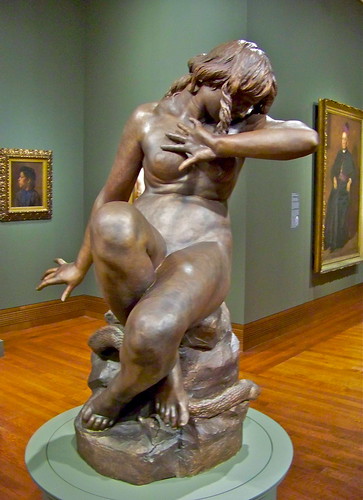 http://www.baylor.edu/christianethics/CreationartEzekiel.pdf
The major article is linked here
http://www.baylor.edu/christianethics/CreationarticleHiebert.pdf
The study guide is linked here:
http://www.baylor.edu/christianethics/CreationStudyGuide1.pdf
In the study guide, there are two pieces of art mentioned. There are two short descriptions of those pieces linked below each picture. I look forward to seeing you at the study. Whether or not you have a chance to read the materials, come and share your perspective--you'll be welcome!
Wednesday, April 07, 2010
Sermon Texts: Luke 24: 1-39 (with emphasis on Emmaus story)
Sermon illustration:
Sermon Notes:
Gorilla Video experiment
Sermon Title: Seeing Jesus
At the beginning of Lent, I shared the idea of that season that precedes this day being a lot like a compost pile. It is a time when we examine ourselves for things that might be spoiled or rotting, and we throw it in a pile. Then we turn that pile, we poke it and prod it and water it through devotion and prayer and practice, and we have faith that God can do something miraculous with it—in fact, God can make it into the perfect food for new life.
Well, today we hear about that new life—That new life isn’t only Jesus’ resurrection some 1980 years ago. It is the new life that can occur in us powered through that resurrection. That new life grows out of the compost of our sin and death, and it blossoms into a mysterious and sometimes elusive flower.
The risen Christ isn’t necessarily an overpowering presence. He might be like that gorilla walking into the middle of a circle and beating his chest. The Risen Christ is definitely someone you think you would just have to recognize, but in reality, unless we are expecting Jesus to make an appearance in our lives, we may not see him waltzing right in.
The disciples were walking on the road to Emmaus, and they were joined by someone they did not at first recognize.
Stuff about Jesus being present in the breaking of the bread………………….
They did not expect to see him, so they didn’t see him for who he was. Jesus was like the gorilla walking into the midst of the basketball passes and doing a little jig.
• He spoke with them about the prophets, and why they should not be troubled about their rabbi being gone.
He gave them the same reasons he gave them before he had been crucified, but still they did not see—they didn’t see, but they felt. After they invited him in to their home, and he broke bread at the table, after that cue that clued them into the supper they had shared together just three days before, they saw him, they knew what they were looking for, and then they said to one another—didn’t our hearts burn as we walked down the road. He is with us. Praise God.
Sometimes the power of an experience doesn’t fully catch up with us until we have finished it and we reflect on it, right?
May this holy meal open your eyes, not only to the presence of Jesus Christ here and now in this communion, but along the road—the path that is your life. May this meal, today, where Christ will be present in the breaking of the bread, cause you to remember a time in your own life where you might say, “didn’t our hearts burn within us…”
Tuesday, March 30, 2010
Pastor's Perspective: Holy Week and Beyond
Pastor’s Perspective: Holy Week and Beyond
“Why do you look for the living among the dead?” (Luke 24:5)
These words, spoken by an angel at the empty tomb on Easter morning, haunt us—don’t they? They are words of hope but also of chastisement. We are people of the empty cross—we claim to celebrate the Resurrection every Sunday—and yet so often, we look for the living and breathing Christ only in the pages of record of a history that is dead and gone. We look for the living among the dead when we try to trap Jesus in the pages of the Bible only, and we fail to see him in the everyday world that we inhabit. As Jesus himself said, God is a God of the living, not the dead. That isn’t to say we should have no appreciation for the story of what happened. On the contrary, we gather together in the first week of April on Thursday and on Friday nights to remember that story that so often moves us to tears.
 On Thursday we hear about the Last Supper that Jesus shared with his disciples. It was a celebration of the Passover meal, that yearly ritual in which all Jews remembered together with friends and family the powerful events of their own history, in which God brought them out of slavery in Egypt and carried them into the Promised Land. God had commanded his people to remember this event by participating in a meal each year. God knows us so well because God created us. And isn’t it true that sometimes a smell or a taste can cue a memory in our minds so vividly? Remembering is re-membering the past and how it continues to shape us.
On Friday, we hear the story of Jesus’ passion in the Tenebre service. “Tenebre” means darkness, and as the story unfolds and candles on the bare altar are extinguished, we’ll experience together perhaps a small taste of the darkness that must have been experienced that day by Jesus and his followers. That darkness is important. Darkness is integral to a deep and vibrant spirituality. St. John of the Cross was a 16th century Spanish priest who wrote about a “dark night of the soul” when describing the spiritual journey toward God. It is our fate to suffer and to grieve and to not comprehend the depth and breadth of the Truth and Love which envelops us. Fortunately, it doesn’t have to be that we suffer and grieve on our own or remain ignorant forever. So on Good Friday we gather in the darkness together. We huddle beneath the cross and hear the last words a loving savior gave his faithful followers.
 On Easter Sunday, the Good News breaks open like that jar of nard that Mary used to anoint Jesus’ feet for burial. The Good News “fills the whole” place, as we hear of the surprised wonder of the disciples. But, as the angel said, we do not look for the living among the dead. The miracle of the resurrection, for us, is not only that Christ conquers death and returns to his disciples in a living and breathing body. It is the miracle that continues 50 days later, at Pentecost, when Jesus imparts his Spirit on the group that is gathered in his name and changes them into a living, collective, body. So, when we only seek Jesus in the pages of a story, however rich and beautiful and life-giving that story is—if our gaze is only directed toward the scriptures to try and find the meaning and power of a Living and Loving God, we are looking for the living among the dead. When we enact those scriptures, when we respond to them by living lives that are inspired (literally “breathed into”) by them, they become the “Living Word” that we so often call the Bible. Those words tell us to look around for God—look in our daily lives. Look especially at the poor and mourning. Pay close attention to those who are oppressed or maligned. It is easy to be inspired by the beauty of creation—and I can attest to the power of finding God’s presence in a magnificent sunset or in a grand mountain vista. But Jesus reminds us to not forget about the underbelly of creation too. Do we see God’s presence in the people the world says are repulsive? Jesus says, “I am there.” It is when we open our eyes to this truth that we seek the living among the living.
Palm Sunday Sermon: Throw your cloak on the ground!
Sermon Texts:
Sermon Notes
Jesus came into the world after being carried in his mother’s pregnant belly being jostled around on the back of a donkey bound for some place to stay in Bethlehem. He was placed in a feeding trough while his mother rested after giving birth. And here, at the end of his life, we see another donkey, carrying a 33 year old man in a parade where the excitement of the crowd was bubbling with hope and fascination. Here is our hero! Here is our Messiah! He is the one we’ve been waiting for!
Jesus enter Jerusalem as the prophets had foretold—on a donkey. This is strange to us, it doesn’t seem like a very kingly type ride. It is as if a newly elected president made a special request to be driven to the inauguration speech in Washington DC in a farm truck.
But, though the choice of a donkey may seem odd, it certainly is consistent. This man riding the donkey is the embodiment of the Holy of Holies. He is the living, breathing incarnation of God. And yet, as Paul writes to the Philippians in the words of an ancient hymn known to the church, “he did not regard equality with God as something to be exploited, 7but emptied himself, taking the form of a slave, being born in human likeness.”
This riding in on a donkey thing isn’t just to put on airs, it’s not part of the story merely to fulfill a prophecy, though a close look at some of the Gospel writers details surrounding this story may lead one to believe that “fulfilling a prophecy” is the main objective. Matthew, confounded with the repetition found Zecheriah’s poetic description, “See, your king comes to you, righteous and having salvation, gentle and riding on a donkey, on a colt, the foal of a donkey,” actually describes Jesus riding into Jerusalem simultaneously on a donkey and on a colt.
It is what the prophecy means that Jesus is interested in. Zechariah continues in his prophecy,
“I will take away the chariots from Ephraim
and the war-horses from Jerusalem,
and the battle bow will be broken.
He will proclaim peace to the nations.
His rule will extend from sea to sea
and from the River to the ends of the earth.”
and the war-horses from Jerusalem,
and the battle bow will be broken.
He will proclaim peace to the nations.
His rule will extend from sea to sea
and from the River to the ends of the earth.”
A donkey symbolizes peace and a horse symbolizes war. Jesus comes into this city knowing full well what will happen here over the next few days. The writing is on the wall! He doesn’t have to be omniscient to see that those in power want to do away with him. And he comes in peace. He will never show hostility toward those who arrest him, accuse him, whip and beat him, or even nail his hands and feet into a cross. On the night he is arrested, in fact, he must re-iterate this aspect of his mission to one of his disciples who draws a sword and tries to defend him.
“You live by the sword and you die by it,” he says. And so he shows us another way. “You live by peace, and you die at peace.” Paul goes on to say in that hymn, that this God made flesh “humbled himself and became obedient to the point of death— even death on a cross.” He is humble as he stands there before the Sanhedrin, and they try to find blame in him. He is gentle with Pontius Pilate, who callously plays politics with his life. He is obedient as he is stripped, beaten, and dressed up like a bloody thorn-crowned king: mocked and ridiculed before being forced to carry the beam he would hang on to the trash heap of Golgotha. And he is righteous on that cross, as he finds a moment, even in his own agony to impart grace and confidence to a common thief being crucified with him who sees him for what he is.
Humble and obedient, gentle and righteous—that’s how Jesus shows us to confront the madness of the world that seeks to blame, dominate, and crucify. That’s a lot. That’s a lot more than those 12 men who walked with for three years could handle. They ran for their lives. It is asking a lot of us to “carry our own cross” and follow Jesus. He endures all of this punishment, and he does it by coming in peace.
The disciples, we are told, throw their cloaks on the donkey for Jesus to sit on. They want to serve their master by making him more comfortable on this humble ride. Then, as Luke tells the story, people take off their own cloaks as Jesus makes his way into the city, spreading the cloaks before the feet of the donkey to keep the dust from getting stirred up.
That’s how this story is different than the other Gospel writers. The others tell of palms, or palms and cloaks, but only Luke is devoid of palms. We’ll call it Palm Sunday anyway. Perhaps Luke wants us to think of cloaks.
What is a cloak worn for? It’s worn to shield us from the elements. And throwing them on the ground in front of someone used to be a gesture of honor and good-will. Imagine all the waste and animal by-products in the road in those days. We don’t really do that anymore, do we? That gesture has gone out of our culture. Has anyone ever thrown their coat on the ground so that someone didn’t have to step on something?
We also use the word “cloak” figuratively, a cloak may be anything that disguises or conceals something. Magicians wear cloaks, don’t they? This week is the most important in your spiritual year. It is a week where we will hear about our savior being laid bare for the world. We will hear about his fearful night in the garden, when he prays to be relieved of this task. Jesus will be laid bare in the hands of the Romans, where he is stripped and beaten. He’ll be laid bare on the cross, and nailed there and raised up into the air to hang. And while he’s hanging on that cross, Jesus will lay bare his soul in the words of the Psalmist in the face of what seems to be utter abandonment, “My God, My God, why have you forsaken me?”
He will leave nothing concealed or disguised in his own walk with the Father. This is his example to all of us. In this week, don’t cloak your relationship with the Father. His only son has made that unnecessary. Join the crowd who sees Jesus and throws their cloaks on the ground as he comes. Lay your soul bare to God’s love. Don’t hold anything back.
I find that this week, with it’s two special days when we recognize the events of the last days of Christ for what they are, God uncloaking His own love for us.
How can you take your coat off for Jesus
So, the Messiah’s entry into Jerusalem upon an animal of peace is made ready with Palm branches yanked off the trees, and people’s cloaks from their backs. They are impromptu displays of preparing the way for peace.
Monday, March 22, 2010
Holy Week Schedule
This coming Sunday, March 28, we will begin our observance of Holy Week with our Palm Sunday service at 10:55am and Easter banquet and Easter Egg Hunt after church. Yes, we jump the gun a little with Easter activities, but we know many families have Easter lunches of their own on Easter Sunday, so we meet together on this Sunday to eat together as a church family. Everyone is welcome to bring a dish and join in the meal. Ham is provided by the UMW.
On Thursday at 7pm, we will remember the Last Supper and the Great Commandment of Jesus in our Maundy Thursday service. The service concludes with the ritual of stripping the sanctuary, which is a reminder that the sadness and grief of Good Friday happened after this meal of love and fellowship.
On Friday at 7pm, we will gather to hear the solemn story of the betrayal, abandonment and crucifixion at the Good Friday Tenebrae. "Tenebrae," or "Darkness" is based on a twelfth-century late night/early morning service, and is fairly stark and simple. Participation in the service typically enhances the power and reality of Easter Sunday.
 Easter Sunday is the most important occasion of the Christian Year. It is when the bold message of the resurrection is loudly and beautifully celebrated in song and in word. Our Easter Sunday celebration will begin at 10:55 am and continue for the rest of the year!
Communion will be served on Easter Sunday, so that Christ Jesus may be known "in the breaking of the bread." All are welcome to receive our Holy Sacrament.
On Thursday at 7pm, we will remember the Last Supper and the Great Commandment of Jesus in our Maundy Thursday service. The service concludes with the ritual of stripping the sanctuary, which is a reminder that the sadness and grief of Good Friday happened after this meal of love and fellowship.
On Friday at 7pm, we will gather to hear the solemn story of the betrayal, abandonment and crucifixion at the Good Friday Tenebrae. "Tenebrae," or "Darkness" is based on a twelfth-century late night/early morning service, and is fairly stark and simple. Participation in the service typically enhances the power and reality of Easter Sunday.
Communion will be served on Easter Sunday, so that Christ Jesus may be known "in the breaking of the bread." All are welcome to receive our Holy Sacrament.
Sunday, March 14, 2010
Lent 4 Sermon: Lost at Home
Sermon Texts: Corinthians, Psalter, and Luke
This is the story we always refer to as the “Prodigal Son.” What does prodigal mean anyway? It’s not a word we commonly use, except when referring to this story.
Etymology: Latin prodigus, from prodigere to drive away, squander, from pro-, prod-forth + agere to drive — more at PRO-, AGENT
Date: 15th century
1 : characterized by profuse or wasteful expenditure : LAVISH
2 : recklessly spendthrift
I don’t know that Jesus would have preferred this title. He, after all, tells the story of two sons, and the second is as prodigal as the first when it comes to driving away people from his own heart and squandering his relationships.
We are most likely overcome with the story of the younger son because his story is so dramatic. He goes from a comfortable home to a pig sty in two sentences.
It is also compelling to us because it is the story of grace…..
I’ve always lingered over this older brother outside the party, asking the servants to give him news of what’s going on, and then complaining to his father for accepting his brother back into the fold.
The first part of the story is compelling because it is so dramatic in its shifts and so honest and bare in its emotionality. The second half of the story is so compelling to me because it so real. It seems more complex and subtle. The first son has lost his way, that’s clearly apparent to him by his realization that he is getting hungry looking at pig slop.
But, the older son who stayed home and helped on the farm perhaps doesn’t even realize that he too is lost. He’s lost right there at home.
More often than not, we don’t have dramatic “bottom of the barrel” type experiences like the younger brother. Some may, and those are compelling and inspiring times in our life, no doubt. But I don’t want to give the whole story to the younger son. After all, Jesus, the master storyteller, leaves the older son’s story as the lynchpin. He leaves it unanswered, compelling us to integrate the experience into our own lives and ask ourselves, “well, what would I do?”
I think it’s a great truth of this story that we can become just as lost in our work and in our dedication and in our obligations and sense of duty as we can by turning our back on the Father and going our own way and “scattering our substance” in dissolute living.
Yes, we can become just as lost dutifully coming here to sit in these pews every single Sunday as those who have never stepped foot in a church. And the glaring evidence of our disorientation can be found in our attitude toward those who find their way home and toward a God who welcomes everyone, no matter what, with open arms.
The reality of being home, being found, being alive to God’s grace has everything to do with an attitude of the heart. Do we harbor contempt? Do we consider others unworthy of God’s grace?
God is running down the road to throw His arms around a lot of people who I might not believe deserve a second chance—am I willing to not only accept that but celebrate that? To come in to the banquet and toast my brother’s return home—that is participating in grace. That is being alive to God’s grace.
Sometimes I wish I had a better story to tell. I wish my faith life was big and dramatic and compelling so that I could persuade all of you to a life of redemption and purpose because I have lived it—because I’ve been in the gutter, and boy can I tell you—you don’t want to be there. I hear preachers who have those kinds of stories, and there’s a part of my heart that whispers, “frauds!” “hucksters!” “What are you trying to sell?” “What are you trying to pull?”
My story isn’t as dramatic. My story isn’t as exciting, and I know you know this about me. I’ve been here close to four years now, and I know my story, who I am has not reached some of you—it has not “lit many fires” or prompted many Kleenexes to be used. Perhaps I’m boring, perhaps I’m pedestrian, perhaps I just haven’t had what it takes to convince you. I’m no prodigal son.
No, I’ve spent my whole life here on my Father’s farm. I’ve tended the sheep…and the goats. I’ve stuck around here like most of you. That’s not all that exciting. I’ve haven’t really had many compelling changes of heart. I’m pretty much the same person now that I was 5, 10, 15 years ago. I’ve never felt desperate for the nourishment and safety of home like that son sitting in the pig sty. I may have gotten some postcards from “distant lands” where debauchery and dissolute living are the trade, but I’ve never really been there—at least I don’t consider myself to have been there.
So, I feel the cliffhanger of Jesus’ story. I get it. I want to believe that I’m excited and celebrating what God is doing in the world—where grace is being shown—but sometimes I look out at the kind of people who are claiming God’s grace, and I say to myself, “what ass...inine people"
Let me assure you—it’s as easy to be lost here at home as it is out in the distant lands. And by God’s grace I’m reminded by this Heavenly Father—“Son, you are always with me, and all that I have is yours. But we had to celebrate.” I want to go in to the party. I want to applaud God’s grace wherever it is being shown. I want to accept the grace that has been with me my whole life. I want to admit this grace into my spirit and let it shape me and mold me into the likeness of my Father, who is pure and unbounded joy and forgiveness. I want to go into the party.
Sunday, March 07, 2010
U2Charist Highlight: Atticus Dellinger plays and sings "Yahweh"
Our U2charist service was a lot of fun this morning. The order of worship can be found here, and the highlight of the service, Atticus Dellinger singing U2's Yahweh, was fantastic. Take a listen.
Friday, March 05, 2010
Readings for "Singing Our Lives" Study

Wednesday, March 03, 2010
U2charist Service this Sunday, March 7

Sunday, February 28, 2010
Lent 2 Sermon: All Hail the Holy Hen
Sermon Texts: Philippians and Luke 13
Sermon Notes
Rick Steves kind of sermon today.
Dominus Flevit, description. The church that commemorates this occasion we hear about today. Jesus wept, the chapel is shaped like a tear.

Window—Barbara Brown Taylor: Inside the chapel, the altar is centered before a high arched window that looks out over the city. Iron grillwork divides the view into sections, so that on a sunny day the effect is that of a stained-glass window. The difference is that this subject is alive. It is not some artist’s rendering of the holy city but the city itself, with the Dome of the Rock in the bottom left corner and the Church of the Holy Sepulcher in the middle. Two-thirds of the view is the cloudless sky above the city which the grillwork turns into a quilt of blue squares. Perhaps this is where the heavenly Jerusalem hovers over the earthly one, until the time comes for the two to meet?

Can you imagine Jesus looking out over a very different Jerusalem, perhaps with the view as clear as this window makes it for us that there is a new Jerusalem, a heavenly Jerusalem, waiting to join the earthly Jerusalem, and he knows he will be the one to usher in that new city?
He is met by the Pharisees, who do him the favor of telling him he has a death threat against him, and he starts talking about animals.
He calls Herod a fox, and then tells the Pharisees what to tell Herod, basically, I’m going to go about my business, and you mind your own!
I used to enjoy imagining what kind of animal I’d be if I could be an animal. I remember running around the playground when I was about Wesley’s age imagining I was a rhino. I also enjoyed thinking I’d be a St. Bernard. In fact, I wanted to change my name to Bernard as a kid, because I thought it would make me bigger. Now that I think about it, a rhino is pretty big too, so maybe I had a thing with wanting to be bigger.
You would think Jesus would have chosen a little better. CS Lewis pictures the savior as a fierce Lion in the Lion, The Witch, and the Wardrobe, and we certainly can see why. The Bible talks a lot about the Messiah as the great Conquering Lion of Judah.

But, if Jesus cared to venture into bird territory to find a good animal representation of himself, then certainly the Eagle of Deuteronomy 32:11 makes sense, like an eagle that stirs up its nest and hovers over its young, that spreads its wings to catch them and carries them on its pinions. Yes indeed. That’s strong, protective imagery.
But instead, Jesus chooses a hen. A hen! His choice is commemorated here in the Dominus Flevit chapel with this mosaic. Though if you ask me, and even though I’m from Arkansas, I don’t know a lot about chickens mind you. But, I thought that only roosters had those combs on their heads.

Well, we can imagine why the artist has taken liberties, can’t we? At least a rooster offers some form of defense. He’s got those spikes on the back of his legs, and I can tell you from the experience of being the cause for alarm to a rooster, they can be awfully intimidating, can’t they? They certainly think they are! I remember thinking, surely I could just kick the thing in it’s head, couldn’t I? But instead I just made a habit of taking a wide berth and kind of scooting across that rooster’s path pretty quickly when I was a visitor to a farm that had a rooster.
Yes, at least a rooster is a little more like an eagle. A little more formidable opponent to a fox, but Jesus very clearly likens himself to the female chicken, which Barbara Brown Taylor said, "About all she can do is fluff herself up and sit on her chicks. She can put herself between them and the fox, as ill-equipped as she is. At the very least, she can hope that she satisfies his appetite so that the fox leaves her babies alone."
and you were not willing!" The last phrase is set outside the circle, in a pool of red underneath the chicks’ feet: you were not willing.
My dad’s dad was a Pentecostal preacher, and every once in a while, my dad tells me about one of the gems that they’d sing in church. One is, “The Devil is a sly old fox; if I could catch him, I’d put him in a box; I’d lock the door and throw away the key; for all those tricks he’s played on me! I’m glad I got salvation, I’m glad I got salvation, I’m glad I got salvation, by the grace of God!”

So, all Hail the Holy Hen, The one who takes away the sin of the world by offering himself as a holy and perfect sacrifice, perhaps praying that the “Sly old fox’s” appetite would be satisfied.

The hen has already given her life for the chicks, and she calls out to all who will listen, come and gather under my wings! Are you not willing?

Monday, February 22, 2010
hymn and singing study readings for 2/28/10
You can find the study guide at this link, and the songs that are referenced there here. Also, we will not only discuss new hymns, but our favorites. Come prepared to speak about your favorite 1 or 2 hymns and why you like them. You can get a hymnal from the church, or just look up the hymn on Cyberhymnal which allows you to search for the hymn by title, then has the story of the composer, then the lyrics. If you download the plugin in the left hand corner, it will play the hymn in a midi file.
Subscribe to:
Posts (Atom)